
Us has affiliate partnerships. We receive compensation when you click on a link and make a purchase. Learn more!
For anyone who reads an ingredient list before buying a blush, Revolution Beauty’s jelly blush sticks are worth a closer look. The $9 lip-and-cheek stain leans on a wet, high-water formulation built around humectants like glycerin and hyaluronic acid, ingredients you’d expect to find in a serum, not a color cosmetic.
That skincare crossover is exactly what’s driving the wider jelly beauty moment. Pinterest has reported that searches for “jelly blush” have increased by more than 130% on the platform, and the interest isn’t purely aesthetic. Shoppers who care about what goes on their skin are looking for formulas that do double duty.
“I think a big part of it is the novelty factor,” makeup artist Wendy Rorong told Fashion Magazine about the jelly trend. “Jelly textures feel new and playful. The name implies that [you’ll get something] lightweight, bouncy and hydrating.”
The formulation is what makes the category interesting, and Rorong is precise about why.
“They’re usually formulated with high water content and humectants like glycerin or hyaluronic acid, so they’re great for delivering quick and lightweight hydration,” she explained.
What’s Actually In the Formula
Glycerin and hyaluronic acid are both humectants, meaning they pull water into the skin. They’re two of the most widely used hydrators in modern skincare, and their inclusion in a blush stick is what separates a jelly product from a standard cream or powder. Instead of sitting on top of skin, the stain melts into it while the humectants work to keep the surface hydrated during wear.
That matters for the shopper who treats makeup as an extension of a skincare routine. A blush that also delivers a light dose of hydration isn’t a marketing gimmick if the ingredient list backs it up.
Rorong put the appeal in blunt terms.
“In the skincare category, jelly products work for people who are looking for something that’s hydrating but not too thin or thick,” she said. “Jelly products are right in the middle. And in terms of makeup (like jelly blushes, eyeshadows or primers) it’s refreshing way of applying makeup if your goal is to achieve a sheer, dewy finish.”
The Revolution Beauty Range
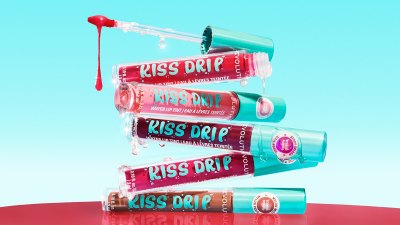
Revolution Beauty’s version comes in three shades, each formulated as a stain rather than an opaque pigment. Peach Orange gives a peach flush. Strawberry Pink lands as a pink wash. Cherry Red delivers a red stain with more punch. All three are buildable, so a light tap reads as a barely-there tint or layers into something more saturated.
The stick format is what makes it practical. There’s no brush, no separate applicator and no tools to clean. You swipe directly onto cheek or lip, blend with a fingertip and go. For someone whose morning routine already includes serums, an SPF and a moisturizer, the last thing she wants is a multi-step blush application. Jelly blush sticks compress the process without sacrificing a polished finish.
What Reviewers Are Saying
Feedback on the product has focused on pigment payoff and how it feels on skin. One reviewer said, “The pigment in this jelly is insane. You only need a small amount. I love how cool it feels on the face too. It feels smooth and hydrating on the lip. It gives such a nice red stain.”
Another described the value.
“Love this multi use lip and cheek blush! It’s perfect as a daily wear and lasts long on my lips and cheeks. Also it is a bargain deal!”
At $9 for a product that works on lips and cheeks, the math is straightforward. It replaces two products in a routine without asking the wearer to compromise on formulation.
Why the Category Is Having a Moment
The jelly trend isn’t only about novelty, though Rorong acknowledged that plays a part. It’s about what the texture signals. A jelly feels different on the skin than a cream or powder, and the sensory element is part of the appeal for someone who wants her makeup to feel as thoughtful as her serum.
For the shopper who scrutinizes labels, the presence of glycerin and hyaluronic acid in a $9 stick means the formula is working harder than the price suggests. The product isn’t marketed as a skincare treatment, but the humectants deliver a functional benefit alongside the color. That’s the kind of formulation-first thinking that earns a spot in a considered routine.
Production of this article included the use of AI. It was reviewed and edited by a team of content specialists.
Browse fashion, beauty and health products. Also, check out our gift guides.