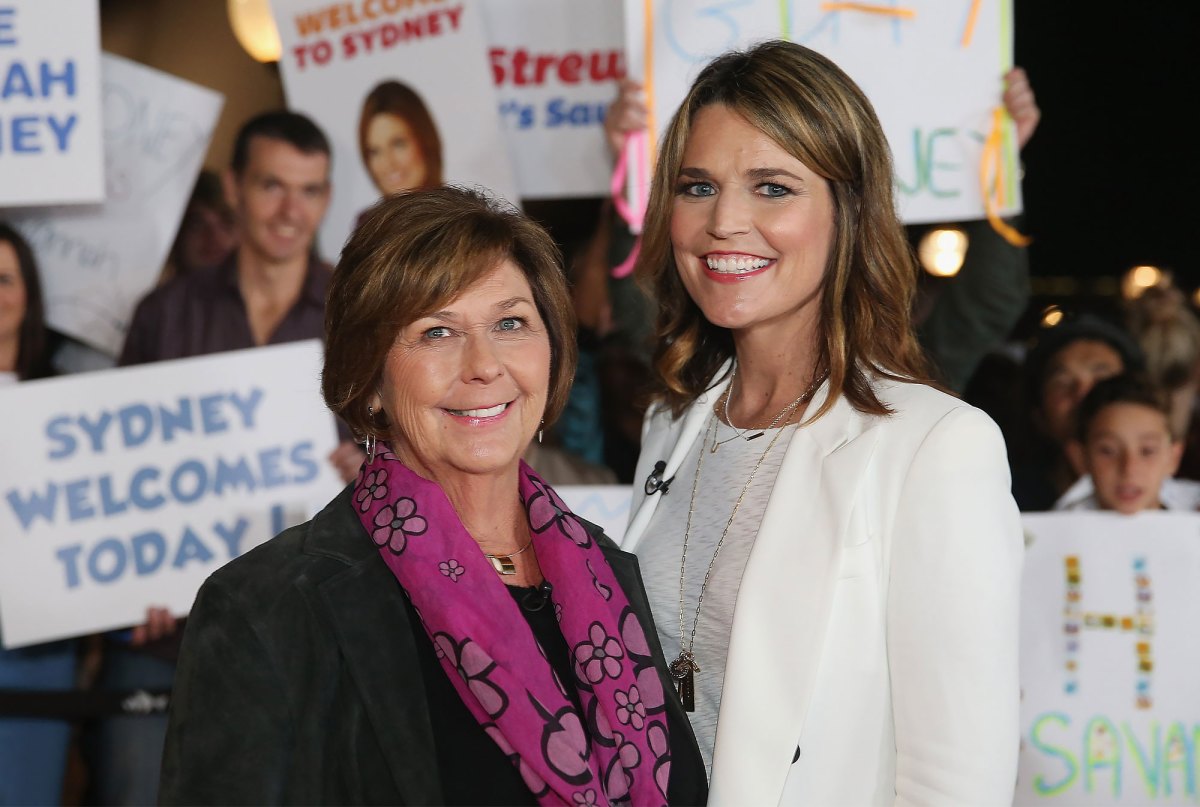


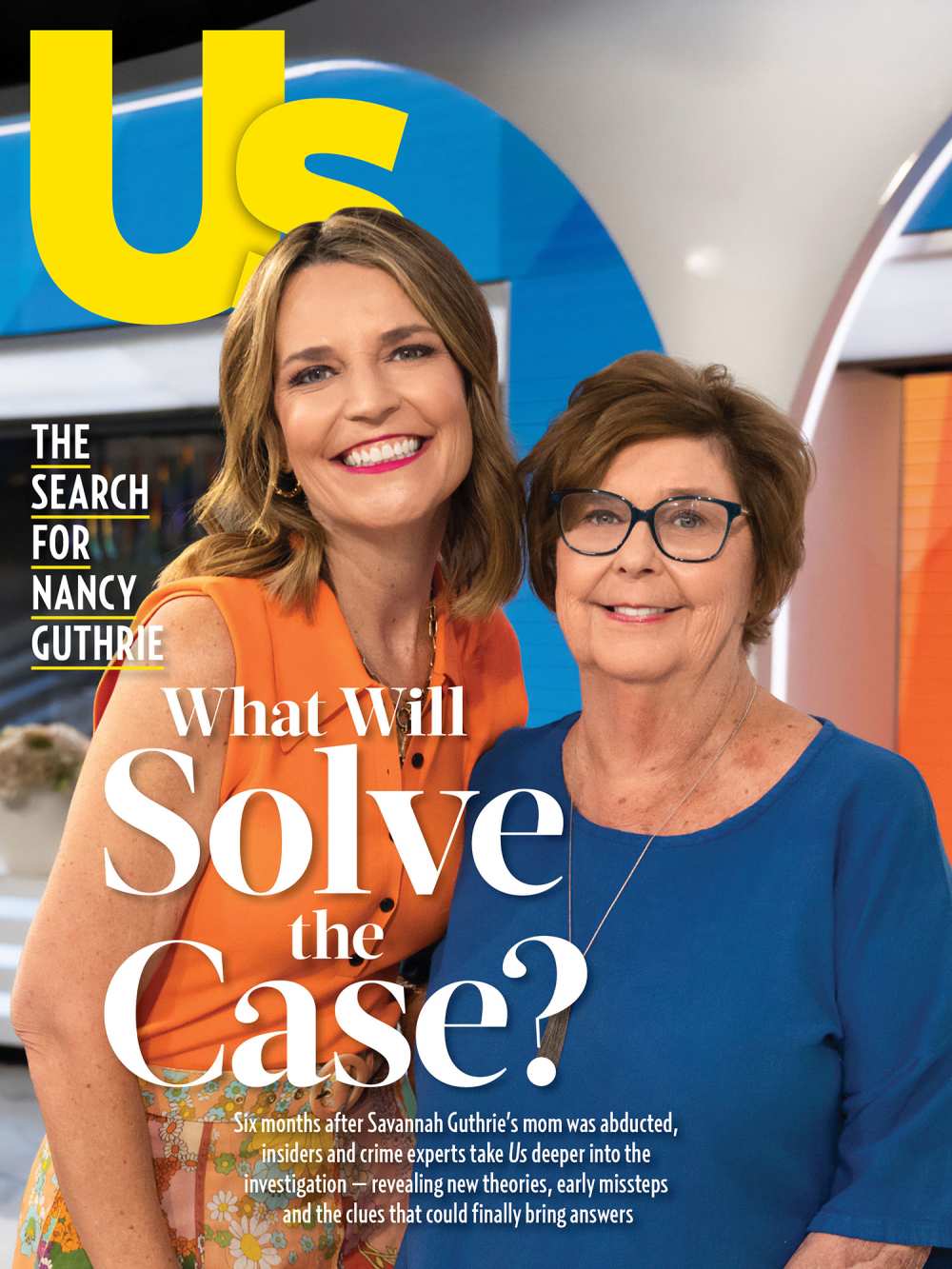
In the early hours of February 1, Savannah Guthrie’s beloved mom, Nancy, was taken from her home in the quiet Tucson suburb of Catalina Foothills. The 84-year-old matriarch had been dropped off the night before by her son-in-law Tommaso Cioni after having dinner with him and Savannah’s sister, Annie. Pima County Sheriff Chris Nanos soon revealed that blood found on Nancy’s porch matched her DNA, and authorities ruled it a kidnapping.
After TMZ reported it had received a ransom note demanding millions in Bitcoin in exchange for Nancy’s safe return, Savannah, Annie and their brother, Camron, posted a video on Instagram saying they were “ready to talk” and asking for proof of life. Savannah also noted her mom was in “fragile” health and without the heart medication she needs to survive. Footage released by the FBI on February 10 showed a masked man tampering with Nancy’s doorbell camera the morning she went missing, but additional information from the authorities has been sparse, and the few reported leads failed to produce a verified suspect.
By February 24, Savannah acknowledged in an Instagram video that Nancy “may be gone” but “we need to know where she is.” (The family is offering a $1 million reward for Nancy’s recovery.) In mid-August, the sheriff ’s department said human remains found 15 miles from Nancy’s home were not believed to be connected to the case. A source tells Us that scrutiny over a lack of answers is well-founded, adding, “How is a killer still on the loose? Why has the FBI not taken a more active role in the investigation? Confidence in federal law enforcement is on the line. If the kidnapping of an 84-year-old grandmother can go unsolved for this long, who is safe?”
Savannah — who returned to work on the Today show on April 6 — last spoke publicly about her mom in an emotional Instagram video posted on July 27, 176 days after her disappearance. “Our family is in agony,” she said. “We are in a nightmare that never ends. I’m begging you to do the right thing now. Help us find her.” An insider at Today says coworkers are in awe of her resilience. “[She’s] incredibly inspiring to those around her. The Today show is a family, full stop,” the insider adds. “The hosts are very tight. Savannah is their sister and also their North Star, and that extends to the crew, and the production team and staff.”
Us takes a closer look at what the ransom notes reveal, the missteps investigators may have made along the way and the potential keys to figuring out what really happened to Nancy.
Was This a Planned Kidnapping — Or a Crime That Spiraled?
Many experts agree Nancy was intentionally targeted — the question is whether her kidnapping was always part of the plan. Ana Belmonte, an assistant professor of forensic psychology at The Chicago School, notes that the perpetrator is said to have gone to Nancy’s house prior to the morning she was taken and was seen in Google Nest camera footage wearing gloves, a backpack and a mask — supplies that may have been purchased in advance. “The abduction appears to follow a pattern consistent with intended violence,” Belmonte says. “The evidence released shows the individual or individuals who perpetrated the abduction engaged in research and planning ahead of the act.”
Michael Alcazar, a retired NYPD detective, agrees there was preparation — but not for a kidnapping. “The video evidence shows an individual came to Nancy’s house on two separate occasions. He was prepared; he covered his face and was trying to destroy or remove the camera. They targeted Nancy’s home because she’s Savannah’s mother, but it didn’t go as planned. Perhaps there was some kind of resistance and the abductors injured Nancy.”
Robin Dreeke, former chief of the FBI’s Counterintelligence Behavioral Analysis Program, believes it was a burglary gone bad. “It began as a home invasion with the intent of taking something of financial value — an object, not a person,” Dreeke tells Us, adding that there was a jewelry convention in the area around the time of the kidnapping. “Jewelry is one reasonable possibility. When Nancy woke up or confronted them, it became a panic escalation,” says Dreeke. “Her abduction was Plan B.” Adds Troy Hillman, a retired cold case homicide sergeant and author of Chasing Down the Zombie Hunter: “I think she was deliberately targeted by a perpetrator who believed they could make money off of her famous family, and then the plan unraveled.”
There’s talk of other motives. Crime Junkie’s Briana Whitney cites retired Colorado detective Lisa Miller’s “evolved wrench attack” theory. “Nobody thinks Nancy [has] millions and millions of Bitcoin or cryptocurrency in her wallet, but they could leverage Savannah’s status and wealth, and use Nancy as the target to extract money in the currency they want,” Whitney explains, noting that such a plan would require a “highly sophisticated, highly experienced” — and possibly foreign — criminal mastermind pulling the strings. In a July episode of Crime Junkie, Whitney pointed out that Savannah had been especially visible in the months leading up to Nancy’s disappearance, as NBC ramped up promo for the 2026 Winter Olympics, which she was scheduled to cover. Nancy was also featured on the November 5, 2025, episode of Today, where Savannah showed viewers around her hometown of Tucson, which Whitney believes may have attracted the perpetrator’s attention.
Forensic psychologist Dr. Gary Brucato speculates the crime was “an elimination murder” — an intentional homicide made to look like a kidnapping for ransom. “[You] get a hired gun involved so it looks like a stranger did it,” says Brucato of his provocative theory (an outlier among experts), adding, “[With] an older person who’s taken, the vast majority of the time, the person knows you.”
What Do the Ransom Notes Tell Us?
The first note was sent to CBS Tucson affiliate KOLD-TV on February 2 — it was addressed to Savannah and demanded millions of dollars in Bitcoin for Nancy’s release. “We have your mother Nancy. She is safe but scared,” it read, adding that if payment isn’t received by February 9, “she will be killed. ” The letter also stated Nancy had a white smartwatch at the foot of her bed and that a floodlight had been damaged in her backyard. The second note was also sent to KOLD-TV and addressed to the Guthrie family on February 6. It said Nancy “perished shortly
after she was taken” and was “buried in nature, ” adding, “Nothing you could have done could have changed the outcome. We want your family to know this and hope you all can find peace. We are truly sorry.”
Belmonte believes the notes could be legitimate. “The inclusion of the information about Nancy’s smartwatch and the damaged light indicates the source of the note is likely credible,” she says. But other experts aren’t so sure. Forensic linguist Dr. Carole Chaski says the shift from the present tense in “We have your mother” and “She is safe but scared” to the future tense in “she will be held for ransom” indicates the notes are fake. “There’s no reason to shift to the future. What’s happening in the present is that she’s being held for ransom, not that she will be held for
ransom.”
Retired FBI agent Scott Curtis says he doesn’t “put a lot of significance” into the notes because they’re not handwritten and could therefore be AI-generated. Alcazar says they are “likely bogus” because there’s no two-way communication and the notes were delivered “via a web form for a tip line.” (Hillman also notes that it’s unusual that the letters were routed directly to news outlets rather than to the Guthrie family.)
The second note differs markedly in tone from the first. Brucato believes two different people wrote them, and that the second one — which he describes as “apologetic or nervous” — indicates a rift between them. “The second [note] completely undoes the purpose of the first message.” Dreeke says it’s “the language of panic escalation after an unexpected death, not the language of someone still trying to monetize a planned kidnapping.”
Did Early Mistakes Cost Investigators Their Best Chance?
There’s been no shortage of criticism over how the case has been handled. “The case is clearly facing a heightened level of scrutiny now that it’s past the six-month mark,” says the source. “And rightly so. [Acting Attorney General Todd Blanche] just acknowledged [on Meet the Press] that it’s a federal case, and despite ‘working as hard as they can,’ they still can’t solve it.”
Whitney, a former reporter for the local news station Arizona’s Family, was at the crime scene in the days immediately following Nancy’s disappearance. She recalls police tape came down quickly and that reporters were allowed onto Nancy’s porch, where blood droplets had been found. “They said, ‘We’ve gotten everything [we need here]. You can take video and pictures.’ And there were probably dozens of people who walked up there.” Whitney says the area
around Nancy’s property appeared to be resecured after news of the first ransom note broke. “We were all thinking, Why was the scene available to people? The FBI is now doing forensic work. [That] could become a problem.”
Former Pima County Undersheriff Rick Kastigar — who was once Nanos’ boss and later worked under him as chief deputy — believes Nanos impeded the investigation by shutting the FBI out. “He hated the FBI, and he wouldn’t accept [their help] or allow them to have any say in [the investigation].”
Kastigar, who admits he had a difficult working relationship with Nanos, notes that the sheriff ’s department failed to pursue data stored on Nancy’s camera, only for the FBI to later recover data from Google, and the decision to send DNA evidence to a family-owned Florida lab for testing “only delayed” the results. “It’s my opinion,” Kastigar adds, “that these mistakes are
based on ego and being vindictive.”
Brian Entin, a senior national correspondent at NewsNation, also feels the criticism is fair. “We reported early on [about] the inexperience of some of the homicide detectives who were working the case initially,” he says. Dreeke notes that if and when an arrest is made, “the handling of the investigation will face intense scrutiny from the defense. Chain of custody, scene management and communication decisions will all be examined.”
Is the Case Cold?
It depends on who you ask. Entin says a dedicated, full-time task force is still pounding the pavement and holding daily meetings. “I would not call this a cold case at this point,” adds Hillman. “The investigation is massive, and they are continuing to plow through leads and analyze evidence. ” (He notes that every agency “has a different definition of what they term a cold case.”) The release of the ransom notes could generate new activity. “It could stir up some evidentiary information,” says Kastigar.
But the longer it goes on, the case may become harder to solve. As of press time, no suspects have been publicly identified, and despite a combined $1.2 million reward between the Guthrie family and authorities, no one has come forward with credible information. “I talked to my sources recently, and unfortunately there is not much new,” says Entin. “I don’t think a ton of progress has been made towards one theory or one particular suspect.”
What Could Finally Solve the Case?
Curtis suggests law enforcement talk to individuals who’ve been arrested for burglary in the area to see if anyone knows anything. “They’re connected and sharing information, whether that’s on the street or in jail talking about how they got arrested. I don’t care how much forensic science you have, if you don’t have human sources pointing you in the right direction, you’re never going to solve anything,” he says. Adds former FBI special agent John Iannarelli: “A criminal’s going to get in trouble and may have an idea of who did this, and they’ll want to cut themselves a deal.” Kastigar believes DNA may have the answer — via testing that’s more related to family genealogy than the FBI’s database, which primarily contains DNA profiles collected from convicted offenders and crime scenes.
The investigation into the 2022 University of Idaho murders could offer a model for how vehicle and digital evidence might advance the case. Surveillance footage helped identify a white Hyundai Elantra near the off-campus house where four students were stabbed to death, which ultimately led authorities to Bryan Kohberger. “There’s cell phone geolocation data that they could still explore,” says Curtis, adding, “I don’t care how familiar you are with Tucson, you probably need some kind of navigation app to find your way out there.” (Other tech leads include navigation-app data, camera footage and cryptocurrency activity.)
Finding Nancy’s remains could help establish how she died and potentially yield new forensic evidence. “It’s fairly common in Arizona for remains to be found in the desert years later,” says Whitney. “But it’s tough because there’s no way of knowing when that would happen and [not everything] would be answered, but at least it would get Nancy home so Savannah and her siblings can say goodbye properly.”
Several of the experts agree the answer may already be in the files and that the case could use a new set of eyes. “You get different takes on things,” says Joseph Giacalone, former commanding officer of the Bronx Cold Case Squad. “Things could’ve been missed — human error plays a large role in this.”
Will the Guthries Ever Get Answers?
While the chances of finding Nancy alive at this point are very low, the likelihood of eventually identifying the person responsible remains higher. Holding them accountable will be challenging — but not impossible. “If you have enough evidence to prove that something nefarious occurred that could be proven in court through direct and circumstantial evidence, you can get a conviction,” says Iannarelli. “These are called no-body homicide prosecutions,” adds Dreeke. “They are more difficult because the absence of remains removes a powerful piece of evidence, but they are not legally barred.”
Entin notes that advances in DNA analysis and digital tech could prove useful in the future. “I’ve learned a lot about how much DNA technology is changing; they’re able to do things they weren’t able to not that long ago, so I’m hopeful that there’ll be a break on that front eventually.”
It’s a high-profile case — and no one is giving up hope. “I know through my sources how many people are working behind the scenes,” Entin reveals. “I can’t think of another case I’ve covered where there was this level of pressure on law enforcement to solve it. Every day I’m like, ‘Today could be the day.’ Eventually there’s going to be a break.”
Savannah is staying strong in the meantime. “It’s certainly not easy, and things will never be back to normal for her or her family,” says the insider. “But every day she returns to the Today studio proves she’s determined to keep going.”



For more on Nancy, pick up the latest issue of Us – on newsstands now.
If you have any information on the Nancy Guthrie case, call the FBI’s tipline at 1-800-CALL-FBI. Tips can remain anonymous.
With reporting by Christina Garibaldi, Nicholas Hautman, Paola Leva, Andrea Simpson, Whitney Vasquez, Mike Vulpo and Amanda Williams