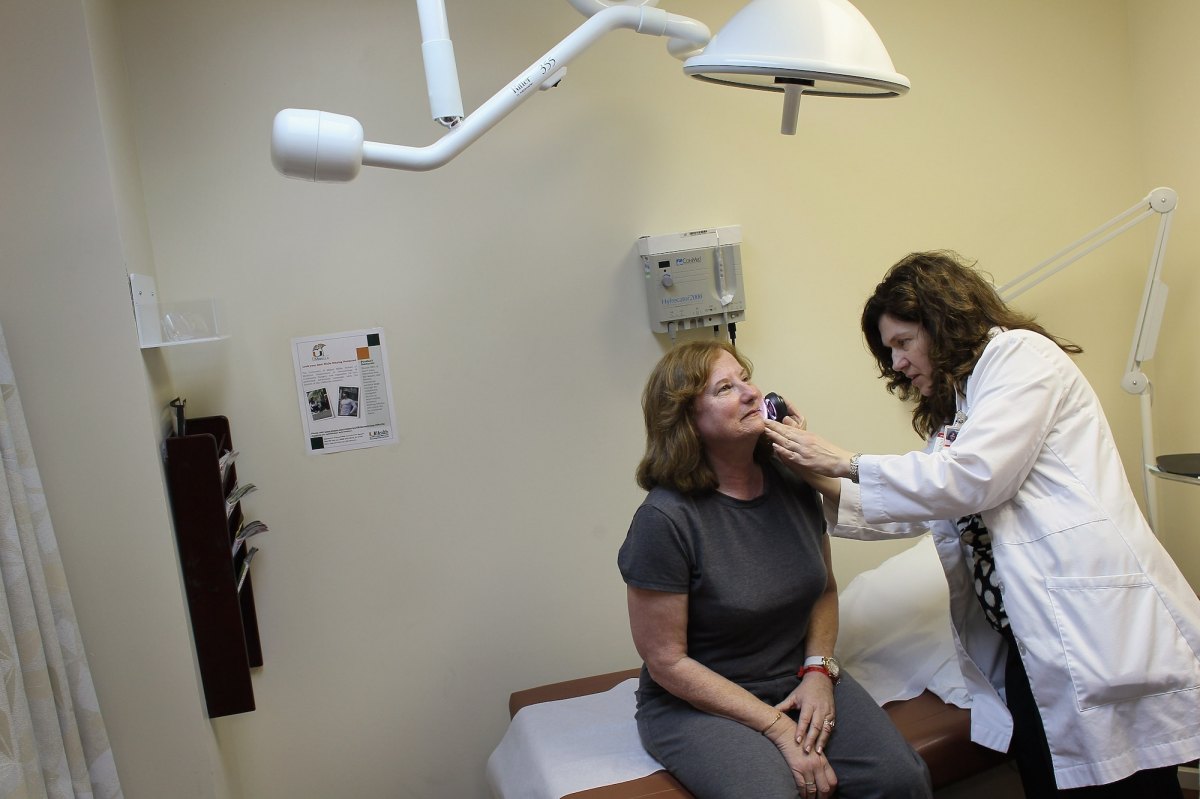


Skin cancer is the most common cancer diagnosed in the United States, and roughly 9,500 Americans hear that diagnosis every single day. Melanoma accounts for only about 1 percent of skin cancer cases but causes the majority of skin cancer deaths, according to the American Cancer Society. Rates in the U.S. have climbed steadily for decades. That is why dermatologists teach patients the ABCDE Rule, a five-letter self-check anyone can do in front of a bathroom mirror to catch a suspicious mole early, when melanoma is most treatable.
The American Cancer Society estimates about 112,000 new melanomas will be diagnosed this year, including roughly 65,400 in men and 46,600 in women. Around 8,510 people are expected to die from the disease, with men making up most of those deaths. Learning what to look for takes two minutes and could save your life.
Why Melanoma Is So Easy to Miss
Melanoma does not always look dangerous. It can mimic ordinary moles, and some forms are not even pigmented.
Dr. Rachel Westbay, a board-certified dermatologist at Marmur Medical in New York City, told Health Central that melanomas sometimes resemble benign moles and are not always dark. She pointed to amelanotic melanoma, a typically pink-hued variant, as one example that is particularly easy to overlook.
Dr. Richard Shaffer, a consultant oncologist at Bupa Cromwell Hospital, told Sustain Health, “Moles are small, colored spots on the skin. In most cases, they are usually nothing to worry about, but it’s always worth monitoring them in case they change shape, size and color (or all three), as this could be a sign they are cancerous.”
“Basically, you’re looking for new moles, or changes to the size, color or shape of an existing mole,” Shaffer added.
How the ABCDE Rule Breaks Down
Each letter flags a different melanoma warning sign.
A is for asymmetry. Draw an imaginary line down the middle of the mole. If the two halves do not mirror each other, take note. “Melanoma is often asymmetrical, which means the shape isn’t uniform,” Westbay said. Ordinary moles tend to be uniform and symmetrical.
B is for border. Healthy moles have smooth, well-defined edges. Cancerous ones often do not. “Melanoma often has borders that aren’t well-defined or are irregular in shape,” Westbay said. Watch for jagged, blurred or notched outlines.
C is for color. A benign mole is generally one consistent shade. A melanoma may mix browns, blacks, reds, whites or blues within a single spot. Varied coloring inside one mole is a warning sign.
D is for diameter, or dark. Anything larger than 6 millimeters across, roughly the size of a pencil eraser, deserves a closer look. The tip of a standard pencil is about 5 millimeters wide, which makes a useful reference.
E is for evolving. Change is the single biggest red flag. “Unlike most benign moles, melanoma will often change characteristics, such as size, shape, or color over time. If you have a mole or skin growth, watch it for signs of changes,” Westbay said.



Other Skin Cancer Warning Signs to Watch For
Melanoma tends to stand out from the moles around it. Dermatologists call this the “ugly duckling” principle. If one spot on your body looks noticeably different from your other moles, that alone is worth investigating.
Shaffer also flagged itching, bleeding or crusting as symptoms that warrant a doctor’s visit. A sore that will not heal or a mole that suddenly feels painful should be examined.
If the answer to any ABCDE Rule question is yes, book a dermatologist appointment. Early-stage melanoma has one of the highest survival rates of any cancer when it is caught before it spreads. A two-minute mirror check could be the most important thing you do this month.