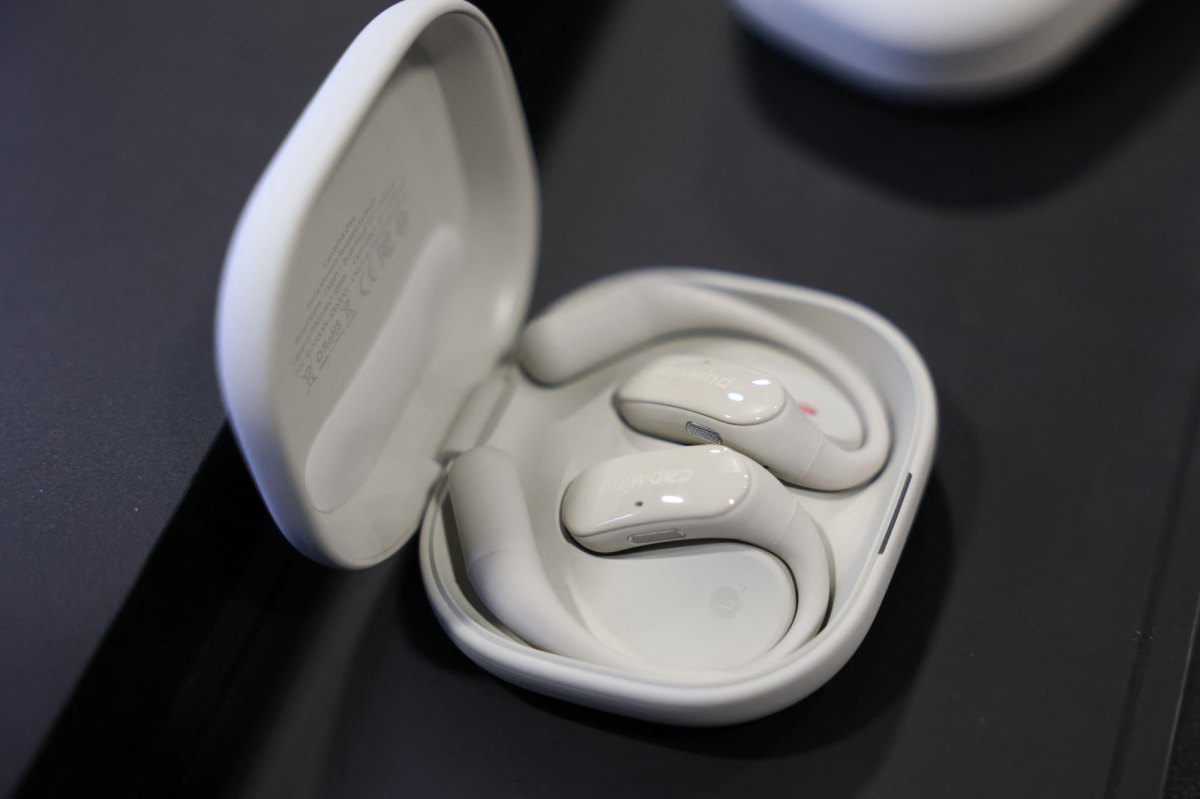


Sleep technology has moved well beyond the white noise machine on your nightstand. Sleep earbuds now pack active noise cancellation, sound masking and biometric sensors into something small enough to wear through the night.
For anyone who tracks recovery metrics or fine-tunes their sleep environment, this category raises some worth-exploring questions. How well do these devices actually cancel noise? Can they survive a full night of side sleeping without discomfort? And is the sleep data they produce worth paying attention to?
The technology is advancing quickly and the research behind it is starting to catch up. Knowing what these devices can and can’t do makes it easier to decide whether they deserve a spot in your sleep setup.
What Are Sleep Earbuds and How Do They Work?
Sleep earbuds are compact wireless earbuds engineered for overnight wear. Unlike standard earbuds, they use low-profile shapes that sit flush with the ear to minimize pillow pressure. Most models offer some combination of passive noise isolation, active noise cancellation and sound masking to reduce nighttime disruptions. Some also include sensors that monitor your sleep.
How Effective Is Noise Blocking in Sleep Earbuds?
Sleep earbuds tackle noise three ways. Passive isolation seals the ear canal physically. Active noise cancellation counters low-frequency sounds like traffic or HVAC hum with opposing sound waves. Sound masking overlays steady audio like white noise or rain to smooth out sudden disruptions.
A pilot study in Frontiers in Digital Health found that Bose noise-masking Sleepbuds reduced measured sleep-onset time by 13.3 percent and perceived sleep-onset time by 32.5 percent among 55 participants exposed to environmental noise. Of those who finished the study, 86 percent reported falling asleep more easily and 82 percent perceived better overall sleep quality.
Are Sleeping Earbuds Comfortable for Sideways Sleeping?
Comfort depends heavily on fit. Valerie Pavlovich Ruff, AuD, an audiologist at Cleveland Clinic, notes that sideways sleeping can force ill-fitting earbuds against the ear canal, leading to soreness or skin irritation. Prolonged use may also push earwax deeper or trap moisture, which raises infection risk.
Look for models with multiple ear-tip sizes and a wing system. The Soundcore Sleep A30 weighs around 3 grams per bud and is shaped to reduce contact pressure during side sleeping.
Can Sleep Earbuds Work as a Sleep Monitoring Device?
Some earbuds for sleep include motion sensors and microphones that estimate sleep duration, body position and snoring patterns. Ear-based sensing shows genuine promise. A 2017 study in the IEEE Journal of Translational Engineering in Health and Medicine used ear-EEG to classify sleep stages with 78.5 percent to 95.2 percent accuracy.
Consumer models, however, typically rely on motion and sound rather than clinical EEG.
How Accurate Is Sleep Tracking in Consumer Earbuds?
Alan Schwartz, MD, a sleep specialist at Johns Hopkins, points out that most consumer sleep trackers estimate sleep from movement and inactivity rather than measuring it directly.
A 2024 analysis in Sensors confirmed that wearable devices identified sleep versus wakefulness with at least 95 percent sensitivity. Accuracy dropped for individual sleep stages, with sensitivity falling to between 50 percent and 86 percent.
Earbud-based sleep data is useful for identifying trends. It should not be treated as a clinical assessment.



What Features Should You Prioritize in Earbuds for Sleep?
Start with fit. A low-profile build and multiple tip options matter most, especially for side sleepers. From there, match the noise-control method to your environment. Passive isolation, ANC and masking each address different types of sound.
Battery life of 8 to 10 hours covers a full night. Bluetooth support is worth checking if you prefer falling asleep to podcasts or music rather than built-in sounds. If sleep tracking interests you, treat it as supplementary trend data. And check for an alarm feature so noise blocking doesn’t leave you oversleeping.
Can You Listen to Music or Podcasts With Sleep Earbuds?
It depends on the model. Some sleeping earbuds only play pre-loaded or app-based sounds like white noise and nature loops. Others support full Bluetooth audio, letting you stream music, audiobooks or podcasts as you drift off. Check this before buying if audio variety matters to you.