One challenge is becoming increasingly apparent in dating in 2026.
Most people are too afraid to be themselves, while outwardly searching for a deeper connection. At the surface level, people claim to be dating for fun… looking for love… a one-night stand… maybe a friend or two. But could they also just be dating for validation?
Some people may be reluctant to acknowledge that what they actually crave is to be truly seen, fully known and accepted. This shift is becoming increasingly visible in how humans interact; there are some Gen Z and Young Millennials who are at the point of burning out.
Some Gen Z and younger millennial daters appear to be placing greater value on authentic connections than on finding an idealized match.
The Anatomy of Dating App Fatigue
According to a recent Forbes Health survey of 1,000 U.S. adults, a staggering 78% of dating app users report experiencing emotional, mental or physical exhaustion from these platforms at least “sometimes,” rather than “severe” burnout.
Taking a deeper look at what’s going on in today’s dating environment, clear patterns emerge time and time again. Some of these problems may be linked to an emphasis on superficial qualities. The rest seems to stem from the feeling of immediacy and the fear of abandonment.
Becoming more confident in who they are and taking the time to see if this new love interest is really someone they want to spend time with could be an early step toward reducing dating fatigue.
Forbes Health’s data points out a noticeable gender gap in digital burnout: 80% of women report experiencing dating fatigue, compared to 74% of men. This emotional deficit is driven by specific failures in user experience and online behavior.
- Among surveyed dating-app users, 40% identified an inability to find a good connection with someone as a reason they experienced dating-app burnout.
- Disappointment with people was cited by 35% of respondents as a reason for dating-app burnout.
- Feeling rejected was cited by 27% of respondents as a reason for dating-app burnout.
- Repetitive conversations while chatting with multiple matches were cited by 24% of respondents as a reason for dating-app burnout.
This data points to major flaws in how most people are meeting online and the gamified matching ecosystem that comes with some of today’s most popular dating applications. The ease of access and the feeling of urgency have contributed to these numbers. But the good news is that some daters appear open to different approaches that could help them form more meaningful connections.
Unpacking the “Dating-Reality Disconnect”
To understand what is driving these cultural shifts and shaping a new narrative, Hily — a dating app that encourages daters to “date as they are” — released its 2026 Dating T.R.U.T.H. Report, examining responses from 3,000 users across the U.S.
Hily’s research team, alongside Relationship Expert Dr. Sabrina Romanoff and Relationship Science Advisor Dr. Liesel Sharabi, surveyed users with a series of questions designed to uncover the gap between what people believe dating should be like and what it actually is. Their answers revealed a phenomenon the team is calling the “Dating-Reality Disconnect” — the polarizing gap between curated expectations and real-life dating experiences.
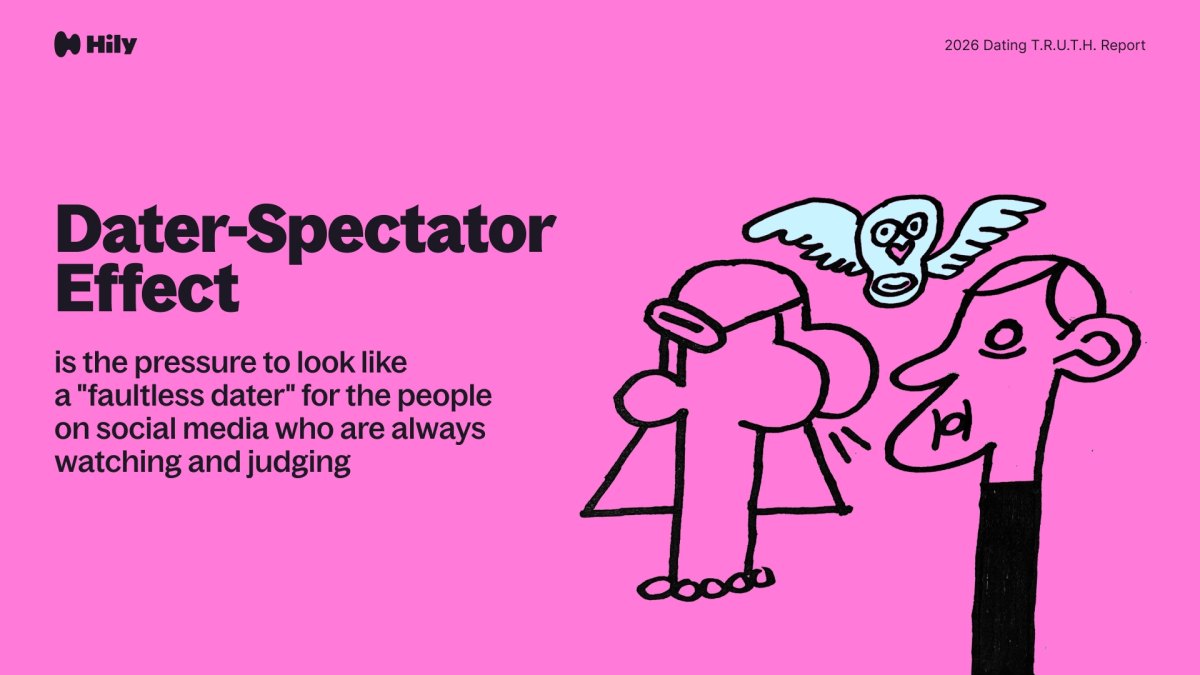
A significant factor fueling this disconnect is what relationship experts refer to as the “Dater-Spectator Effect.” By constantly comparing unedited personal interactions to cinematic, highly curated romantic highlights on TikTok and Instagram, daters can easily slide into comparison traps and exhaustion.
Hily’s mission is to help guide millennials and Gen Zers back to the romance and back to the fun of real, organic dating.
“More than anything, daters need authenticity to end the Dating-Reality Disconnect,” explains Dr. Liesel Sharabi. “Real dating isn’t always social media-worthy or cool, but it’s worth pursuing, especially for meaningful connections.”
Some relationship commentators describe a pattern among Gen Z daters that they call the ‘Dater-Spectator Effect.’ Instead of constantly comparing their own “unedited” dating life to the highly cinematic reels broadcast across social media, they can “have fun” organically getting to know someone new and step into a much healthier dating life.
“Factor in how much time Gen Z spends online, and it makes sense that they’d be influenced by what they’re seeing, even if they know it’s far from reality,” notes Dr. Sharabi. “Moreover, seeing these posts constantly can further contribute to the perception that everyone is out there having incredible dates when you’re not. In these instances, it’s easy for social media to make people feel bad about themselves and like other people’s dating lives are better than their own.”
Instead of being paralyzed by anxiety, embrace the adventure. And realize human experiences can help shape the future.
When It Comes to Real Connection, Communication Is a Must
Communication is the absolute core of a lasting relationship. To help address dating burnout, Gen Z daters may benefit from learning to date with deep, uncompromisable intention, rather than succumbing to the pressure of finding love that looks good on social media.
The internet is flooded with restrictive dating “rules” that adversely damage organic communication in a culture where it’s okay to “ghost.”
From the male perspective, they can quickly lose interest when their interest isn’t clearly reciprocated.
What they don’t get is that opening up takes time. A study of interpersonal closeness estimates that it takes about 50 hours of time together to move from acquaintance to casual friend. It can take even longer to build a lasting romance.
Expecting depth from a two-second swipe is, at most, diabolical. But building a stronger foundation may help create more resilient relationships.
Human beings are complex and capable of being multi-dimensional. Real charisma isn’t a practiced performance. It takes courage to be yourself — your wonderfully nerdy, delightfully goofy self.
For the neurodivergent, social awkwardness is more common than you think. A recent British Medical Bulletin article reported that approximately 15-20%, or 1-in-5, of the global population is neurodivergent. Dating apps and websites can be a godsend, allowing them to be more confident in their communication… as long as they have someone to communicate with.
How Platforms Are Adapting for Human Connection
In response to widespread fatigue, dating platforms are re-evaluating how features cater to real-life human interaction. Rather than optimizing their engines strictly for rapid swiping, more and more dating apps are being designed to encourage daters to take their time and to engage in clearer, more intentional communication.
Hily, in particular, centers on creating a safe space for deliberate interaction under the concept that you should “Date as you are.”
Two of their most popular features include Icks & Clicks and Hi-Powered Finder, which encourage communication by using compatibility quizzes, icebreakers and the user experience to their advantage:
- Icks & Clicks: An interactive compatibility feature designed to help users identify personal dealbreakers and core values before initiating a match.
- HI-Powered Finder: Hily’s answer to AI matchmaking, where “HI” stands for Human Intelligence. Instead of an algorithm deciding who users should like, the Finder lets daters browse and choose matches using their own taste, instincts and judgment.
The Path Ahead for Digital Romance
True confidence isn’t about presenting a bulletproof persona. It’s about standing boldly in your authentic self, flaws, goofiness, intelligence and all. And when you trade the illusion of being flawless for the power of being real, this may reduce the desire for external validation and make it easier to form a more open connection with a potential partner.
However, some users may rely on carefully curated profiles to lessen the fear of rejection, potentially prioritizing short-term reassurance over vulnerability and deeper interaction.
Some existing dating tools may not meet users’ needs. And new approaches are emerging in response to these changing preferences.
With the global dating app market valued at over $3 billion, platform providers face the clear challenge of addressing dating fatigue altogether. The shift among Gen Z toward transparency and intentionality may reflect a shift in how digital tools support real-world relationships.
Dating doesn’t need to be an endless cycle of swiping left or swiping right. By prioritizing authenticity over perfection, new approaches aim to make forming connections feel less demanding — and more like a human experience worth having.
The information provided in this article is for general informational and educational purposes only. It is not intended as legal, financial or professional advice. Readers should not rely solely on the content of this article and are encouraged to seek professional advice tailored to their specific circumstances. We disclaim any liability for any loss or damage arising directly or indirectly from the use of, or reliance on, the information presented.