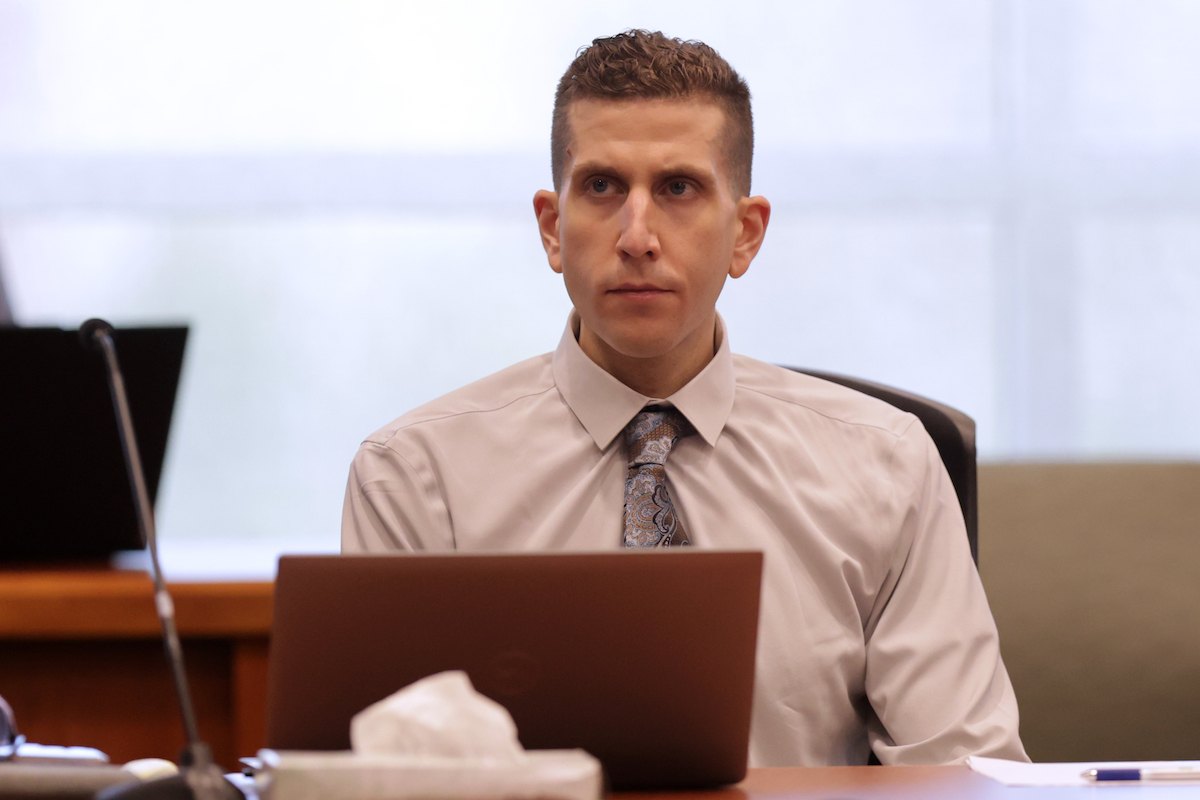


Bryan Kohberger previously pleaded guilty for the brutal murders of four University of Idaho students — but nearly three years after the killings, one question continues to haunt investigators, victims’ families and the public alike: Why did he do it?
Kohberger, a former PhD student, broke into the off campus home at 1122 King Road in Moscow, Idaho, on November 13, 2022, and stabbed Ethan Chapin, Xana Kernodle, Maddie Mogen and Kaylee Goncalves to death with a Ka-Bar knife. He was arrested a little over one month later and initially pleaded not guilty.
That changed in July 2025, one month before his trial was set to begin. Kohberger pleaded guilty to four first-degree murder charges and one count of felony burglary in a deal that took the death penalty off the table. He was sentenced to life in prison without the possibility of parole later that same month.
One year later, Kohberger announced he was filing to have his plea withdrawn and has insisted he’s innocent.
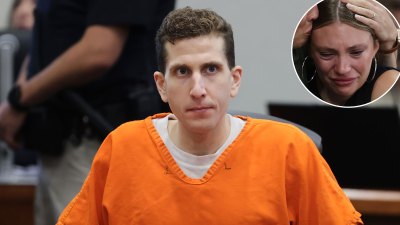
More than years later, one of the biggest mysteries of all remains wide open regarding what his motive for the killings was.
Bryan Kohberger’s Motive Remains a Mystery
The most pressing question surrounding the Idaho murders is also the one investigators cannot answer. Kohberger has not spoken about why he broke into the King Road house and stabbed four young people to death — and law enforcement has admitted they don’t have a clue either.
Lead investigators on the case, Idaho State Police Lieutenant Darren Gilbertson and Moscow Police Corporal Brett Payne, were asked in a July 2025 press conference whether they had any clear motive.
“We don’t,” they replied.
The absence of an established motive is particularly striking given the pre-planning involved. Prior to his conviction, Kohberger was studying for a PhD at Washington State University in Pullman. He was spotted outside the King Road house 23 times before the murders.
Was Kaylee Goncalves Being Followed?
While no official motive has been established, documents released by the Moscow Police Department revealed unsettling accounts from Goncalves’ friends, who claimed she believed she had a “stalker.”
Goncalves apparently thought someone was following her, and her friends recalled one incident where she said she saw an “unknown male up above their house to the south who was staring at her.”
It has also been widely speculated that Kohberger entered the home and immediately went to the third floor — where Mogen’s and Goncalves’ rooms were located. Prosecutors have suggested that either Mogen or Goncalves may have been his intended target, though this has not been confirmed.

What Happened Inside the House?
Court documents paint a chilling picture of what unfolded inside 1122 King Road that November night. Kohberger used a Ka-Bar knife with “a lot of force” while murdering the four college students.
Kernodle appears to have fought back. Documents released by the Moscow Police Department reveal that “it was obvious an intense struggle had occurred” between Kernodle and Kohberger based on the “defensive knife wounds” on her hands. Her body was discovered with more than 50 stab wounds on the floor of her bedroom.
Chapin was found dead in Kernodle’s bed. The documents note that he had “stab wounds” and was “covered in blood.”
Mogen and Goncalves were found dead in the same bed. Mogen had wounds to her arms, hands and face. The documents reveal that Goncalves was “unrecognizable” following the “damage” to her face, according to multiple accounts from the police officers on scene. She had more than 20 stab wounds.
Was There a 2nd Weapon?
Adding another layer to the case, Goncalves’ sister alleged during her victim impact statement at the sentencing hearing that Kohberger may have used a second weapon. That claim has yet to be confirmed — but prosecutors haven’t ruled it out.
“There were injuries that appeared to have been caused by something other than the knife, although it could have been the knife,” Latah County Prosecutor Bill Thompson shared in a July 2025 interview with The Idaho Statesman. “I don’t think we can exclude the possibility that there was an additional weapon involved.”
Complicating matters further, the Ka-Bar knife Kohberger used to murder the four college students has never been recovered. A knife sheath found at 1122 King Road, however, helped lead investigators to his arrest.
The Surviving Roommates
Two roommates survived the attack: Dylan Mortensen and Bethany Funke. The document revealed that Mortensen misidentified two of her deceased roommates because of the severity of their wounds.
Mortensen saw Kohberger walk through the house but “was intoxicated and didn’t want to believe what was going on.” Transcripts of her interview with the police reveal that Mortensen heard what she believed to be a man’s voice say, “You’re gonna be fine. I’m gonna help you.”
Mortensen spoke publicly for the first time during Kohberger’s sentencing hearing in July 2025.
“What happened that night changed everything,” she said, in part. “Because of him, four beautiful, genuine, compassionate people were taken from this world for no reason.”
She continued, “Living is how I honor them. Speaking today is to help me find some sort of justice for them, and I will never let him take that from me. He may have taken so much from me, but he will never get to take my voice.”
Funke also wrote a letter for the hearing, but it was read in court by a friend.
Bryan Kohberger Applies to Withdraw Guilty Plea
After he pleaded guilty in July 2025, Kohberger received four life sentences without the possibility of parole — one for each young life he took.
However, he announced his plans to withdraw his plea one year later in July 2026.



“My actual innocence is my truth, and the plea, hinged on by false promises and blatant disinformation, MUST be withdrawn,” Kohberger said in a statement to The New York Times on July 26, 2026, adding that he had an “absolute claim of innocence.”
While he did not share any evidence he had to prove his innocence, he said that “the intention is for all of those questions to be investigated and answered appropriately in a trial setting.”
This story was compiled with the help of AI tools and edited by journalists.