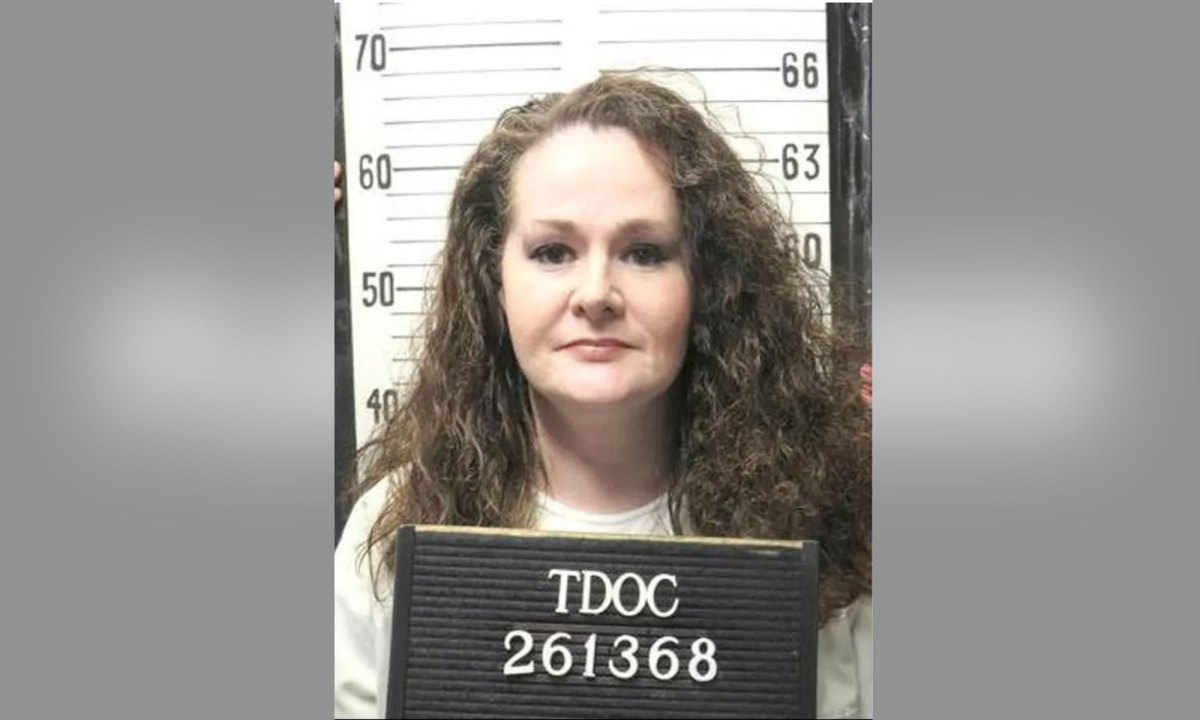


Christa Pike has spent nearly three decades on Tennessee’s death row — and on September 30, 2026, she came within an hour of becoming the first woman killed by the state in more than 200 years before a federal appeals court halted the execution.
Pike, the only woman on Tennessee’s death row, was sentenced in March 1996 for the 1995 murder of 19-year-old Colleen Slemmer, a fellow Job Corps student in Knoxville. She was 18 years old when she committed the crime.
Here is a closer look at how long Pike has been awaiting execution and the sentence that landed her in prison.
Christa Pike Has Spent Nearly 30 Years on Tennessee’s Death Row
Pike was found guilty in March 1996 and sentenced to death that same month, meaning she has been on death row for roughly 30 years. She is one of 42 inmates awaiting execution in Tennessee and the only woman among them.
Her scheduled execution date of September 30, 2026, would have made her the first woman put to death in Tennessee in more than 200 years, according to the Death Penalty Information Center. The organization also notes she was slated to be the only person put to death in the state “for a crime committed at age 18, 19 or 20 in the modern death penalty era.”

Christa Pike’s Execution Was Halted 1 Hour Before It Was Set to Proceed
Just one hour before Pike was scheduled to be executed, a federal appeals court announced its decision to halt the process on the morning of September 30, 2026.
The court wanted to review whether Pike’s allegations of sexual abuse and rape as a child were fully considered before she received her death sentence.
Christa Pike Was Convicted in the 1995 Murder of Colleen Slemmer
Pike was 18 years old in January 1995 when she was accused of murdering Slemmer, a fellow student at the Job Corps Center in Knoxville, according to court filings. Prosecutors said Pike, who was dating a 17-year-old at the Job Corps, viewed Slemmer as a “romantic rival,” USA Today reported.
On January 12, 1995, Pike, her boyfriend Tadaryl Shipp and a friend led Slemmer into a remote area of the University of Tennessee’s agricultural campus. Court records state that Pike slashed Slemmer’s throat, beat her and threw pieces of asphalt at her. Pike also allegedly told her friend she used a meat cleaver to slash Slemmer’s back and carved a pentagram into her forehead and chest.
Investigators said Pike kept a piece of Slemmer’s skull. Before the killing, Pike had allegedly revealed the plan to a friend, then later showed that same friend a piece of Slemmer’s skull, court records say.
Pike and Shipp ultimately admitted to the murder. Pike was convicted of murder and conspiracy to commit murder in March 1996 and sentenced to death the same month.
Christa Pike’s Codefendants Received Lesser Sentences
Shipp, who was 17 at the time of the murder, was sentenced to life in prison with the possibility of parole because he was a minor. He remains in custody after most recently being denied parole in October 2025.

Shadolla Peterson, the friend who accompanied Pike and Shipp, pleaded guilty to being an accessory and was sentenced to serve six years of probation in exchange for her testimony against Pike and Shipp, according to the Death Penalty Information Center.
Christa Pike Has a History of Abuse and Mental Health Struggles
Pike had a difficult childhood and was just 13 years old when she was sexually assaulted by her mother’s boyfriend, according to Mercy for Christa. Children’s Services removed her from her home following the assault, but she returned three months later with minimal follow-up.
Years later, Pike was raped again by a stranger when she was 17. The rape was confirmed with hospital records, though local authorities only minimally investigated the situation.
Pike also developed bipolar disorder and suffered from post-traumatic stress syndrome, which stemmed from the abuse she experienced throughout her childhood. However, she never received appropriate medical treatment or care for her mental health struggles.

In a 2023 letter to The Tennessean, Pike wrote that she has “changed drastically” since the killing.
“Think back to the worst mistake you made as a reckless teenager. Well, mine happened to be huge, unforgettable and ruined countless lives,” Pike wrote to the newspaper. “I was a mentally ill 18 yr. old kid. It took me numerous years to even realize the gravity of what I’d done. Even more to accept how many lives I [affected]. I took the life of someone’s child, sister, friend. It sickens me now to think that someone as loving and compassionate as myself had the ability to commit such a crime.”
Christa Pike’s Recent Legal Battles Over Her Execution Method
Pike’s attorneys have argued against the death sentence in recent years. In a June 2021 motion cited by the Death Penalty Information Center, her attorneys wrote, “Life imprisonment is a proper punishment for Christa, just as it is for the nearly 200 women convicted of first degree murder who did not receive death in Tennessee since 1978.”
In January 2026, Pike filed a lawsuit arguing that Tennessee’s execution method — lethal injection — violates her religious rights, according to the Death Penalty Information Center. In a March 19, 2026, response viewed by USA Today, the state said Pike had not sufficiently argued that her execution would be unconstitutional.
As her execution date approached, Pike asked to be killed by an all-female execution squad rather than by lethal injection. Her lawyers said she is “terrified” of dying a “painful” death by lethal injection and reportedly wanted witnesses to the shooting to include members of Slemmer’s family, according to the New York Post. In August 2026, she also took the state to court and asked to be hanged instead.



Pike’s legal team said lethal injection would be “prolonged and agonizing” because she has a rare blood disorder that could make it difficult to find a vein.
“(Lethal injection administered by men) will increase the likelihood that an 8th Amendment violation will occur,” Pike’s lawyer, Stephen Ferrell, said of the execution method, per the Post. “There is an increased risk of pain and suffering.”
This story was compiled with the help of AI tools and edited by journalists.