UPDATE — 9/04/26, 5:10 p.m. ET:
The judge presiding over Lindsay Clancy‘s nearly six-week murder trial officially declared a mistrial on Friday, September 4, after jurors were unable to reach a unanimous decision and were deadlocked 11-1.
Clancy’s attorney was granted a hail mary opportunity to petition a higher court to put the Judge’s decision on hold — an attempt to force the judge to require the jury to continue deliberating in an effort to avoid a mistrial — but the request was ultimately rejected.
A court hearing has since been scheduled for September 29. Plymouth County District Attorney Timothy Cruz said the prosecution will decide whether to retry the case against Clancy before then. Clancy will remain in custody at Tewksbury Hospital, a state psychiatric facility in Massachusetts, as she awaits to hear the future of her case.
Original story below:
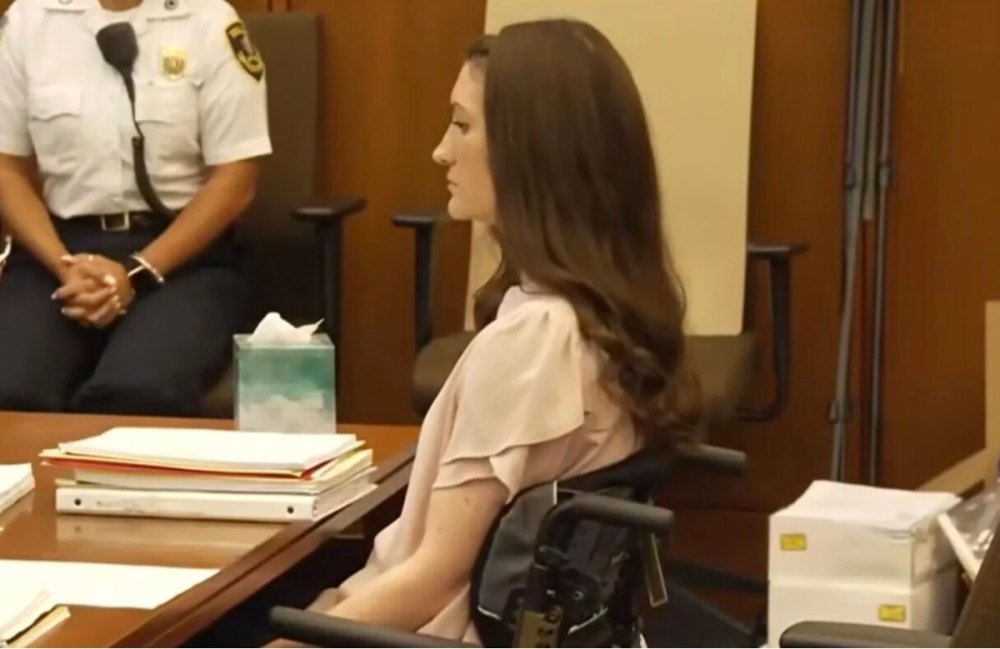
Lindsay Clancy, the Massachusetts mother on trial for the January 2023 killings of her three young children, has been held at a state-run psychiatric facility throughout her pretrial detention and the ongoing court proceedings. The former labor and delivery nurse — who is paralyzed from the waist down after jumping from a second-story window the same night her kids died — has appeared in court in a wheelchair as prosecutors and her defense team spar over whether she is criminally responsible for the deaths.
Here’s everything to know about where Clancy has been staying during her murder trial.
Lindsay Clancy Is Being Held at Tewksbury Hospital
Clancy is currently being held at Tewksbury Hospital, a state-run public psychiatric facility in Massachusetts, where she has remained throughout the pretrial period.
The facility has become her long-term residence following the events of January 24, 2023, when Lindsay strangled her three children — 5-year-old Cora, 3-year-old Dawson and 8-month-old Callan — with exercise bands inside the family’s Duxbury, Massachusetts, home.
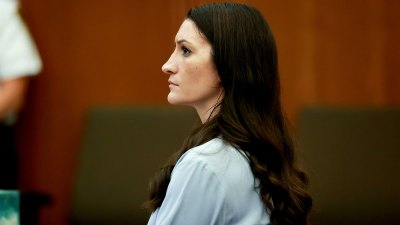
That same night, Clancy jumped from a second-story window of the family’s home. She survived the fall but sustained catastrophic injuries that left her paralyzed from the waist down. Her physical condition has factored into logistical decisions surrounding the case, including her transport to and from court proceedings and her seating arrangement in the courtroom.
How Lindsay Clancy Ended Up at Tewksbury Hospital
After the fall, Clancy was initially treated at South Shore Hospital, but her injuries were quickly deemed too severe for that facility.
Dr. Kelly McDonough, who treated Clancy in the immediate aftermath, told jurors during the high-profile trial that scans showed the defendant had a “thoracic spine injury,” though there was no apparent head injury.
“The decision was made by the team that her injuries were too severe to stay at South Shore Hospital, and the decision was made to transfer her to a tertiary care center,” McDonough testified, per Boston.com.
She was eventually transferred to Tewksbury Hospital, where the combination of her medical needs and psychiatric evaluation could be managed in one setting. She has been held there throughout the pretrial period leading up to her trial, which began on July 27, 2026.
Lindsay Clancy’s Wheelchair and Physical Condition in Court
Clancy has appeared in a wheelchair at each hearing and throughout the trial itself. The two-story fall left her requiring long-term medical care and mobility assistance, and doctors have indicated her paralysis is permanent.
She was largely silent in court until August 4, 2026, when she spoke publicly for the first time during her trial. Answering questions from Massachusetts Superior Court Judge William Sullivan on the sixth day of proceedings, Clancy stipulated certain facts in the case.
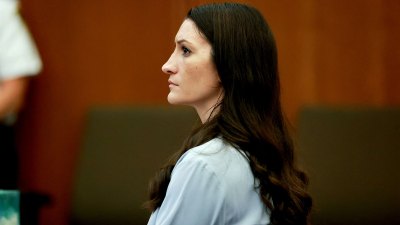
“Yes, your honor,” she said, according to a livestream by the Associated Press, when asked whether she could stipulate the facts.
Defense attorney Kevin Reddington said the stipulation involves facts related to the chain of custody of DNA evidence. By agreeing to the stipulation, Clancy acknowledged she would not be able to contest certain facts moving forward — a decision that meant prosecutors no longer needed to call certain witnesses.
Lindsay Clancy’s Defense Cites Postpartum Psychosis
While Clancy has not denied killing her children, she has pleaded not guilty to three counts of first-degree murder. Her defense strategy centers on an insanity plea, with Reddington arguing she was suffering from postpartum psychosis and was overmedicated at the time of the killings.
Reddington told the court that his client had struggled with depression for a long time and voluntarily committed herself to a local psychiatric hospital less than a month before her children died. Her doctors took her on and off medications to treat the depression, which Reddington said only worsened her symptoms.
The defense has said Clancy was prescribed 15 medications in the months leading up to the tragedy. Reddington argued that jurors should hear why Lindsay and her then-husband, Patrick Clancy, “would go to consult with doctors because of depression, because of the life that she was living, which was one of horrific misery because of medications.”
Lindsay Clancy Repeatedly Requested Medication Changes
Psychiatric nurse practitioner Rebecca Jollotta testified in court on August 11, 2026, that Lindsay asked several times to change her medications during her treatment in late 2022.
Jollotta, who works at South Shore Hospital in the perinatal behavioral health program, said she created a plan to treat Lindsay’s anxiety, depression and insomnia beginning in late November 2022 and ending the following month.
Lindsay repeatedly sought changes to her medications and claimed that they caused her to have intrusive thoughts, insomnia and numbness. She also expressed concerns about becoming dependent on the benzodiazepine Ativan she had been prescribed.
“It’s just a very scary stressful time for me, and starting new meds with side effects is very scary to me,” Lindsay previously wrote in a note amid the medications.
Jollotta responded by explaining it would take weeks for the medication to be effective and told Lindsay she believed her problems were more likely postpartum depression instead of side effects from the drugs.
“All of this sounds like postpartum depression,” Jollotta wrote in a note during the time she worked with Lindsay.
Jollotta also recalled an appointment on December 6, 2022, in which Lindsay said she first experienced issues with insomnia when she took Zoloft and was unable to sleep for 48 hours straight. Jollotta said insomnia was an “unusual” reaction to Zoloft and that it may have been a sign suggesting Lindsay could have underlying bipolar disorder.
The last time Jollotta treated Lindsay was on December 21, 2022 — approximately one month before the killings.
What’s Next for Lindsay Clancy?
Prosecutors continue to maintain that Lindsay carefully staged the moments before the killings, sending Patrick out of the house so she would be alone with the children. The defense counters that her actions were the tragic result of untreated postpartum illness. Her paralysis and use of a wheelchair are expected to remain permanent.
In April 2026, Reddington filed a motion revealing that Lindsay “is offering to admit that she killed the children” if the judge agreed to a bifurcated trial format, according to WCVB. Judge Sullivan denied the request, ruling the matter could be handled in a single trial.



If Lindsay is found not guilty by reason of insanity, she would likely be committed to a psychiatric facility rather than sentenced to prison — meaning her long-term residence could remain at a state-run hospital similar to Tewksbury. A first-degree murder conviction in Massachusetts carries a mandatory sentence of life in prison without the possibility of parole.
If you or someone you know is pregnant or just had a baby and is in crisis, help is available. Call or text the National Maternal Mental Health Hotline for free, confidential support 24/7 in English and Spanish at 1-833-TLC-MAMA (1-833-852-6262).
This story was compiled with the help of AI tools and edited by journalists.