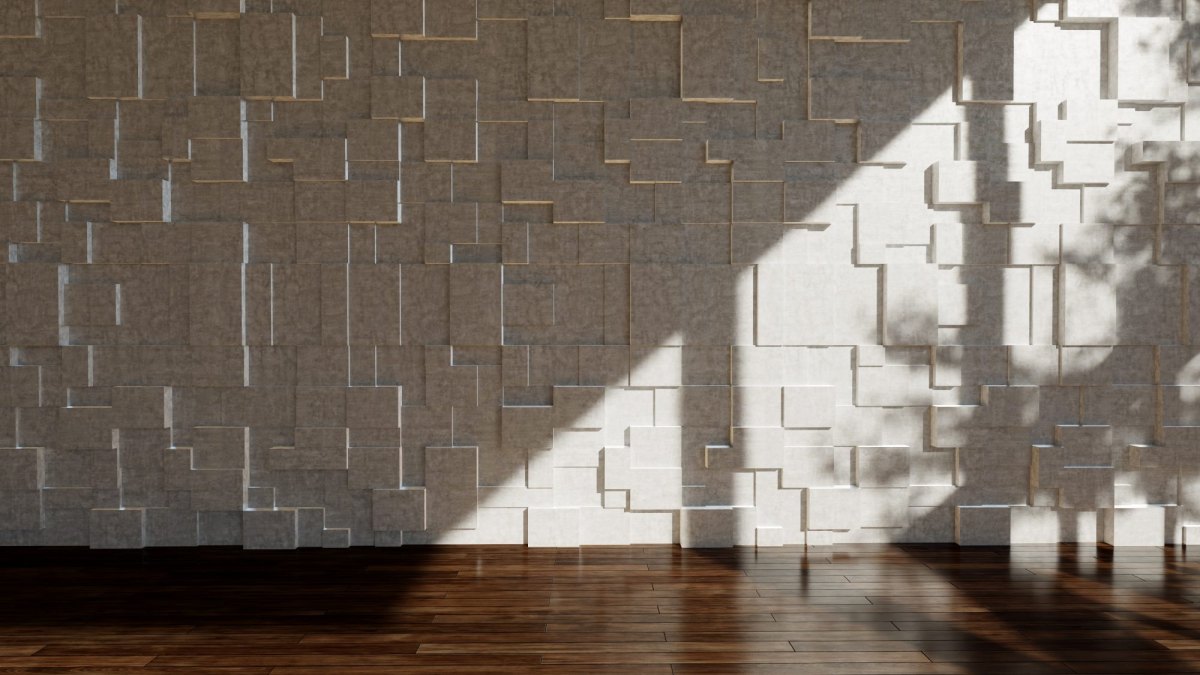


Paint and wallpaper can only do so much. If you’ve been staring at a flat accent wall wishing it had more depth, you’re in good company. Homeowners in 2026 are reaching for 3D wall panels as part of a broader shift toward texture, warmth and dimensional surfaces.
Drew and Jonathan Scott recently told Homes & Gardens that people are moving past the usual options in search of something more architectural. Jonathan said homeowners are “leaning back more into adding personality and warmth into their spaces.” Drew added that wood panels for walls offer “rich warmth and interest, plus texture you can really see and feel.”
That interest has turned into a booming category. Faux brick panels, stone wall panels, geometric PVC designs, acoustic slat systems: you can now find 3D wall paneling at Lowe’s, Home Depot, Wayfair, Amazon and even TikTok Shop.
Most shoppers start by browsing patterns. But the pattern is actually the least important decision you’ll make. What the panel is made from, how it attaches and what happens when you want it off are the choices that determine whether the project holds up or turns into a headache.
What 3D Wall Panels Are Made From and Why It Matters
Every panel falls into one of a few material families, and the differences go well beyond appearance.
Foam and lightweight plastic panels are the easiest to cut and install. They’re the go-to for brick wall panels, stone wall panels and geometric patterns. They’re budget-friendly, but they feel less substantial up close.
PVC panels are more durable and moisture-resistant, which makes them a better fit for kitchens or bathrooms. You’ll see them in slat, wood-look and geometric designs.
MDF, composite and wood-veneer panels are the heaviest option. They look the most architectural and are popular for slat walls and more permanent installations.
Acoustic slat panels pair wood or composite slats with felt backing. They’re marketed for both design and sound control, which makes them a favorite in home offices and media rooms.
Those material differences matter because they dictate what comes next: how the panel gets on your wall and how hard it is to take off.
How Installation Methods Compare for 3D Wall Paneling
This is where the real tradeoffs show up. A lighter foam panel and a heavy MDF slat might look similar in a listing photo, but they call for completely different installation approaches.
Peel and stick wall panels are the fastest option. Measure, cut, peel and press. No drilling, no carpentry.
Construction adhesive creates a stronger bond, which suits heavier panels and high-traffic areas. But it’s essentially permanent.
Screws or mechanical fasteners leave holes. The upside is that the damage is localized and predictable, which often makes them the smartest choice for MDF or wood-veneer panels.
Removable mounting strips or hook-and-loop systems can work for lighter foam or PVC panels, as long as you check weight limits against the manufacturer’s guidance.
So a budget-conscious shopper comparing two similar-looking panels might actually be comparing two very different projects. That’s why the material question has to come before the installation question, and both have to come before checkout.
Are Peel and Stick 3D Wall Panels Really That Simple?
Here’s where the most popular option deserves the most scrutiny. Peel and stick 3D wall panels are appealing because installation feels almost effortless. But easy on does not mean easy off.
K&B Panels describes its 3D wall panels as semi-permanent and warns that removal “may require some wall repair depending on the surface.”
EnjoyTheWall echoes that. Peel-and-stick foam panels are usually among the easiest to remove, but adhesive residue or minor paint damage can still happen depending on the surface and how long the panels stay up. EnjoyTheWall goes further, noting that most premium systems are designed as long-term architectural features, not temporary decorations. If future removal matters, a modular or mechanically fastened system is the safer route.
That might sound like screws are worse because they leave holes. But the opposite is often true. Luxewall says its slat panels install with a few screws and can be removed later, leaving small holes that are easy to patch. Think hanging artwork or shelving.
The takeaway isn’t that peel-and-stick panels are bad. It’s that the realistic standard for any installation method is “reversible with minor repair,” not “completely damage-free.” Once you accept that, you can pick the method that actually fits your wall, your panels and your comfort level.


What to Check Before Installing 3D Wall Panels on an Accent Wall
All of the above leads to one final step: slowing down before you scale up.
- Test one panel first. Stick it somewhere inconspicuous and leave it long enough to see how the adhesive behaves before covering an entire accent wall.
- Check whether the manufacturer approves the product for textured walls, recently painted surfaces or humid rooms. The panel that works in a living room may not work in a bathroom.
- Think about removal before installation. Will it peel off cleanly? Need heat? Leave residue? Require patching or repainting?
- Compare cost by square foot, not package price. Foam, PVC and real wood or composite panels can cover very different areas for similar-looking kits.
- Keep extra panels on hand. Matching a discontinued finish later can be difficult.
And if acoustic performance is part of the reason you’re buying, check whether the manufacturer publishes actual sound-absorption specifications. A generic “acoustic” label on its own doesn’t tell you much.
3D wall panels can transform an accent wall on any DIY budget. But the best results don’t start with the pattern you like most. They start with understanding what’s behind it.