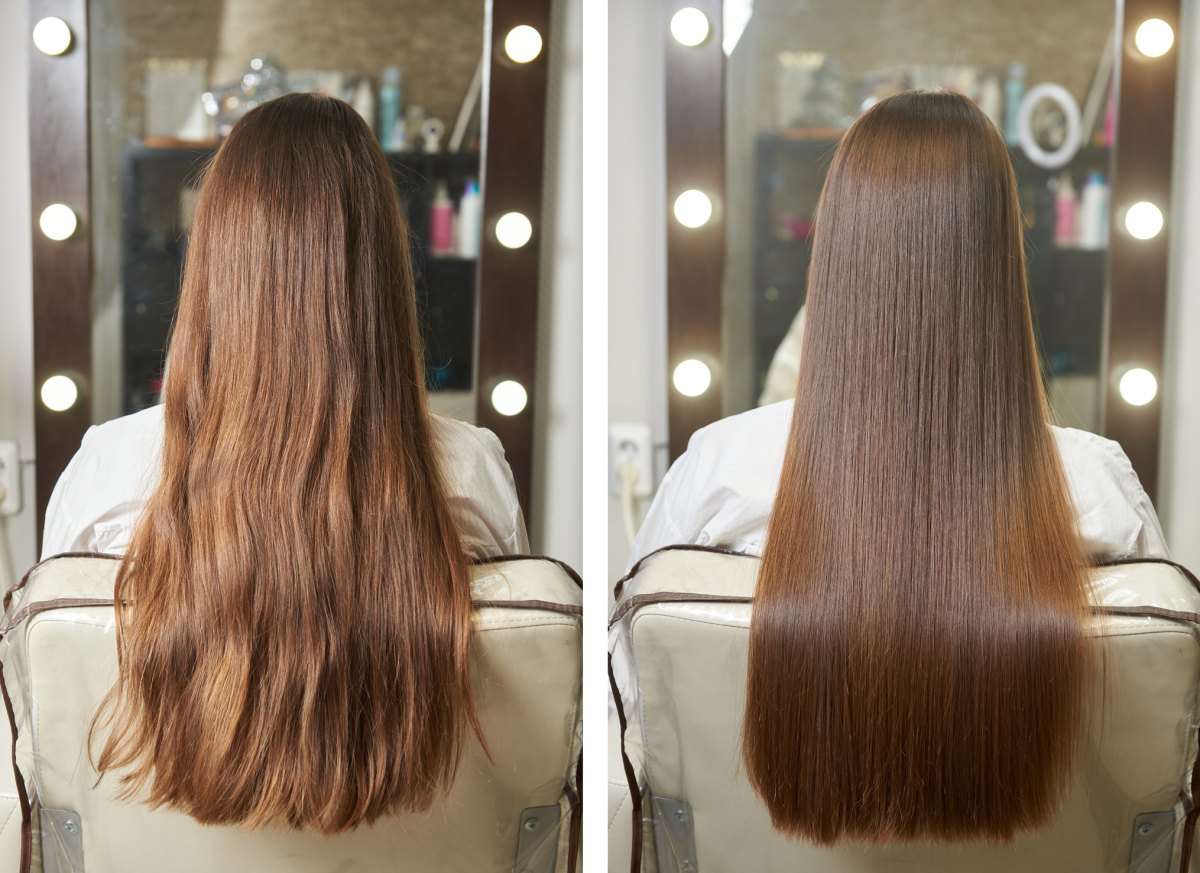


If you’ve spent years working through blow-dries and flat iron passes to keep curly, wavy or frizzy hair under control, Japanese hair straightening offers a different path. The service chemically restructures each strand so hair stays pin-straight until it grows out, with no daily routine required.
The tradeoffs are real. The treatment typically runs $400 to $800, cannot be reversed and may not be a fit for hair that has been bleached, dyed or weakened by earlier chemical services. For anyone considering a consultation, here’s what the signal looks like and what to ask before booking.
What Japanese Hair Straightening Actually Does to Your Hair
Also called thermal reconditioning, the service combines a chemical solution with heat to break and reform the disulfide bonds inside each strand, permanently changing the hair’s structure until new growth comes in, board-certified dermatologist Dr. Hadley King told Vogue. Unlike a surface smoothing treatment, this one rewrites the hair’s internal architecture, and a wash cycle will not undo it.
“Japanese hair straightening is a chemical process that completely restructures the hair bonds that takes any textures such as curly, wavy, and frizzy hair to permanent pin-straight flat hair. It is irreversible and will stay straight until the hair is grown out,” Michelle Hong, founder and creative director of NYC The Team, told Byrdie.
How It Compares to Keratin Treatments and Brazilian Blowouts
If you’ve been researching smoothing services, the three options often get grouped together, but they are not interchangeable. Keratin and Brazilian treatments are semipermanent coatings that tame frizz, add shine and wash out over a few months, and treated hair can still hold waves or curls. Japanese straightening is a full chemical process that permanently flattens the hair, with no gradual fade. Picking between them is less a style question than a commitment question.
“They’re all smoothing treatments, but they work very differently. Japanese straightening permanently changes the structure of the hair, and it’s a full chemical process, not a coating. Brazilian blowouts and keratin treatments are semipermanent. They smooth frizz and add shine, but they wash out over time and don’t make the hair pin straight,” celebrity hairstylist Joseph Maine told Vogue.
Chemistry is another point of contrast. Keratin and Brazilian treatments have been linked to formaldehyde use, which has been associated with dermatitis and uterine cancer. Japanese straightening typically does not use formaldehyde.
The Benefits of Permanently Sleek, Straight hair
For anyone who has spent years fighting humidity, frizz and the clock, the appeal is clear. The treatment holds until treated hair grows out, which is a different proposition than paying for a blowout every few days. Daily styling time drops sharply, and the hair resists weather that would usually trigger a full reset. Stylists and clients cite several specific advantages when the service is done well on the right hair type.
Reported benefits include
- Permanently straight, sleek hair with no daily styling required
- Strong resistance to humidity and frizz
- Faster, easier blow-drying on treated strands
- Lasting shine
- No formaldehyde, unlike some keratin treatments

The Risks, Damage and Who Should Skip It
The chemistry that makes results stick is also what makes the service risky. Treated hair cannot be reversed to its natural texture, meaning you are committed until the straightened length grows out and gets cut off. The process can weaken or dry the hair, particularly if strands are already fragile from coloring, bleaching or previous chemical treatments. Styling options also narrow once the treatment is done, because treated hair will no longer hold waves or curls.
Stylists urge clients to be specific about the look they want before any chemicals touch the hair. “If you don’t want it stick-straight, definitely express that to your stylist, as it can make that hair extremely flat,” Kim Gueldner, celebrity hairstylist and founder of Voel Hair Studio, told Byrdie.
Choosing the right technician matters as much as choosing the service. “Since there are chemicals involved in this style, if done wrong, there can be permanent damage especially if working on dyed hair, previously damaged hair, or just an incompatible hair type. To avoid these results, I strongly recommend doing a test strand and doing your research on going to the right stylist. If you get the treatment continually, it can break weak or broken hair over the years,” Jerome Lordet, owner of Jerome Lordet Salon NYC, told Real Simple.


Very fine hair and hair that has been heavily bleached or lightened are generally considered poor candidates. Results may also vary across different hair textures, including for members of the Black community, which is why consulting a specialist familiar with your hair type is strongly recommended.
Cost, Upkeep and What to Ask Before Booking
Pricing runs $400 to $800, though it varies by salon, hair length and density. New growth typically starts showing around six months after the appointment, and root touch-ups are generally recommended every eight to 10 months to keep the line between treated and untreated hair from becoming obvious.
Aftercare is strict. The chemical change is permanent, but the health of treated strands depends on how carefully they are maintained in the weeks and months that follow. If you’re considering the service, book a consultation with a licensed, experienced stylist who can evaluate your hair’s history and current condition. A test strand, as Lordet recommended, is a reasonable ask and often the difference between a result you love and damage you cannot undo.