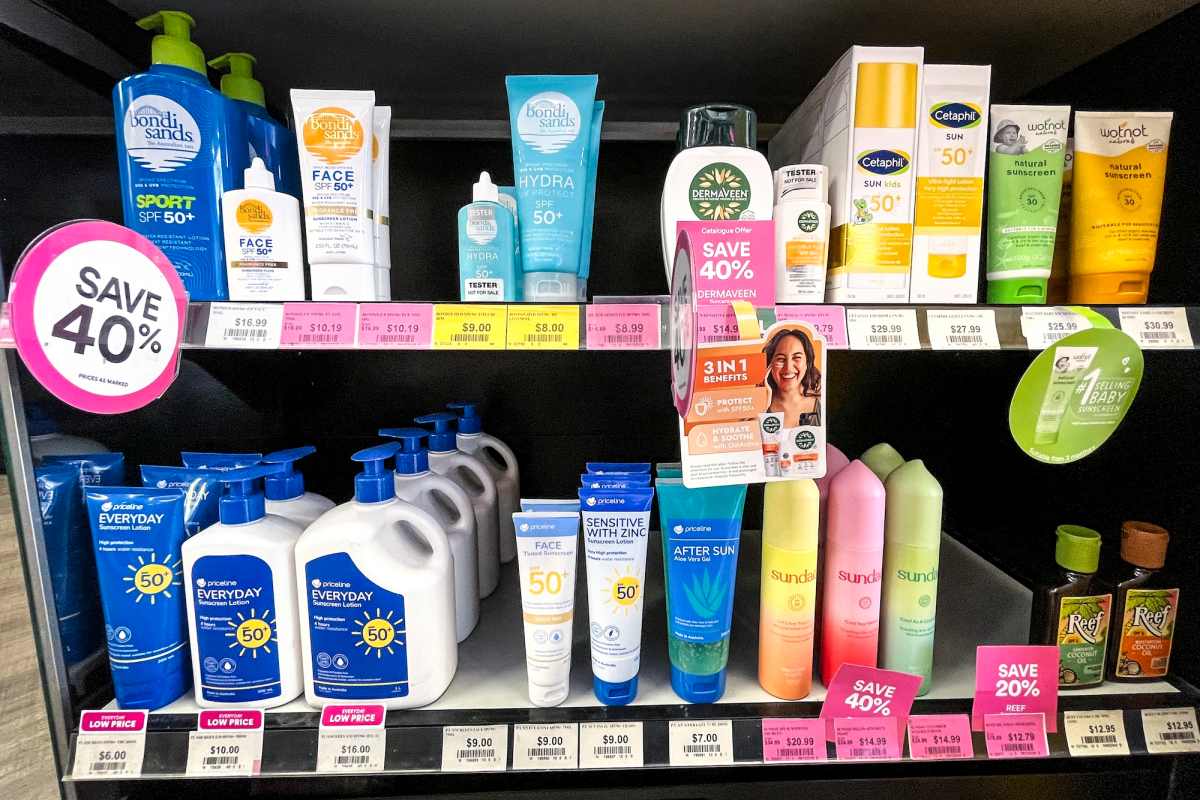


Sunscreen aisles are stacked with SPF numbers ranging from 15 to 100, and the higher tiers usually carry higher price tags. Whether those extra digits actually deliver better protection is a question dermatologists field every summer.
What Does SPF Actually Mean on a Sunscreen Bottle?
SPF, short for sun protection factor, measures how well a sunscreen blocks UVB rays, the type of ultraviolet radiation most responsible for sunburn.
According to Dr. Adewole Adamson, a dermatologist and internal medicine professor at the University of Texas at Austin, SPF is a ratio comparing how much UV radiation would burn skin with sunscreen versus without it. Higher numbers block more UVB, but not in a linear way. SPF 25 blocks about 96 percent of UV radiation, while SPF 50 blocks roughly 98 percent. SPF does not measure UVA protection, the deeper-penetrating rays that drive tanning and long-term skin damage, so shoppers should look for a “broad spectrum” label to cover both. The FDA banned the term “sunblock” in 2011 because no product can stop 100 percent of UVB rays.
Does a Higher SPF Sunscreen Actually Work Better?
Yes, higher SPF offers slightly more UVB protection, but the bigger real-world benefit is a wider margin for error when people apply too little sunscreen, which most do.
SPF 15 blocks 93 percent of UVB radiation, SPF 30 blocks 97 percent, SPF 50 blocks 98 percent and SPF 100 blocks 99 percent, according to Dr. Marisa Garshick, a New York dermatologist and clinical dermatology professor at New York Presbyterian-Weill Cornell Medicine, via PolitiFact. The added benefit shrinks as numbers climb, but the buffer matters when people skimp. “We want to have the number be high enough that even if you’re using less than the recommended amount, you’re still going to have significant protection,” Dr. Heather Rogers, a board-certified dermatologist and founder of Modern Dermatology in Seattle, told The Guardian. Apply SPF 30 too lightly and you may only be getting coverage equivalent to SPF 15.
Does SPF 100 Block 100 Percent of UV Rays?
No. SPF 100 filters about 99 percent of UVB rays, only a sliver more than SPF 50, and no sunscreen blocks 100 percent of UV radiation.


The jump from SPF 50 to SPF 100 sounds dramatic, but the added protection is minimal, and higher-SPF bottles often cost more, per UC Davis Health. The bigger risk is a false sense of security. “Someone wearing SPF 100 may think they can stay in the sun significantly longer without reapplying, which is not the case,” Dr. Garshick said. Skin cancer remains the most common cancer in the United States, and more than 8,510 Americans are projected to die from melanoma in 2026, according to The Skin Cancer Foundation.
How Much SPF Do Dermatologists Recommend and How Often Should You Reapply?
Dermatologists recommend using at least SPF 30 broad-spectrum sunscreen and reapplying every two hours, or immediately after swimming or heavy sweating.
Choosing a higher SPF gives you a useful buffer because most people apply far less sunscreen than the amount used in laboratory testing. “Lower SPF sunscreens may feel lighter or be easier to wear, but they provide less protection. The higher the number, the more margin of error you may have if you under apply,” Dr. Adamson said. Broad-spectrum matters because UVA rays, with wavelengths of 320 to 400 nanometers, penetrate deeper than UVB and contribute to long-term damage. Tanning beds emit UVA only, part of what makes them dangerous, because there is no UVB burn to signal the skin has had enough. No SPF, however high, replaces reapplication.