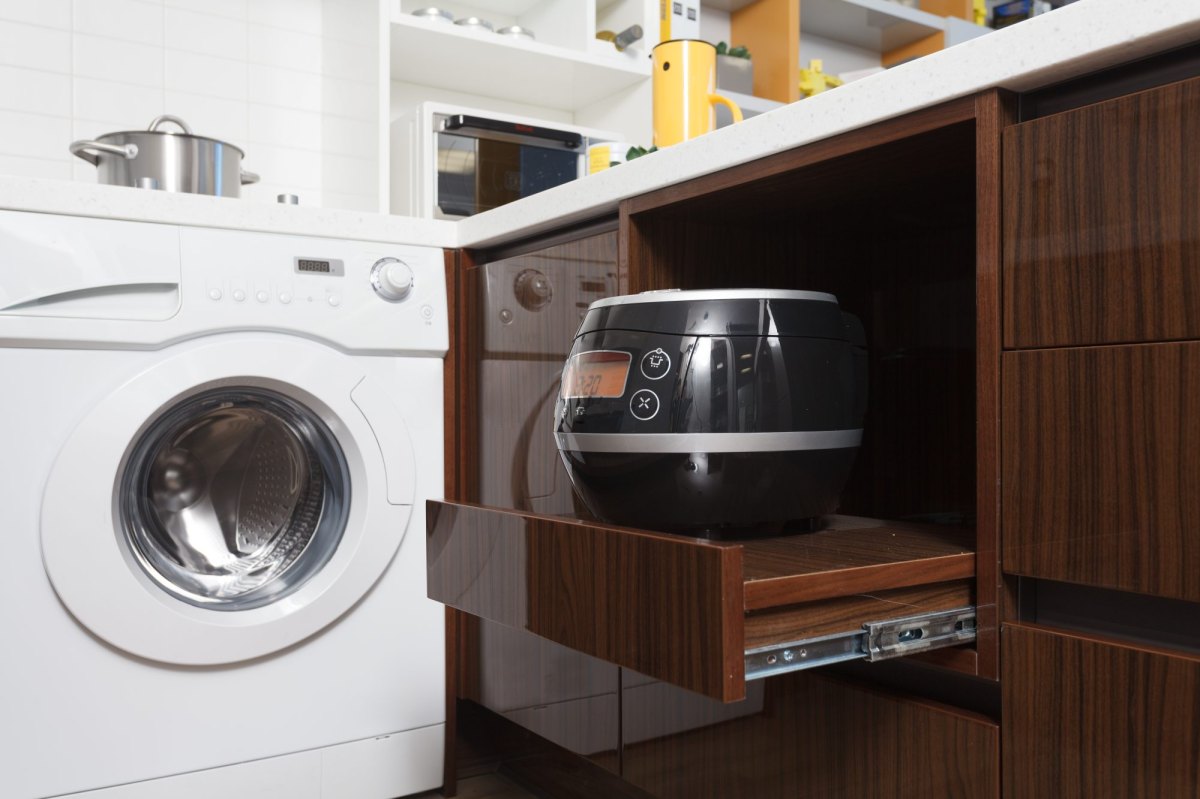

There’s something so satisfying about closing a cabinet door and watching your countertop chaos disappear. That’s the magic of the appliance garage, the not-so-secret weapon behind so many of those calm, clutter-free kitchens filling your social feeds.
If you’re unfamiliar, an appliance garage is basically a cabinet or enclosed nook on the counter that hides small appliances like coffee makers, toasters, blenders and mixers when you’re not using them. The idea has been around for decades, but open floor plans have given it a major comeback now that every crumb and cord is on display.
Designer Jessica Risko Smith said it best in an interview with House Beautiful: “An appliance garage doesn’t eliminate the working kitchen; it simply gives you the ability to edit what you see.”
Of course, a pretty kitchen is only half the story. Once you start tucking hot appliances behind doors and adding outlets inside the cabinet, safety matters just as much as style. Luckily, a few smart habits can help you get the clean look without creating trouble behind closed doors.
Appliance Garage Ventilation: How to Manage Heat and Steam
Here’s the thing about some of your favorite countertop helpers: they get hot, and some of them get steamy. Running them inside a closed space can trap that heat and moisture where it doesn’t belong.
That’s especially true for toaster ovens, air fryers, kettles, coffee makers and multi-cookers, which all need breathing room to work safely.
Breville, for example, warns in the manual for one of its coffee makers that it “should not be placed in a cabinet when in use” and should be allowed to cool completely before being moved.
Likewise, Cosori recommends keeping its air fryer away from cupboards and other surfaces that can be damaged by steam, and to leave about 5 inches of clearance behind and above the appliance.
If your appliance heats up or lets off steam, these habits can keep things safer:
- Slide it forward onto the open counter before you switch it on.
- Leave the garage doors wide open whenever something inside is running.
- Stick to the clearance guidelines in your appliance’s manual.
- Point steam vents away from shelves and cabinetry.
- Give everything time to cool off before you push it back and shut the doors.
- Add a pullout tray if you want an appliance to stay stored inside but slide into an open spot when it’s in use.
An Outlet Inside Your Kitchen Appliance Cabinet Adds Another Layer of Risk
An outlet inside the cabinet is a game changer for convenience, since cords stay hidden and your appliances can stay plugged in and ready to go. But leaving heat-producing appliances powered up behind closed doors is a real hazard.
The U.S. Consumer Product Safety Commission recommends unplugging countertop appliances when they’re not in use, since unattended plugged-in appliances can pose a fire risk.
The National Fire Protection Association adds that heat-producing appliances like toasters, coffee makers and microwaves draw a lot of electricity. It recommends plugging only one of them into each outlet to keep wiring from overheating.
If your kitchen appliance garage has a built-in outlet, keep these tips in mind:
- Unplug appliances when you’re done with them, especially anything that heats up.
- Avoid doubling up high-powered appliances on the same outlet.
- Make sure your countertop outlets have GFCI protection.
- Skip the extension cords and power strips as a long-term fix inside the cabinet.
- Stop using any outlet that feels unusually warm or looks discolored, and call a qualified electrician.
- Look into a safety outlet that cuts power automatically when the door closes. Docking Drawer, for example, sells ETL-listed systems that shut off power when the cabinet closes and turn it back on when the door opens.

The Safest Appliance Garage Is Designed Around How You Use It
An appliance garage can make your kitchen feel instantly calmer, but the safest setup starts with knowing exactly what’s going inside it.


A blender or stand mixer is pretty low-maintenance to store and use. An air fryer, toaster oven or coffee maker, on the other hand, needs a little more thought when it comes to heat, steam, airflow and power.
The smartest move is to follow each manufacturer’s guidelines, give hot appliances plenty of room to breathe and make sure any built-in outlet is designed with safety in mind.
After all, an appliance garage should hide the clutter, not the risks.