
Olympic medalist Toshiaki Fushimi died on Sunday, July 19, one day after being involved in a crash during a race in Japan. He was 50.
Fushimi crashed during the Matsusaka Keirin tournament, with footage shared via social media appearing to show him attempting to avoid another collision ahead of him. Off camera, he reportedly struck a barrier. He sustained fractures to his cervical vertebrae and skull, according to the Independent.
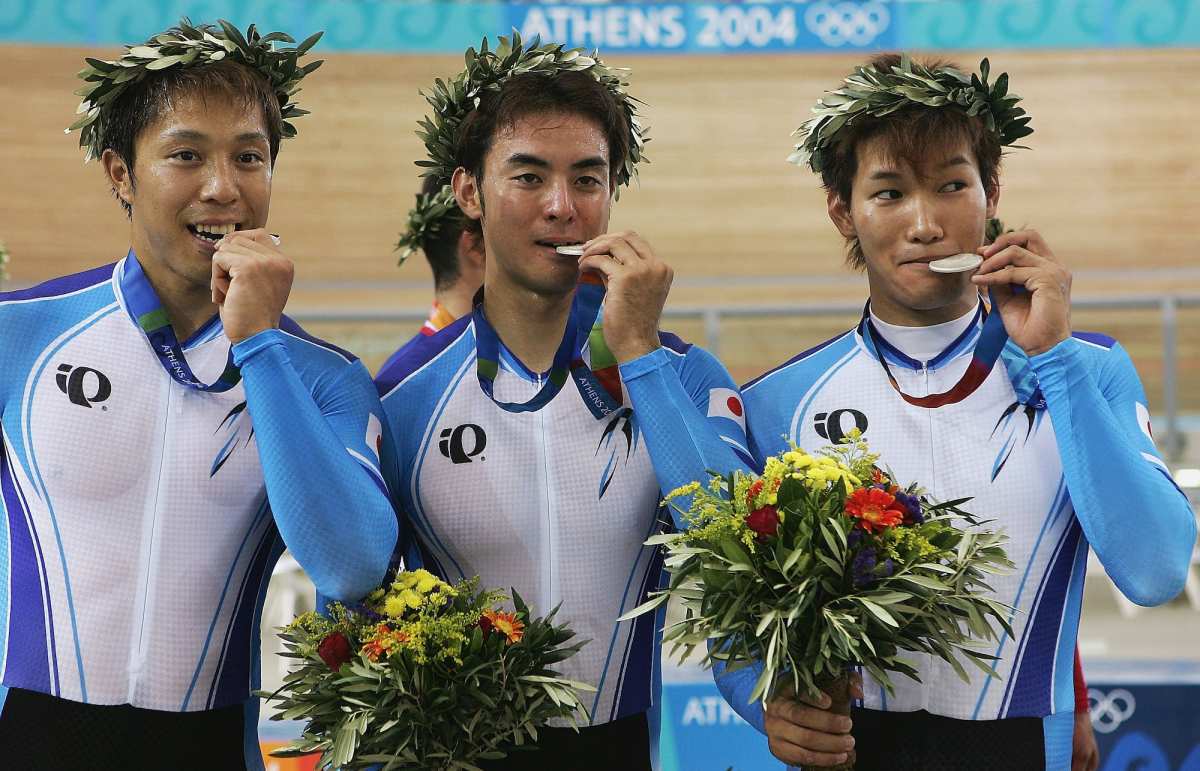
Fushimi, who began competing professionally in 1995, joined Tomohiro Nagatsuka and Masaki Inoue on the cycling team that won the silver medal for the team sprint at the 2004 Athens Summer Olympics. He won 619 races in his career as a keirin competitor, including five G1 titles and Keirin Grand Prix wins in 2001 and 2007.
He returned to racing in May 2026 after a four-year hiatus.
“It is truly heartbreaking that he lost his life in an accident during a race,” chairman of the Japan Keirin Association, Hiroshi Kido, told The Independent. “We will reconfirm our safety measures and thoroughly ensure fair and safe races.”
Keirin is a form of cycling in which racers follow a pacer who gradually increases its speed as the competition goes on. Near the end, the pacer leaves the track, allowing the competitors to sprint to the finish.
Since news broke of Fushimi’s death, his fellow cyclists — including his rivals — have paid their respects online.
“R.I.P. Fushimi San 🙏,” former Malaysian cyclist Josiah Ng Onn Lam wrote via instagram. “Toshiaki Fushimi wasn’t just a competitor. He was one of the best keirin riders Japan has ever produced. Grand Prix winner. Olympic Silver Medalist. A true professional on the track.”

He continued, “We raced against each other for years. That kind of rivalry builds a respect that doesn’t fade. Devastated to hear he lost his life doing what he loved. My thoughts are with his family and the entire keirin community in Japan. Rest in peace, champion.”



Yudai Nitta, who competed for Japan at the 2012 Summer Olympics, said that he viewed Fushimi as a mentor.
“He was the one who taught me what it means to be able to participate in the Olympics,” he said in a statement, according to Wide Open Country. “He also taught me how to behave when competing as a keirin racer.”
Nitta, 40, added, “Fushimi was someone who always sought results. Those of us who are left behind want to respond by producing results. I think that would make him happy.”