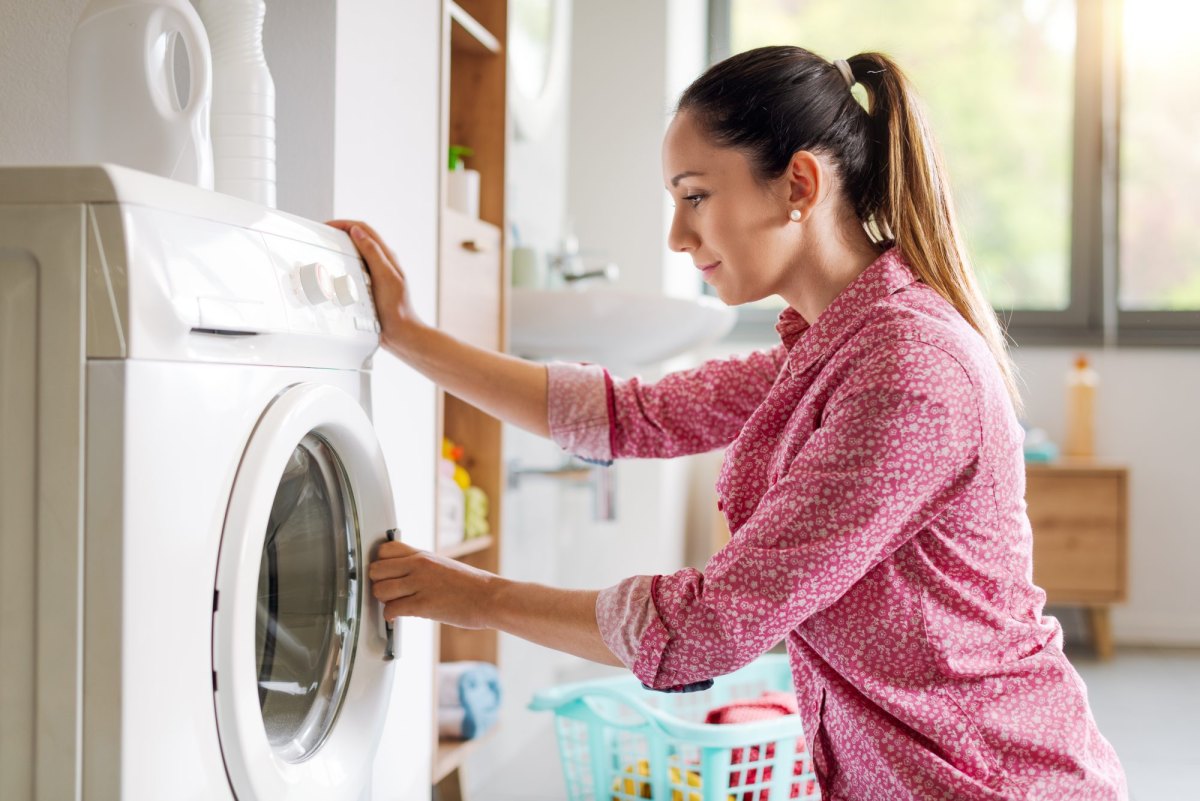


If a sweater still looks and smells fine after one wear, does putting it through a full wash cycle actually do anything useful? For a lot of Americans, the answer is no.
The average family washes about 300 loads of laundry per year, according to ENERGY STAR. But not all of those loads are justified. Some clothes end up in the hamper out of habit, not because they’re dirty. That extra washing shortens the life of clothing while adding to water and energy use.
Here’s how often to do laundry based on what you’re actually wearing, why over-washing matters and what cutting just one load per week can save.
How Many Loads of Laundry Americans Are Actually Doing
In the American Cleaning Institute’s 2026 survey of 1,000 U.S. adults, 43 percent said their household does one to three loads per week. Half said they do four or more.
That doesn’t mean those loads are all unnecessary. Towels, bedding, underwear, workout gear and heavily soiled clothing genuinely need regular washing.
But other pieces often land in the hamper after a single wear even when they show no sweat, stains or odor. A blazer worn to dinner. Jeans worn for a few hours on a weekend. A cardigan layered over a T-shirt.
The question isn’t whether to do laundry. It’s whether every item in every load actually needed to be there.

Why Your Laundry Schedule Might Be Costing You More Than You Think
Three forces explain why the way most people approach laundry deserves a closer look.
Over-washing wears clothes out faster. Washing exposes fabric to water, detergent, agitation and friction. Drying adds heat and more tumbling. ENERGY STAR notes that some washer designs can be rough on clothing.
Electrolux laboratory research found that shorter cycles and lower temperatures could extend garment life by more than 50 percent compared with harsher conditions.
“A simple rule is to wash like items together: towels with towels, blue jeans with blue jeans, non-blue jeans with non-blue jeans, and underwear with underwear. Similar colors, similar fabrics.”
— Rich Handel, Laundry Expert, Consumer Reports
Handel warns that mixing heavy fabrics like denim with delicate garments increases friction and degrades the softer fabric faster.
Most people don’t know how often they should wash their clothes. There’s no universal wear count, but general guidelines exist. Underwear and socks should be washed after every wear. T-shirts, tank tops and activewear the same.
Pajamas can go roughly three to four wears depending on sweating, according to Consumer Reports. Bras last about two to three wears with minimal sweating, per the Cleveland Clinic. Levi’s recommends washing jeans after about 10 wears to preserve fit, color and lifespan.
Sweaters, jackets and structured outer layers often benefit more from airing, spot cleaning or steaming between washes.
Consumers are open to changing but need a reason. In Electrolux’s 2025 Truth About Laundry report, 38 percent of consumers said they would wear clothes longer between washes if it helped clothing last. But only 25 percent believed washing had a major effect on lifespan.
The willingness is there. The awareness gap is what’s missing.
Laundry Tips That Save Water, Energy and the Life of Your Clothes
The math on cutting back is surprisingly clear. Skipping one unnecessary load per week means 52 fewer loads per year. That’s a 17 percent reduction from the typical 300-load annual total.
The water savings add up fast. A full-size ENERGY STAR washer uses about 14 gallons per load. A standard washer uses about 20. Over 52 avoided loads, that’s roughly 728 to 1,040 gallons saved per year. For anyone looking for how to reduce water usage at home, fewer unnecessary loads is one of the simplest places to start.
Energy savings follow. ENERGY STAR says water heating accounts for roughly 90 percent of the energy a clothes washer uses. Eliminating warm or hot wash cycles cuts the energy needed to heat that water. If those loads would also have run through a dryer, the savings increase further.


Practical ways to stretch the time between washes. These laundry tips target lightly worn clothing that isn’t actually dirty.
- Air the garment out after wearing instead of tossing it straight in the hamper.
- Spot-clean a small stain rather than washing the entire item.
- Steam clothing to release wrinkles and freshen it.
- Brush lint, hair and surface debris from coats, wool and structured pieces.
- Wear an undershirt beneath sweaters or button-downs to reduce direct contact with sweat.
- Use a between-wear refresher spray on garments that don’t need a full cycle.
None of this replaces washing underwear, socks, sweaty workout gear, stained items or anything exposed to illness.
The goal is not to do as little laundry as possible. It’s to stop treating every wear as the same kind of dirty. If one lightly worn outfit gets aired or steamed instead of washed, that single change can save hundreds of gallons of water a year while putting your clothes through 52 fewer cycles.
THREE SIGNALS TO WATCH
- Updated ENERGY STAR washer efficiency standards. Watch for the next round of efficiency benchmarks. Stricter standards could push manufacturers toward gentler, lower-water cycles that reduce the cost of every load.
- Wear-count guidance from more major brands. Levi’s already publishes wash recommendations. Watch for other clothing brands to follow with specific guidance on how many wears their fabrics can handle between washes.
- Growth in between-wash garment care products. Refresher sprays, steamers and dry wash products are a growing category. Watch for mainstream retailers to expand shelf space as consumer interest in washing less picks up.