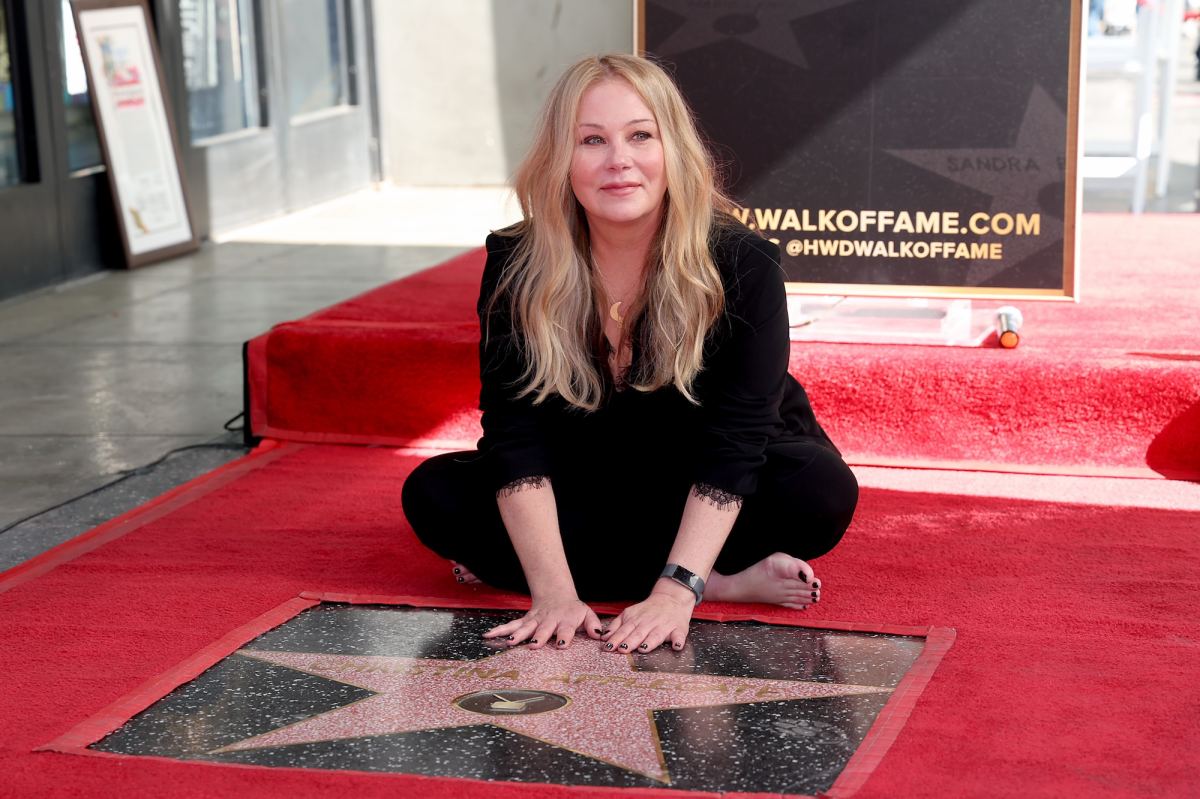

Christina Applegate is breaking down her reaction to learning she had been misdiagnosed with multiple sclerosis.
“I was, like, not happy at all. Everybody else was so happy,” Applegate, 54, said on the Tuesday, October 20, episode of her and Jamie Lynn Sigler’s “MeSsy” podcast. “You don’t get misdiagnosed and then all of the sudden I’m better. I haven’t gotten better, Jamie. If anything, I’ve gotten worse in some ways.”
She continued, “So I’m back at square one that I don’t know what’s going on with me. And that’s going to be an online investigation that my doctors are going to get into just to find out what has been going on since 2021. Why did this happen?”
Applegate went public with her MS diagnosis in 2021 and has since been candid about navigating the ups and downs of her health battle. In a separate episode released on Tuesday, Applegate and Sigler, 45, were joined by Dr. Marwa Kaisey, an associate professor with the Cedars-Sinai Medical Center department of neurology, to discuss MS misdiagnoses.

“When I was diagnosed with MS, of course, I’ve gone through great depression because of it. I lost everything,” Applegate said, while becoming emotional. “I lost my job. I lost — I’m sorry. What do you say to someone who’s been living with this for six years — God, I’m so sorry, I get really emotional because it stopped my life. I still have to use wheelchairs when I go to the doctor’s offices. I can’t walk from the car to the room. I mean, I’m still in this.”
She continued, “Nothing magical happened when she said, ‘You don’t have MS.’ Nothing magical happened. So what do you say to someone like that? To someone who has kind of lost their abilities. And here we are, we don’t know. I guess I felt comfort in having a name. I felt comfort in having an answer and a community.”
Applegate explained that she still feels like “a part” of the MS community because she’s a “big, big lover” of her friends and others who are navigating the autoimmune condition.



“I know what your struggles are because I lived all of them as well,” Applegate said. “I guess, what do you say to someone who now is emotionally dealing with this misdiagnosis and how it became such a part of their identity and yet they are still suffering?”

Kaisey, for her part, shared that she wasn’t sure there was “anything great to say,” adding that what Applegate is “going through is really, really hard.”
“My big hope for you is that this does lead to some answers and to treatments that might even address what you have better than the MS explanation, which was a little offtarget,” Kaisey said. “So there’s hope there, also, in this undiagnosis … You may be on a difficult road but on a road to getting a more accurate diagnosis and better treatments for what you actually do have.”