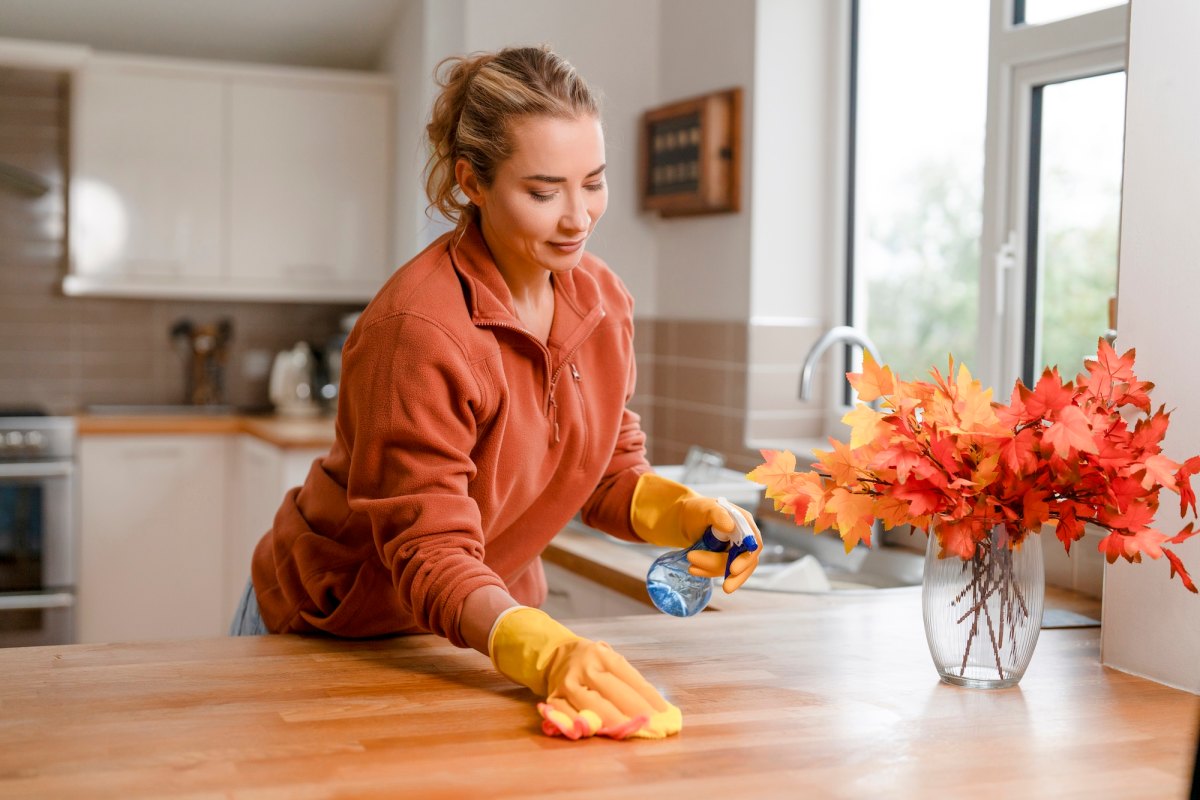

Wiping down the doorknobs, light switches and phones in your home takes maybe five minutes, and during flu season those five minutes do real work. Flu viruses can live on hard surfaces like your kitchen counter for up to 48 hours, which means a cleaning routine that felt fine in summer may be letting germs linger once coughs start circulating in the fall.
The fix is not complicated. Clean first, then disinfect the surfaces people touch most. That two-step sequence, backed by the Centers for Disease Control and Prevention and echoed by pediatricians and cleaning-product researchers, is the small upgrade that makes a real difference between November and April.
How Flu Germs Linger on Surfaces in Your Home
Hard surfaces are the bigger worry. “Certain types of viruses, including the flu, can live on hard surfaces like counters for up to 48 hours, and on soft surfaces like pillows for up to 12 hours,” says Susan Werner, MD, a family medicine provider at Geisinger Nanticoke. “Bacteria, like the one that causes strep throat, can live on surfaces for months.”
The virus also drifts beyond the air you breathe. Dr. Randy Bergen, clinical lead of Kaiser Permanente Northern California’s Flu Vaccine Program, told ABC News that flu particles land and linger. “The viruses do stay in the air for a period of time, but they also land on surfaces and can stay on surfaces for a period of time,” he said. “They can stay conceivably hours after you’ve touched something.”

When to Clean Versus When to Disinfect
Those two words get used interchangeably, but the CDC draws a clear line between the steps. “Cleaning is an important first step to make sure you remove most germs from surfaces in your home. Using household cleaners that contain soap or detergent will remove germs and dirt on surfaces,” the agency says. “Remember to clean first, and then sanitize or disinfect if needed.”
For everyday life, cleaning high-touch spots such as light switches, doorknobs and countertops is enough, especially after guests leave. When someone in the house actually gets sick, bump it up to disinfection. “To disinfect a surface, wipe so that the surface remains visibly wet for four minutes and then let it dry,” Dr. Tanya Altmann, a pediatrician and spokesperson for Clorox, told Today.
Bergen says a daily wipedown through the colder months is the realistic baseline. “I would be doing it at least daily,” he said. “To be safe, do it from November to April [flu season] because it seems like there is always some germ that’s coming through.”
What to Wipe Down, Room by Room
The American Cleaning Institute suggests focusing on the surfaces hands touch most often, which saves you from scrubbing every square inch of the house.
In the kitchen, that means sink handles, countertops, drawer and refrigerator handles, switches, trash can lids and appliances. Sanitize the inside of the fridge with diluted bleach, sanitizing products or hot soapy water.
In the bathroom, focus on the toilet lid, seat and flushing lever along with the sink faucet. Launder towels and the shower curtain.
Bedrooms call for washing clothes and bedding after an illness, ideally with a laundry sanitizer or bleach. Vacuum and dust during the week to cut down on allergens, and rinse small children’s toys after disinfecting.



Across living areas, hit doorknobs and light switches, vacuum carpets thoroughly and mop hard floors with hot soapy water. Wipeable covers on remotes and phones make electronics easier to clean too.
Which Products Actually Kill the Flu Virus
Not every spray on the shelf does this job. According to Force of Nature, the best option is “an EPA-registered disinfectant that’s proven to kill Influenza A and that you’ll actually use correctly,” including observing the full contact time listed on the label. The company says its own product is EPA-registered to kill 99.9% of viruses and bacteria, including Influenza A, in 2 minutes when used as directed.
Bleach is still a cheap and effective choice. The Source FMOL Health recommends mixing half a cup of bleach with a gallon of hot water to wipe down doorknobs, cabinets, toilets, bathtubs and sinks. Keep that mixture away from rugs, couches and curtains to avoid discoloration. Spray disinfectants like Lysol Disinfecting Spray work for furniture and doorknobs, and the CDC advises choosing products that are EPA-approved for killing germs.