

Most people would never consider spending $35,000 on an apartment they don’t own. Imani Keal didn’t just consider it. She documented every step, built an audience doing it and turned renovating a rental into a full-time career.
Her story raises a question renters don’t hear often enough: what if the money you spend making a rental feel like home isn’t wasted, but invested in how you actually live? Here’s how Keal got here, why she’d do it again and what her renter-friendly approach can teach anyone figuring out how to decorate an apartment.
How Imani Keal Turned Pandemic-Era DIY Projects Into a Career
Keal is a Washington, D.C.-based content creator and DIY expert who estimates she’s spent roughly $30,000 to $35,000 transforming her rental apartment over several years, according to Vox.
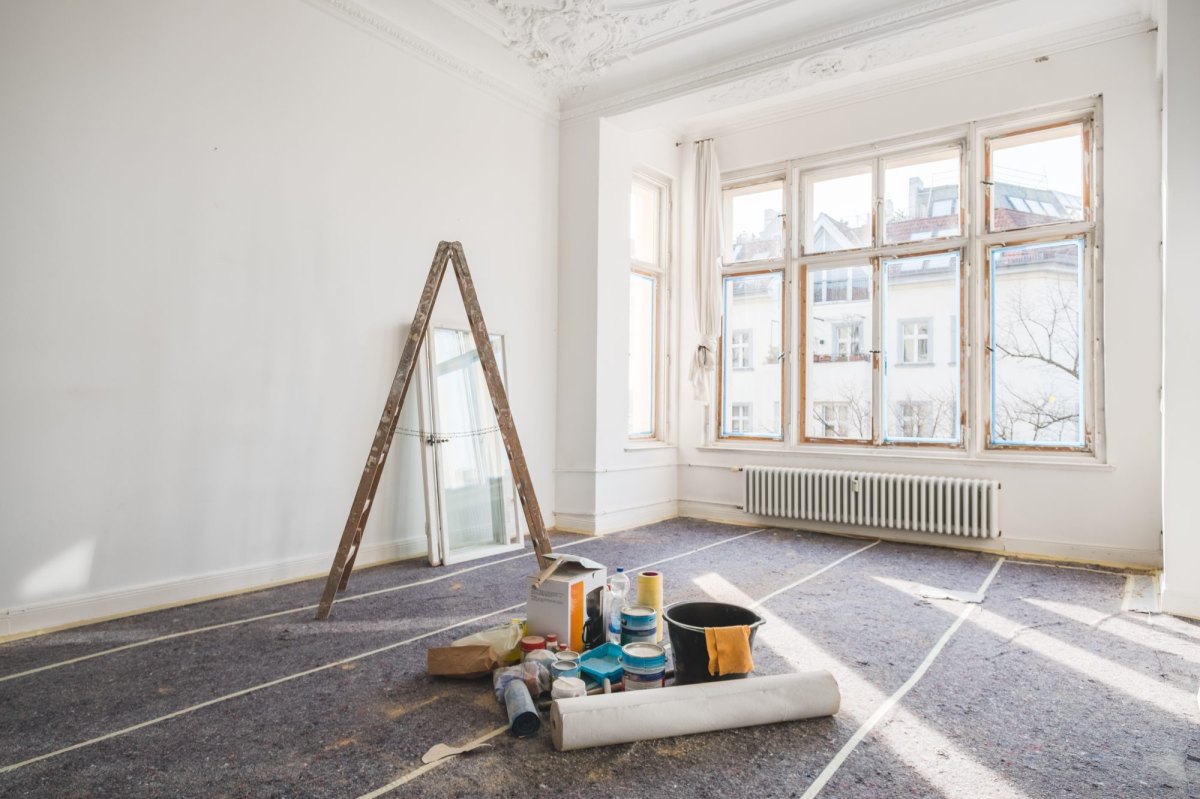
The work has included painting rooms, changing light fixtures, installing peel-and-stick flooring, building furniture and a major kitchen makeover. All self-funded. None permanent.
What started as pandemic-era diy projects became Imani At Home, the platform where Keal documents her rental renovations and teaches other renters to take on their own. That platform turned home renovation content into full-time work.
Keal told Vox she’s made significantly more through the career that grew out of her apartment than she ever spent on the apartment itself. The rental wasn’t a sunk cost. It was the portfolio.
She’s realistic about the exit too. Some work will need to be undone, including removing wallpaper and returning parts of the apartment to their original condition. But a few days reversing changes is worth years of enjoying them.

Why She Spent $35,000 on a Home She Doesn’t Own
When Vox asked Keal to explain the investment, she gave three reasons. Each one challenges a different assumption about what it means to rent.
She lives there and deserves a space she loves. “I think that I deserve to have a beautiful space to live in. I’m not going to sit in something that’s ugly just because other people would be upset about how I spend my money,” she told Vox. Waiting for homeownership to invest in where she actually lives felt like putting life on hold.
The investment created something bigger than a decorated apartment. Documenting her diy projects built an audience, brand partnerships and a platform that now generates more income than the renovation cost. The apartment was the starting point. The career was the return.
DIY is her hobby, not just a means to an end. “I want to learn how to use a circular saw and build furniture in my apartment. This is my hobby,” Keal told Vox. The spending wasn’t purely strategic. She genuinely enjoys the work.
“I have every intention of living the life that I was granted to the fullest. I’m going to do everything that I want, everything that is within my means and is possible for me to have a good life.”
— Imani Keal, Vox
Keal also pushes back on the idea that renting is just a stepping stone. “There’s a misconception that renting is for the under-30, unmarried, or childless and that it’s a lesser option than buying a home,” she told The Everygirl. “And I just disagree so hard.”
What Renters Can Take From Her Renter-Friendly Approach
Keal’s budget is more extreme than most renters will follow. But the principles behind it scale down easily.
Test your taste before you commit. Keal suggests starting with something small and inexpensive rather than overhauling everything at once. A paint sample, a mirror, a single thrifted piece. “Developing your style is really about starting with a small thing, gaining confidence, and doing it over and over again,” she told The Everygirl.
Anchor the room with three basics. When OTTO Studio asked Keal what every renter needs to make a space feel like home, she named three things: something old, like a vintage or secondhand piece that keeps the room from looking like a showroom; warm lighting, favoring amber tones and layered lamps over bright overheads; and real window treatments, because swapping basic rental blinds for drapes or Roman shades can make the whole room feel more finished.
Treat mistakes as part of the process. “Failure is a part of the journey and every time I make a mistake it’s an opportunity to teach people how NOT to do something,” she told OTTO Studio. The difference between Keal and renters who think they can’t build anything, she told Reckon, is “the audacity to believe that I should have nice things.”



Push back on the lease, respectfully. Read the lease. Run projects by the landlord. But don’t assume every request will be shut down. “I am not guaranteeing that your landlord will say yes. I’m saying that you don’t know what they will say yes to,” she told Reckon.
Refuse to treat a rental as temporary. “You have to stop thinking of it as a temporary space and start thinking of it as a space that you deserve and space that you deserve to be happy in,” Keal told NBC Washington.
“A home is a place that offers refuge, safety and a sense of belonging,” she told IKEA. “My home, even as a renter, is where I feel the most myself.”

THREE PREDICTIONS FOR THE FUTURE:
- More renters documenting high-investment rental transformations. Keal’s story resonated because it named a tension millions feel. Watch for more creators building platforms around rental renovation content as homeownership timelines stretch further.
- Landlords formalizing policies around renter-led improvements. Watch for property managers to create clear guidelines around removable upgrades and peel-and-stick materials rather than leaving it to case-by-case negotiation.
- DIY brands marketing directly to renters. Watch for Home Depot, Lowe’s and tool brands to build renter-specific product lines and tutorials, treating renters as a permanent customer base rather than future homeowners in waiting.