
If melatonin, white noise and a stack of sleep apps still leave you staring at the ceiling, there’s a new category worth your attention. Sleep tech is shifting from passive scoring to active steering, and EEG sleep headbands are the devices driving that change heading into 2026.
What Are EEG Sleep Headbands and How Do They Work?
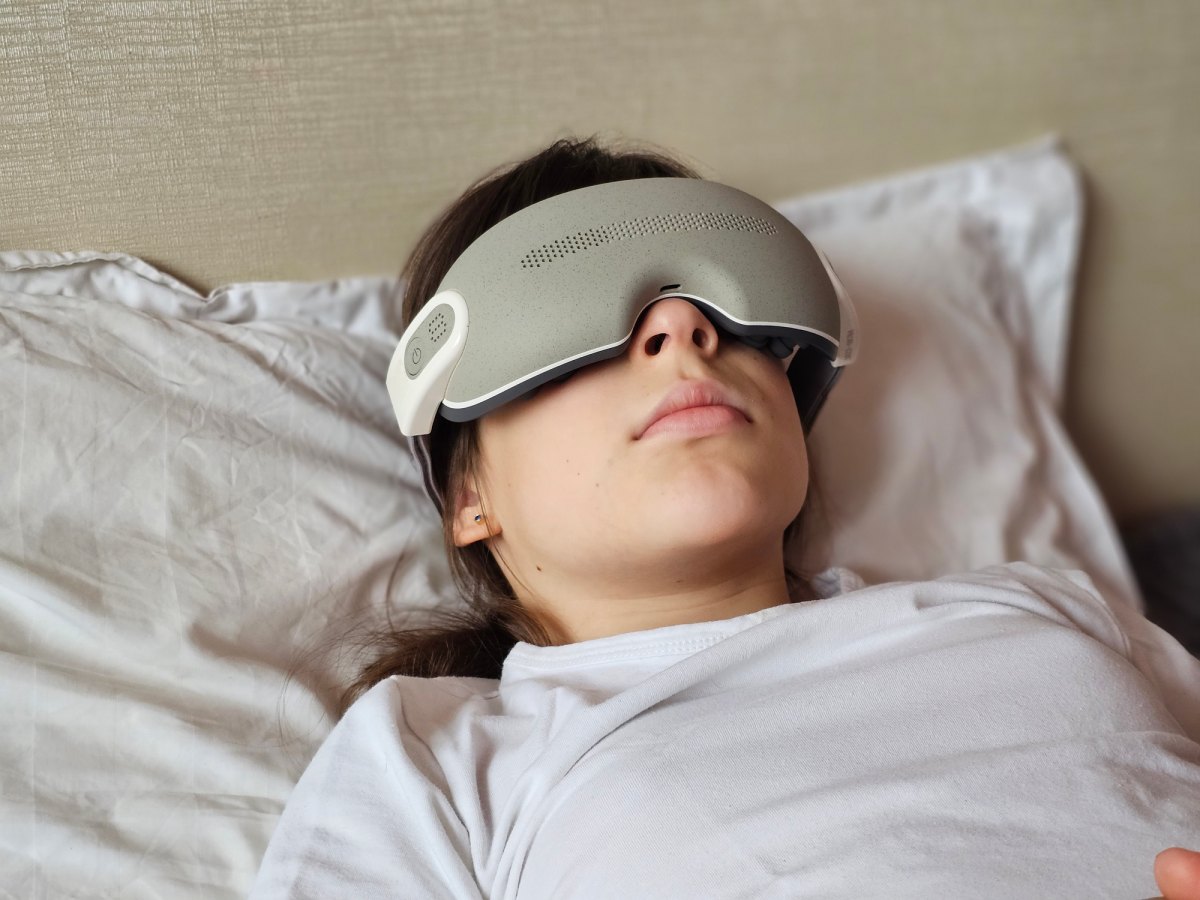
EEG sleep headbands are wearables that read brainwave patterns in real time and respond with sound or gentle vibration meant to guide the brain into rest. Many models rely on closed-loop auditory stimulation, detecting brain activity and delivering targeted cues in the moment.
Dr. Angela Holliday-Bell, a board-certified physician and certified sleep specialist, told Forbes, “These headbands track real-time patterns in your brain activity and respond with cues that encourage your system to settle. When a device delivers the right sound or gentle vibration at the right moment, it can reinforce relaxation and help guide you into more stable sleep stages.”
For insomniacs, the appeal is timing. Instead of handing you a score the next morning, these devices try to intervene while you’re actually trying to fall asleep.
Do EEG sleep headbands actually help you sleep?
Experts say they can, though part of the benefit may come from the ritual of putting one on. Jamie Zeitzer, Ph.D., associate professor at the Center for Sleep Sciences and Medicine at Stanford University, told Sleep.com, “If you think you’re going to sleep better by putting something on your forehead, you likely will sleep better. You’re creating your own physiology to encourage sleep.” Zeitzer added, “The biggest issue with sleep onset is getting out of your own way,” noting that focusing on something introspective such as the breath, the heartbeat or a growing and shrinking dot can induce an almost hypnotic state that clears the mind.
You are not alone in struggling. The National Sleep Foundation’s 2025 Sleep in America Poll found 6 in 10 adults don’t get the recommended 7 to 9 hours of quality sleep, nearly 4 in 10 struggle to fall asleep at least three nights a week and almost half wake up often during the night.
The EEG sleep headbands launching or leading in 2026
Four devices define the active EEG sleep headband category heading into 2026, each targeting a slightly different sleeper.



- Elemind is a Cambridge, Massachusetts company and MIT spinout that uses real-time EEG detection of alpha phase to deliver phase-locked pink-noise pulses, especially for sleep onset. It runs a 9-hour battery and offers a 30-night trial.
- Frenz Brainband, developed by Earable Neuroscience and founded in 2018, uses clinical-grade sensors and tracks sleep stages plus jaw and eye movement. Battery life is 8 hours, with a 14-night trial and no subscription.
- Muse S by Interaxon is the most established consumer EEG brand in the space, with more than 500,000 members, over 1 billion minutes of brain data and 200+ research studies tied to the platform. A 2025 validation study showed 88% to 96% agreement with polysomnography for sleep staging.
- LumiMind’s LumiSleep D1 is the most visible 2026 launch, announced September 24, 2026, and marketed through CES-award signaling and crowdfunding. It uses “real-time neural coupling” and adaptive sound to guide users toward sleep.
How much do EEG sleep headbands cost and how big is the market?
Expect to spend a few hundred dollars, and expect company. The global sleep tech devices market is estimated at $29.62 billion in 2026, according to The Business Research Company via a GlobeNewswire release.
LumiMind’s LumiSleep D1 carries a $569 retail price with a $389 early-bird tier through Kickstarter. Muse S offers an optional premium subscription for added coaching and programs, while Frenz Brainband skips subscriptions entirely. Elemind pairs its hardware with an optional subscription and a 30-night trial.
Buyer appetite is driving the shift. Shoppers increasingly want devices that help them fall asleep, stay asleep or wake at the right time, not simply hand over a sleep score the next morning.