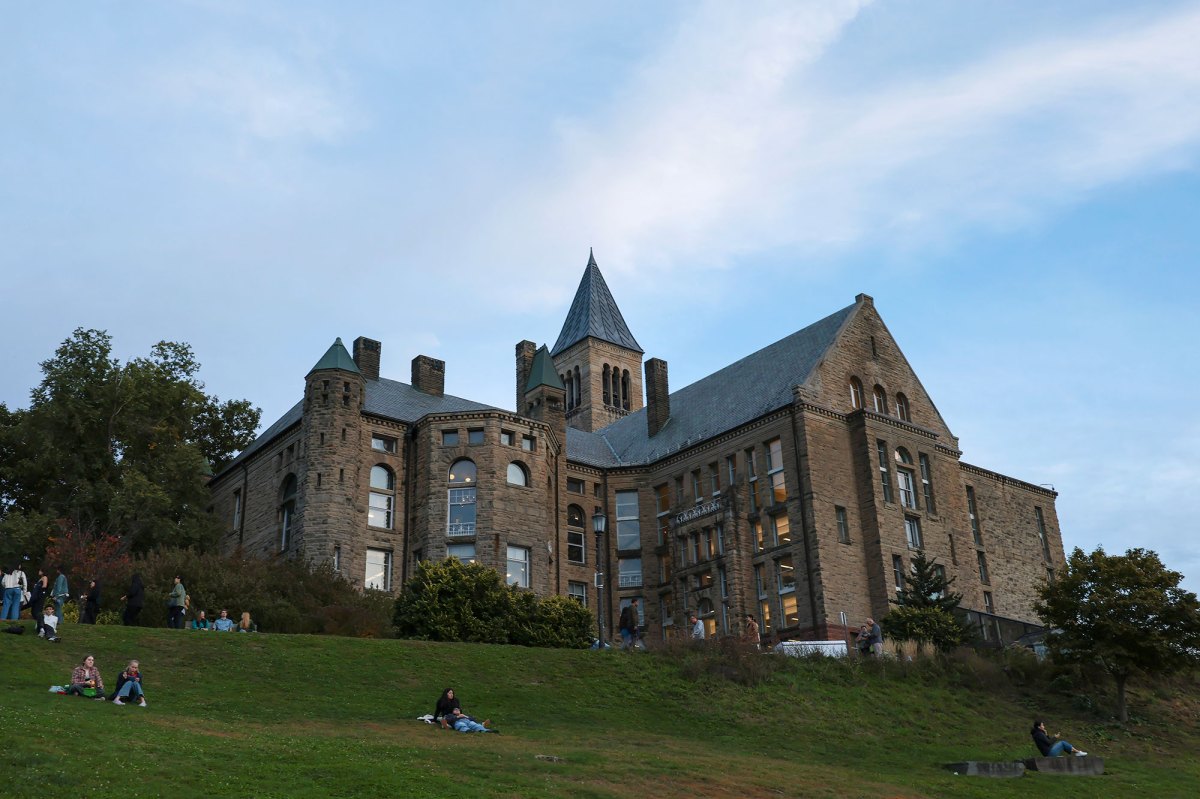

Cornell University is banning all parties and social gatherings at fraternity houses for the rest of the school year as part of “immediate measures” to address “the social context” of campus sexual violence amid the alleged gang rape scandal.
“I am deeply sorry for the harm Jane Doe suffered in 2024, and appalled that this act of sexual violence occurred within our Cornell community,” university president Michael I. Kotlikoff announced in a Tuesday, October 13, letter to the school community. “It is clear that women on our campus continue to question whether they are safe. We must meet this moment by acknowledging where we have fallen short and taking meaningful action.”
The ban is one of several efforts to improve campus safety and support sexual assault survivors as a direct response the outrage surrounding a reopened criminal investigation into the alleged gang rape of a former student at a Chi Phi fraternity house in October 2024, as detailed in a lawsuit filed by the woman referred to as Jane Doe last month.
To strengthen campus safety, fraternity house parties and social events are on pause for the rest of the 2026-2027 academic year to allow for a thorough review of fraternity culture.

The review will determine “whether and how” fraternity life “can safely continue,” Kotlikoff said.
If any fraternity violates the ban, the organization will immediately receive an emergency suspension.
“We will immediately engage students and faculty experts in the development of safe social alternatives and invest university resources in their establishment,” Kotlikoff wrote in the letter.
In another measure, New York State Police will investigate sexual assault allegations at Cornell University and interview with survivors who wish to pursue criminal charges for the remainder of an ongoing independent review into how the school responds to sexual misconduct, according to Kotlikoff.
State police investigators will prepare investigative summaries based on survivor accounts to provide to the “appropriate law enforcement agency,” the president said.
Other measures taken by Cornell include adding staff to the Cornell Office of Civil Rights and changing the campus’ social culture.
“Research has shown that campus sexual assault is not limited to the fraternity system,” Kotlikoff wrote in the letter. “At its core is the specific context of social behavior and a deeply disturbing prevalence of alcohol and drug abuse. While this is not a problem unique to Cornell, we are committed to setting a higher standard for education, oversight, and enforcement of safe social behavior and citizenship.”

Jane Doe’s lawsuit accusing seven former Chi Phi fraternity members of gang rape resulted in intense public scrutiny and media coverage, prompting the renewed criminal investigation after the local prosecutor declined to pursue the criminal case in 2024.
The prosecutor, Tompkins County District Attorney Matthew Van Houten, said on September 28 that he was revisiting the criminal investigation after Jane Doe’s lawsuit brought an alleged “series of heinous and despicable acts” to light.
However, New York Attorney General Letitia James is now in charge of the criminal probe after Gov. Kathy Hochul intervened to designate her as a special prosecutor, according to the Associated Press.
The accused fraternity members have denied the gang rape allegations.



Civil trial attorney Tre Lovell previously told Us that he expects at least some of the men will be charged.
“Then at that point, whether or not they get convicted, that’s a much much different question,” Lovell said.
If you or someone you know has been sexually assaulted, contact the National Sexual Assault Hotline at 1-800-656-HOPE (4673).