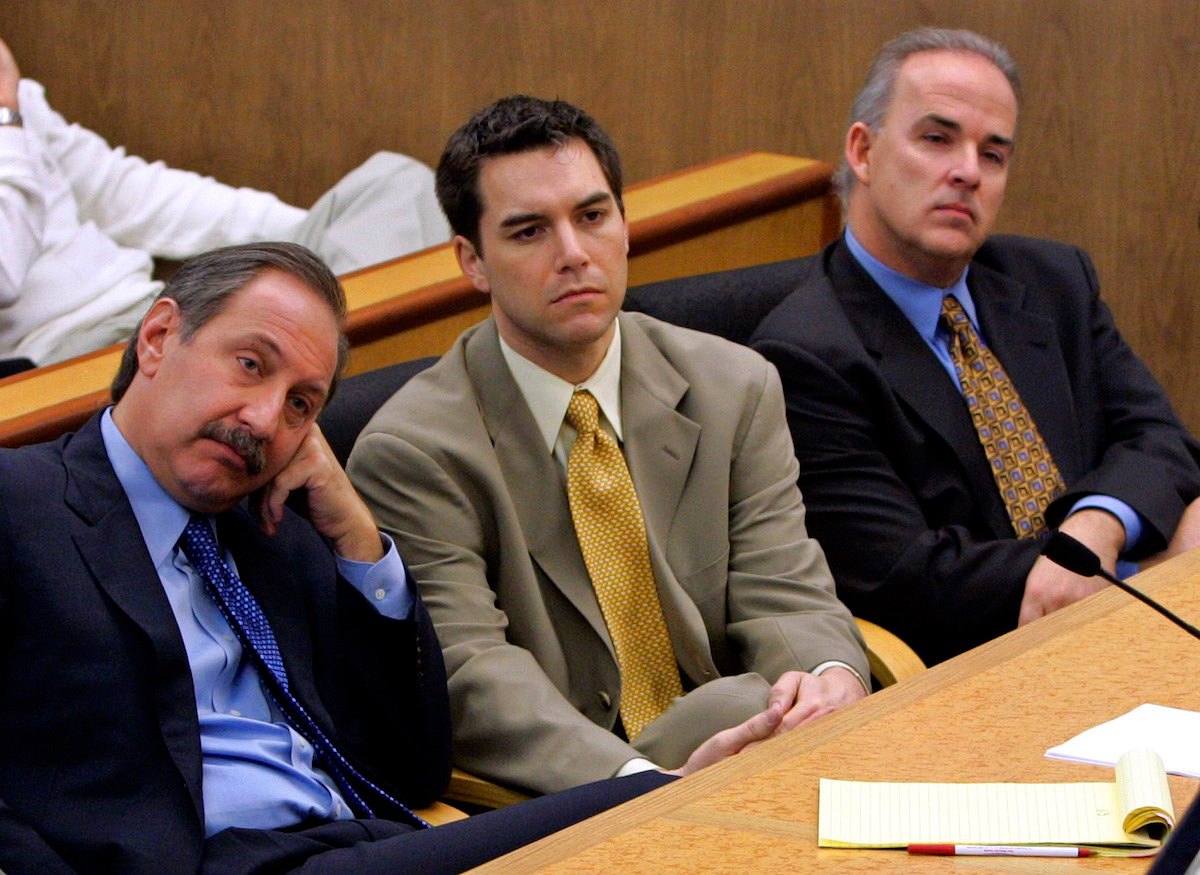

More than two decades after Scott Peterson was convicted of murdering his pregnant wife, Laci Peterson, and their unborn son, Conner, questions about the investigation continue to surface — including whether Scott ever submitted to a lie detector test in the days after Laci vanished.
According to legal analyst Chris Pixley in A&E’s docuseries Scott Peterson: The New Evidence, the short answer is no. While Scott agreed to take one, he never actually sat for the test. Pixley said Scott’s “cooperation with the police was significant,” pointing out that “he agreed to multiple interviews on the day of her disappearance.”
“Peterson also agreed to turn over to them all of his devices … he agreed to give them a lie detector test,” Pixley said, adding that Scott never took the test because his father felt uneasy about it.
The revelation is one of several bombshells Pixley unpacks across the two-part docuseries, which premiered on July 16, 2026, and July 17, 2026. The examination coincides with the Los Angeles Innocence Project’s motion seeking a new trial for Scott.
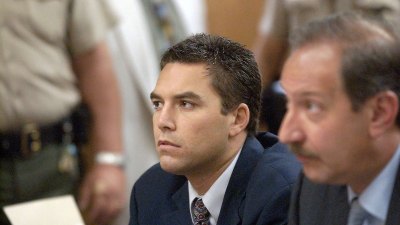
Scott Peterson Cooperated With Police After Laci Peterson Vanished
Laci was last seen on December 24, 2002. Conner’s body was recovered in the San Francisco Bay on April 13, 2003, and Laci’s body was found nearby the next day.
Scott was arrested on April 18, 2003, and was convicted on November 12, 2004. Originally sentenced to death, he was resentenced in 2021 to life in prison without the possibility of parole after potential jurors were found to have been improperly dismissed. He remains behind bars at Mule Creek State Prison in Ione, California.
In the hours after Laci was reported missing, Scott sat for multiple interviews with the Modesto Police Department. The interrogation tape was later released to the public, and the state argued Scott did not appear appropriately grieving. He even took a phone call during the interview.
“What the public hasn’t been made aware of was that that phone call was coming in from Laci’s sister, Amy,” Pixley said.
Retired officer Ninette Toosbuy, who joined Pixley in reexamining the case, said police likely already believed Scott was the suspect during that first interview. Pixley pushed back on the interpretation that Scott’s demeanor equated to guilt, arguing his willingness to talk, hand over his devices and agree to a polygraph “lays groundwork for a previous argument that this guy was doing everything he could to find his wife.”
The Los Angeles Innocence Project’s Arguments for a New Trial
The Los Angeles Innocence Project is now arguing to the federal court that Scott’s conviction should be thrown out. Pixley outlined the group’s three main pillars: new fetal biometric science, updated tidal modeling and challenges to the integrity of the investigation itself.
“Scott Peterson always maintained his innocence. And now the Los Angeles Innocence Project is arguing to the federal court that the constitutional basis of his conviction is not viable and that he was wrongfully prosecuted and convicted,” Pixley said. “First they’re arguing that new fetal biometric science suggests that Laci Peterson likely didn’t die on December 24, 2002. That she may not have died for many days or even weeks later. If they’re right, that means that Scott Peterson is innocent.”
The LAIP’s second argument centers on new computational hydrodynamic modeling, which the group says suggests that if Laci’s body had been dropped in the bay from where Scott was fishing, her body and Conner’s would not have been recovered where they were.
Handwritten Notes Were Reportedly Written by Laci Peterson
In 2024, the LAIP said it found handwritten notes inside the Petersons’ home that were allegedly written by Laci about the boat Scott had purchased — a boat prosecutors argued he bought for the specific purpose of dumping her body.
“If true, that means that not only was she aware of the boat, but that she participated in the purchase of accessories for the boat,” Pixley said. “And if she knew about Scott’s boat, the whole argument at the time of the trial that he premeditated her murder and purchased the boat in order to carry out the disposal of her body is false.”
Pixley enlisted an independent handwriting examiner, who confirmed the note was likely written by Laci. The notes were never provided to the defense team during the trial.
Scott’s former attorney, Mark Geragos, said the theory that Scott took the boat out to dispose of Laci “never made any sense.”
Witnesses and a Burning Van That Police Reportedly Ignored
Part 2 of the docuseries focused on what the LAIP characterizes as investigative failures, including allegations that Modesto police changed the date of a burglary at the neighboring Medina home from December 24 to December 26, 2002.
“I think what happened was the Modesto police changed the date of the burglary because it certainly would’ve undercut their theory on Scott,” Geragos said. “Because if it has happened on the 24th, it’s the definition of reasonable doubt.”

Seven witnesses reported seeing a suspicious van outside the Medinas’ home on the day Laci disappeared, and one witness described a pregnant woman being pushed into the van by a man who appeared homeless. A burning van was later discovered by police in an alleyway about a mile and a half from the Petersons’ home on Christmas Day 2002. That fire was investigated separately and never linked to Laci’s case.



A stain later found on a mattress inside that van tested inconclusive for blood, but one analysis identified potential traces of male DNA and could not rule out female DNA.
Toosbuy called the failure to connect the burglary and the van fire to Laci’s disappearance “investigatively negligent.”
This story was compiled with the help of AI tools and edited by journalists.