
You know you’ve made it into the pop culture pantheon when Taylor Swift gives you credit for inspiring her songwriting.
For NBC’s true-crime institution Dateline — which influenced Swift’s 2024 murder-tinged “Florida!!!” and recent hit “Patient Zero” — that’s just one more sign of staying power. Now in its 35th season, the longest-running prime-time series in the network’s history has mastered a surprising kind of TV alchemy: turning tales of human depravity and heartache into appointment viewing that millions find oddly comforting.
“The thing about these stories — and I think Josh and I both had to be dragged into reporting on true crime — is that they are revelatory,” Keith Morrison tells Us, referring to fellow correspondent Josh Mankiewicz. “They tell you so much about human nature. You hear that bump in the night, you get a little scared by it. You want to know why it happened, and that’s why we’re here. We work to report on why those things happen, best we can.”
In an era overflowing with Reddit sleuths and YouTube investigators, Dateline offers multiple things its imitators can’t: expert reporting, familiar faces, unparalleled access and, often, the satisfaction of a story brought to some kind of resolution. The crimes may be disturbing, but the ritual is reassuring.
Mankiewicz knows just how personal that connection can feel. “I was getting out of my car in Los Angeles, and a woman was walking down the sidewalk. She took her earbud out and said, ‘I’m listening to you right now,’” he tells Us. “You get that sense of, Oh yeah, this really [is] becoming universal.”
The Dateline brand has grown far beyond the weekly show (Fridays, 9 p.m.): There are multiple companion and standalone podcasts, live events and so much syndication that episodes seem to be running 24/7.

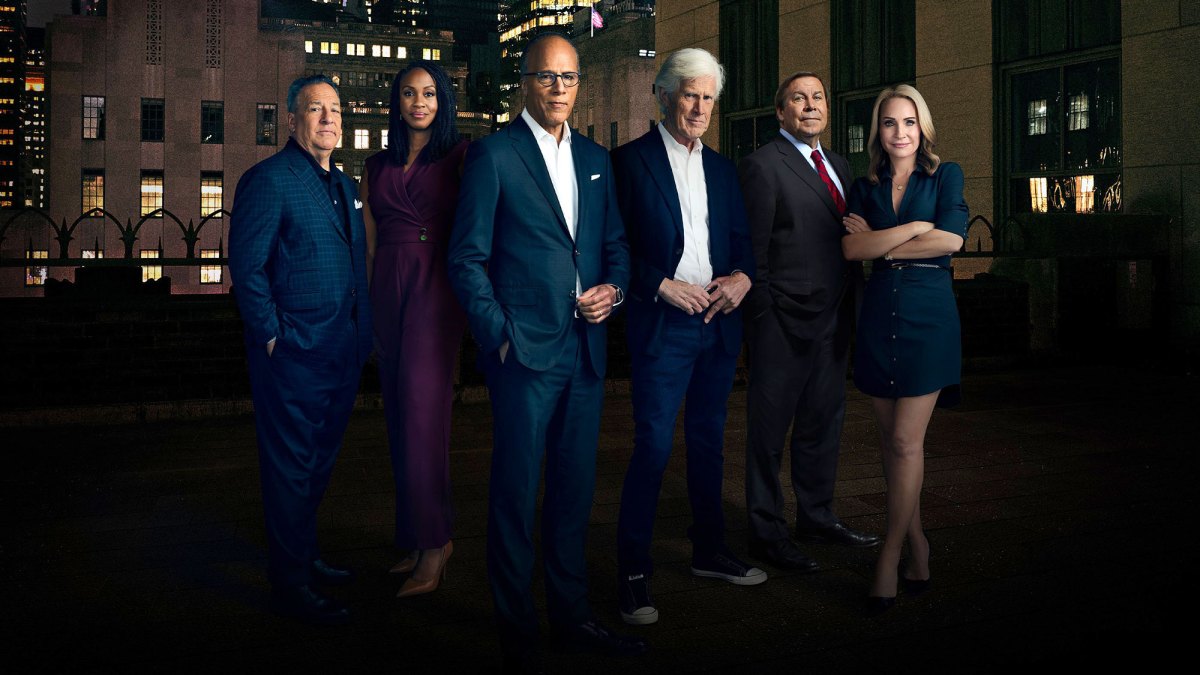
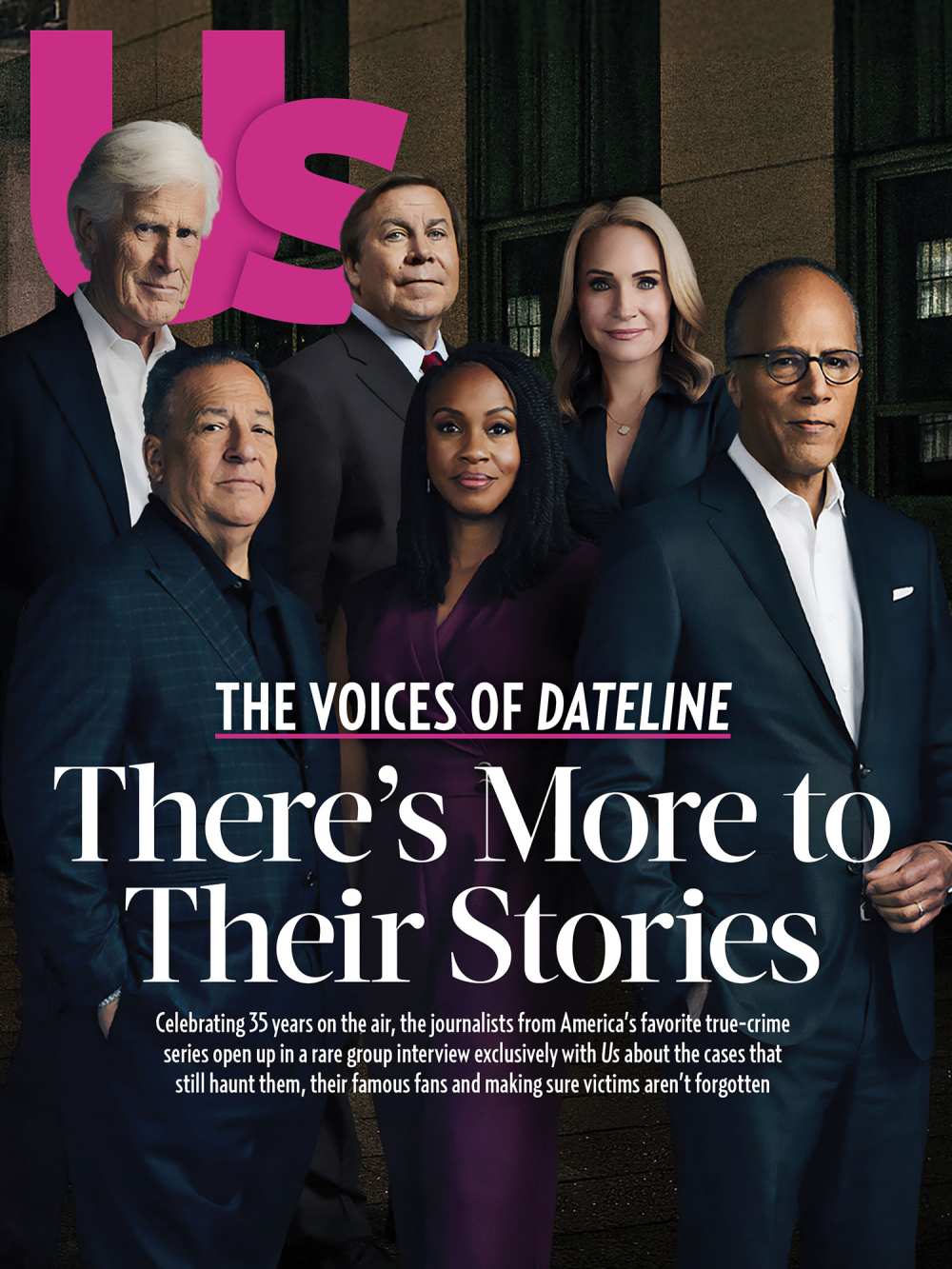
For a show that premiered in 1992, its presence has never felt bigger. For this issue’s cover story, on newsstands now, Us caught up with correspondents Morrison, Mankiewicz, Blayne Alexander, Andrea Canning and Dennis Murphy — along with host Lester Holt — to talk about the show’s evolution, its passionate fans and the ways the reporters cleanse their crime-cluttered brains.
How have you witnessed Dateline change over the years?
Keith Morrison I didn’t even have gray hair when we started!
Josh Mankiewicz Keith was only, like, 70 when we started [laughs]. Sorry, I had to! In 1995, when I joined Dateline, I did not think to myself, This is the job you have for 30-plus years. What lasts 35 years in TV? Nothing. After I’d been here about 10 years, we started doing true crime, and it’s the thing that makes Dateline Dateline. They’re stories that need to be told, and in a lot of cases, they’re stories that were not getting told.
Dennis Murphy We used to be an hour show with the usual TV-newsmagazine segments: big story of the week, an original investigation and maybe a celebrity interview. We’ve evolved into a show centered on the people at the heart of these stories about terrible true crimes and the ensuing search for justice.
Andrea Canning When I’m in the airport or the grocery store or HomeGoods, I just can’t believe all the people that come up to me and tell me how much they love the show. It happened sort of all of a sudden. Social media has given us that opportunity… to communicate with our viewers, and that’s been awesome.
DM I remember, years back now, when I heard for the first time a character on a sitcom say “Dateline,” as though it were an adjective. “This story or situation is ‘Dateline-esque,’” no further explanation necessary. And then stories started emerging about celebrities who like Dateline: Lady Gaga, Charlize Theron, Kristen Bell and a singer from Pennsylvania named Taylor Swift.
How often are you all in the same room together?
JM Very rarely, like once a year.
AC Twice a year.
Do you have a group chat?
All No.
KM God, no. It would be fun, actually. We should have a group chat.
JM I’ll start it. Let’s start it.
How do you decompress? Do you need to?
Blayne Alexander I definitely need to. To really do these interviews justice and conduct them in a genuine and compassionate way, I believe we have to fully lean in: listen, feel, share emotions. So I try to draw pretty firm boundaries and turn off when I’m home with my family.
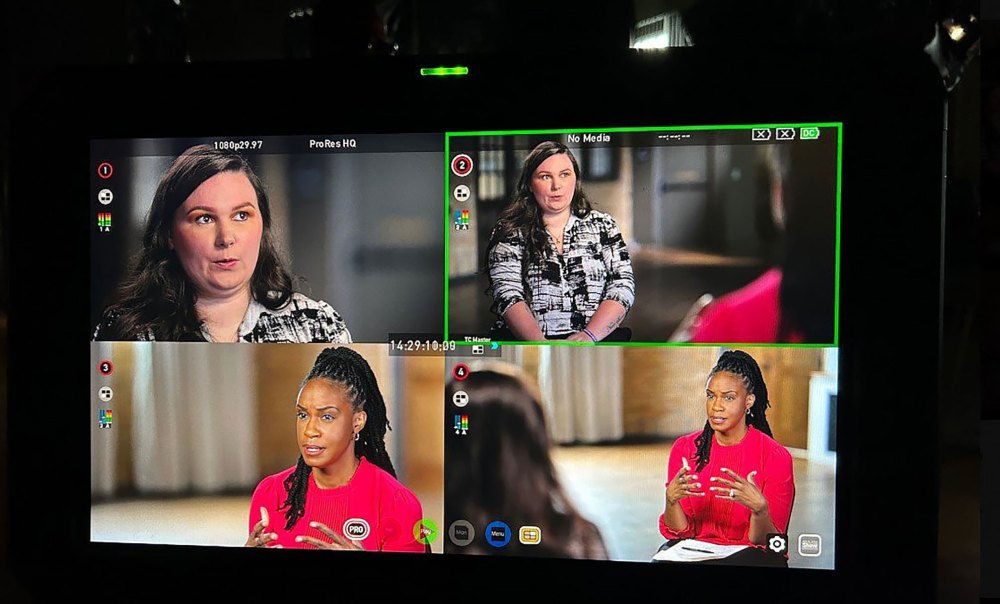
AC I watch Real Housewives. And I write Hallmark movies!
Lester Holt I think about many of them. They’ll just pop into my brain, mostly the people at the center of them. I have no particular strategy. Forty-five years in the news business, you get used to processing heavy stories.
JM I stay in touch with a lot of the families we cover. That definitely helps me.
When you go to prisons to interview people convicted of murder, are there any nerves?
JM No. First of all, it’s not just you and them. There are generally corrections officers sitting just out of camera range. And also, by the time they’re sitting across from one of us, they’re on their best behavior.
KM They want the whole world to know how wonderful they are.
JM “I didn’t do this, and you don’t understand what a great person I actually am.” That’s essentially the message they’re all sending us. A lot of times the people that we interview, the people accused or convicted, they declined to talk with investigators and they didn’t take the stand at their trial, which is their right. So the interview we’re doing, that’s the only time that story is getting cross-examined. I’m much more worried about getting it right than I am about anything they’re going to do.
BA There’s a piece of [the victim] when we go into those rooms. By that time, we’re very familiar with the case, so we’re taking that spirit into the interview and being their voice.
LH People want their chance to tell their story, and they see us as an important vehicle in that mission. People will always bring the best version of themselves to these interviews for that very reason. I think they feel they get a fair shake when they come on our program.

Over the past 35 years, true crime content has exploded. How have you seen the appetite for it change?
DM It can sometimes feel that people who do bad things get away with it. True crime allows us to mostly see justice get served. Most stories have beginnings, middles and ends; messy real life doesn’t necessarily have that.
JM People come up to me and ask incredibly detailed questions about stories we’ve done. They’re clearly not just watching out of the corner of their eye; they’re paying extremely close attention, and that’s great to see.
BA Journalism drives everything we do. That’s something that makes us stand out in this space. Yes, it’s true crime, [but] we’re journalists first and foremost.
High-profile cases like Karen Read’s and Lindsay Clancy’s have created armies of social media detectives. Do you have any concerns as you watch their role in the true crime ecosystem grow?
AC We try to focus on ourselves. Of course we’re worried about our own episodes, but yes, we do see people who are fast and loose with their coverage. It can be a little dangerous.
KM It can be. Sometimes it provides an opportunity for us to use that material to kind of correct the record.
JM One of the things that’s great about the internet, as it pertains to true crime, is that all kinds of people have [access]. There’s no barrier to entry. If you want to investigate a crime in another city, you can do that. Sometimes those people are vital to a story. Sometimes they’re a distraction. It just places more emphasis on our need to cut through all of that. We have to find out not just what’s being said, but what’s being said that’s true.

When fans approach you, what do they want to talk about?
DM When someone comes up to say hello in an airport or restaurant, they almost always say that they love Keith and ask whether he really speaks that way. [Editor’s note: He does!]
AC Right now it’s the Cornell 7 case, but I was on the Karen Read case, and people were constantly asking me my opinion. People would come up and say, “We’re Team Karen.” And then it became Lindsay Clancy, and now it’s the Cornell 7. There always seems to be some case that people can’t get enough of. They want more information. They’re constantly asking you questions about it, and they want your opinion.
Do you give your opinion?
All No.
JM I tell them what I know about the case.
AC I do with family.
KM No opinion. Opinions are just not shared usually.
JM One of the things I get asked a lot is, “Do you agree with the verdict in such-and-such a case?” And that I stay away from.

People call Dateline comfort food. How do you square that with the kind of stories you cover?
LH I hope they [mean] that the familiarity of the correspondents drives a sense of loyalty. In that respect, it can be comforting. Something we call “appointment television” is fairly rare now compared to when I was coming up.
AC And also, it’s the ending. There’s satisfaction in the ending of every episode. The person responsible is being held accountable, and they’re going to be spending, a lot of times, the rest of their lives in prison. And while it doesn’t bring families closure, it certainly ends that one painful chapter for them.
BA And there’s usually some sort of redeeming nugget in the story too, somebody in the story that people can really latch on to or feel inspired by. I did a story last week where I spoke to a woman who was a victim of rape, and I had so many people reach out and say, “I am just inspired by this woman.” Even with a dark story, there’s some element of something that can be uplifting as well.
DM As someone who savors irony, I’m delighted that people can chill out to an investigation and find comfort there.
The new movie Primetime, starring Robert Pattinson, is about your former Dateline colleague Chris Hansen during his time as host of To Catch a Predator. Hansen has called the film a hit piece.
JM I haven’t seen the movie. I’ll probably see it when it appears in my living room.
KM I saw the movie. I don’t mean to cast any aspersions on a filmmaker, but the film attempted, I think, to aim an arrow directly at the moral core of this program, which existed for a while on Dateline. I think they missed. I don’t think it quite hit the mark, but that was just my opinion. And this is having said I never like to give my opinion on anything!
JM I haven’t seen it, but my sense is that the Chris that’s depicted in the trailer and in the reviews that I’ve seen is not the guy I knew and worked with.
LH Exactly. Fair guy.
JM But you know what? A few years ago, there was a movie about my family [David Fincher’s Mank, about screenwriter Herman J. Mankiewicz]. Some of it was flattering. Some of it wasn’t. Some of it was right on the money. Some of it was clearly made up. But ultimately it’s a movie. It’s a dramatized retelling, sort of based on true events, but not an exact historical record.

LH I’m with you — when it comes on my home TV, I will probably watch, but I’m not racing.
Tell Us about the balance between compelling storytelling and responsibility to the real people whose lives have been devastated.
KM With every single solitary story, you head into that sort of dark tunnel, where a bad thing has happened, and you try to shed a little light on it. You know that you’re going to be talking to people who are wounded, who may always be wounded, for the rest of their lives. “Do I really want to do this?” you’ll say to yourself at the beginning, at least I do. But gradually, as you are able to tell the story effectively and with their feelings in mind, I think it can open a door to something better at the end of the story.
JM You’ve got to remember, they’re going to live with this forever. We’re just going to tell your story to the public, the wider world, and the wider world doesn’t care as much about you as you do your own family. And we’re well aware of that as we start.
When you get to a town and start interviewing people, do they typically want to talk to you?
KM It runs the gamut. There are some people who say, “This is our business — this is not your business, this is not the public’s business, this is very personal.” And that’s fine. If they don’t want to talk to us, they certainly don’t need to talk to us. But sometimes it can be very cathartic for them because we don’t just talk about the crime. We talk about the life, about the people.
LH Some of these stories are notorious, and in small towns, it becomes, “Hey, Dateline’s in town — what did so-and-so tell them?” We’re keenly aware that our presence sometimes alters the salt of a community.
BA By the time we do a story, typically the case is adjudicated. Something is done. So this is kind of the period at the end of a sentence. And I had one person tell me after our two-hour-plus interview, “I feel like I just had a really good therapy session.” This is one of the rare opportunities they have to sit down and just speak about it uninterrupted to somebody who is listening, somebody who is going through the whole thing. And in some cases, I’ve had people tell me, “Gosh, this is the first time I’ve spoken about this in 10 years.”
What about when the show airs?
BA Oftentimes people are very complimentary. That’s one of the more touching things for me. Sometimes people tell you at the beginning it’s hard to watch; then they get into the story and realize it was beautifully done. They’re usually very grateful.
JM That’s the reaction I’m usually waiting for.
Dateline has become a part of pop culture as well. Any starstruck moment?
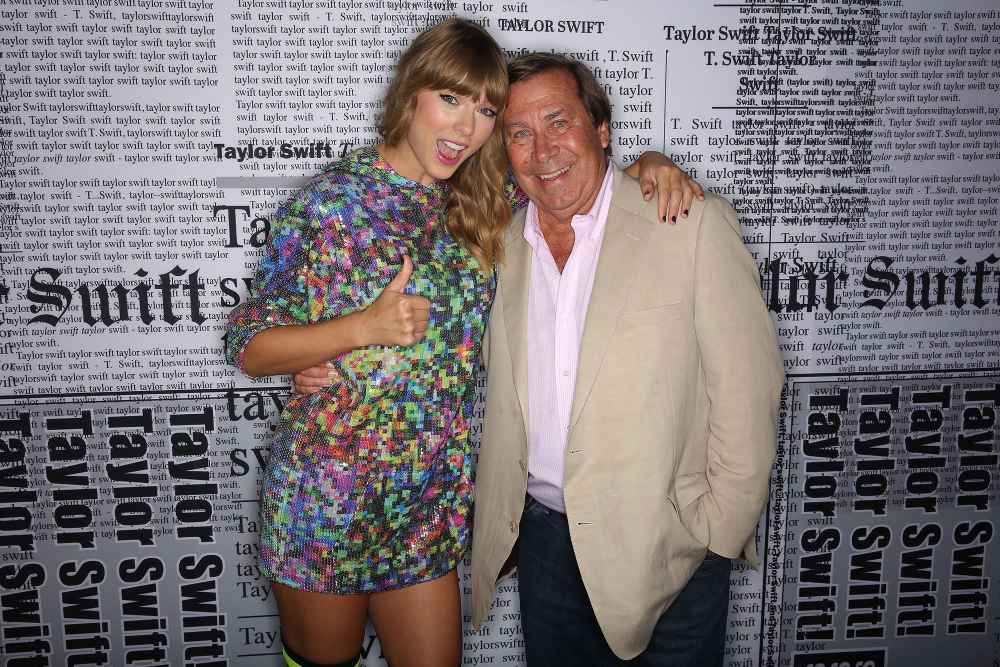
DM: At a back of stadium meet and greet — she couldn’t have been nicer — [Taylor told] me the Plan B of her life if the singing thing hadn’t worked out was to study criminal forensics, a goal inspired by watching Dateline and Law and Order. I asked her if she’d like to ride-along as a guest correspondent sometime. Didn’t happen unfortunately. I can see how some of our darker themes about jealousy and vengeance made their way into her songwriting.
AC: I saw Olivia Munn at the premiere of Friends and Neighbors, and we have a mutual friend. The moment I got there, within 10 seconds, I was face to face with Olivia, and I told her that our friend said hi. I said, “Oh by the way I’m Andrea,” and she said, “I know exactly who you are.” I was, of course, starstruck in that moment that Olivia Munn knew who I was. So, there’s moments like that.
JM: It’s great and it’s astonishing the extent to which we show up in the popular culture. I didn’t expect that, but [it’s] a sign of how much a part of the zeitgeist Dateline is.
Keith, you’ve been doing this show for more than 30 years. Have you ever thought about stepping away?



JM I’m gonna take that. Keith has never thought about stepping away, and he’s not going to.
LH A spokesman! [Laughs.]
KM Why would I do that? I spend my day with fascinating people who make sure I don’t make too many mistakes along the way. And at the end of it, we have a complex, interesting story… Why would I give a thing like that up?