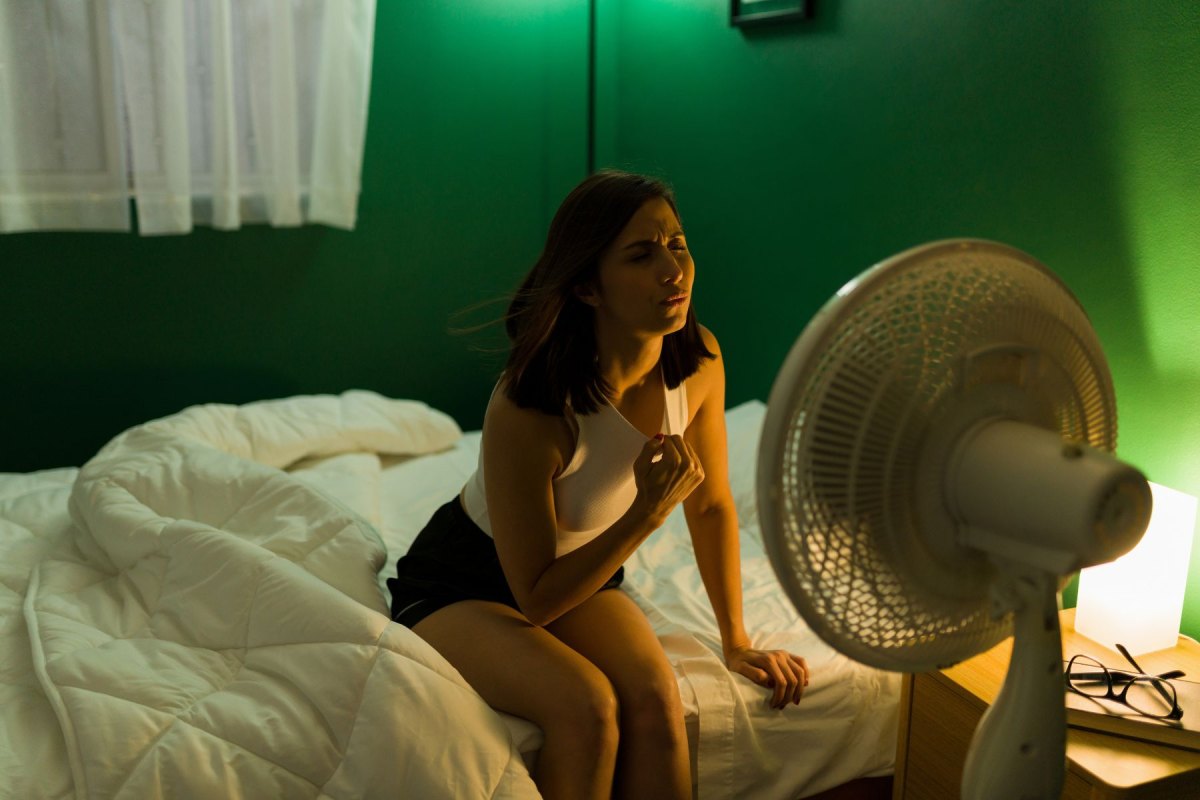

Your apartment turns into an oven by mid-afternoon. By bedtime, no amount of fan-pointing or pillow-flipping brings relief. You wake up groggy, sweaty and frustrated.
If this sounds familiar, you’re not alone. Record-breaking summer heat is making it harder than ever to sleep well, especially for renters who can’t control their building’s insulation or install permanent cooling upgrades. Meanwhile, a wellness trend called sleepmaxxing promises better rest through optimized habits and environments.
You don’t need an expensive setup to practice good sleep hygiene. Many of the most effective strategies for creating a comfortable sleep environment cost little or nothing. What follows breaks down what the science says and what you can actually do about it tonight.
What Is Sleepmaxxing?
Sleepmaxxing is the practice of layering habits, products and environmental changes to maximize sleep quality. It has gone viral on social media, with people trying everything from magnesium supplements to mouth taping and blackout curtains.
Stanford sleep specialist Clete Kushida told National Geographic that interest has surged as people connect sleep to overall health and use wearable trackers to monitor their rest. “People are sleepmaxxing because they want to find ways of maximizing their mental and physical health, or they are having sleep difficulties and are looking for an easy solution to fix it,” Kushida said.

What Is the Perfect Temperature for Sleep?
Most experts recommend keeping your bedroom between 65 and 68°F, according to the Sleep Foundation. Individual preferences vary, but cooler air helps your body complete a natural process: shedding heat through the skin as you drift off.
A 2022 analysis published in One Earth reinforces the point. Researcher Kelton Minor and his team tracked more than 47,000 participants across 68 countries and found that elevated nighttime temperatures delayed sleep onset and reduced total sleep duration.
Why Do Hot Bedrooms Make It Harder to Sleep?
Heat disrupts sleep in measurable ways. A 2023 study monitoring older adults at home found that rest was most restorative between 68°F and 77°F. Above that threshold, sleep efficiency declined by 5 percent to 10 percent.
Minor’s team saw consistent results on a global scale. After analyzing over 7 million sleep records, they found that above-average nighttime heat reliably cut into sleep duration across climates and income levels. “What we found is that warmer than normal nights erode human sleep. And this is a global phenomenon,” Minor said on the Flash Forward podcast. On the hottest nights in the study, those above 85°F, people lost roughly 15 minutes of sleep.
Are Overnight Temperatures Getting Worse?
Yes. July 2026 set the record for the hottest month in the contiguous U.S. Average overnight lows reached 64.2°F, landing 3.7°F above the historical norm, per the National Centers for Environmental Information.
The trend is expected to continue. The EPA projects that nights staying above 70°F will grow more frequent in the years ahead. Less overnight cooling means buildings hold heat longer, which makes a cool bedroom harder to achieve without intervention.
Does Air Conditioning Solve the Problem?
It helps, but cost is a real barrier for renters. Running AC overnight adds up fast, and in hot-climate markets that expense can be difficult to sustain all summer.
The impact of that gap is well documented. A 2017 study led by Nick Obradovich surveyed roughly 765,000 U.S. adults and found that warm nights correlated with worse sleep. The effect hit people earning under $50,000 more than three times as hard as higher-income groups. The researchers pointed to nighttime AC costs as one likely explanation.
Climate Central vice president for science Kristina Dahl told Scientific American, “We know that people in wealthier countries are losing less sleep when it’s hot, and that’s likely due to having means to cool your home.”

How Do You Cool Down a Room Without AC?
Start by blocking heat before it enters. Static-cling solar film is renter-friendly, removable and relatively cheap. Applied to sun-facing windows, it reduces the solar heat that builds up during the afternoon so you need less AC later.



Other low-cost strategies include drawing your curtains or blinds before the sun reaches your windows, running fans to circulate air and create a wind-chill effect, and opening windows after dark when outdoor temps drop below indoor levels.
What Are the Cheapest Ways to Keep a Cool Bedroom at Night?
Focus on your sleep surface. A cooling mattress pad or bed-cooling system targets where your body actually contacts heat. Breathable or moisture-wicking sheets can also make a noticeable difference for just the cost of a new set.
Pair that with daytime prevention like window film, closed blinds and fans. You can build a cool bedroom without relying on air conditioning alone. The most effective sleepmaxxing strategy isn’t always the most expensive. Sometimes it’s about stopping the heat before it starts.