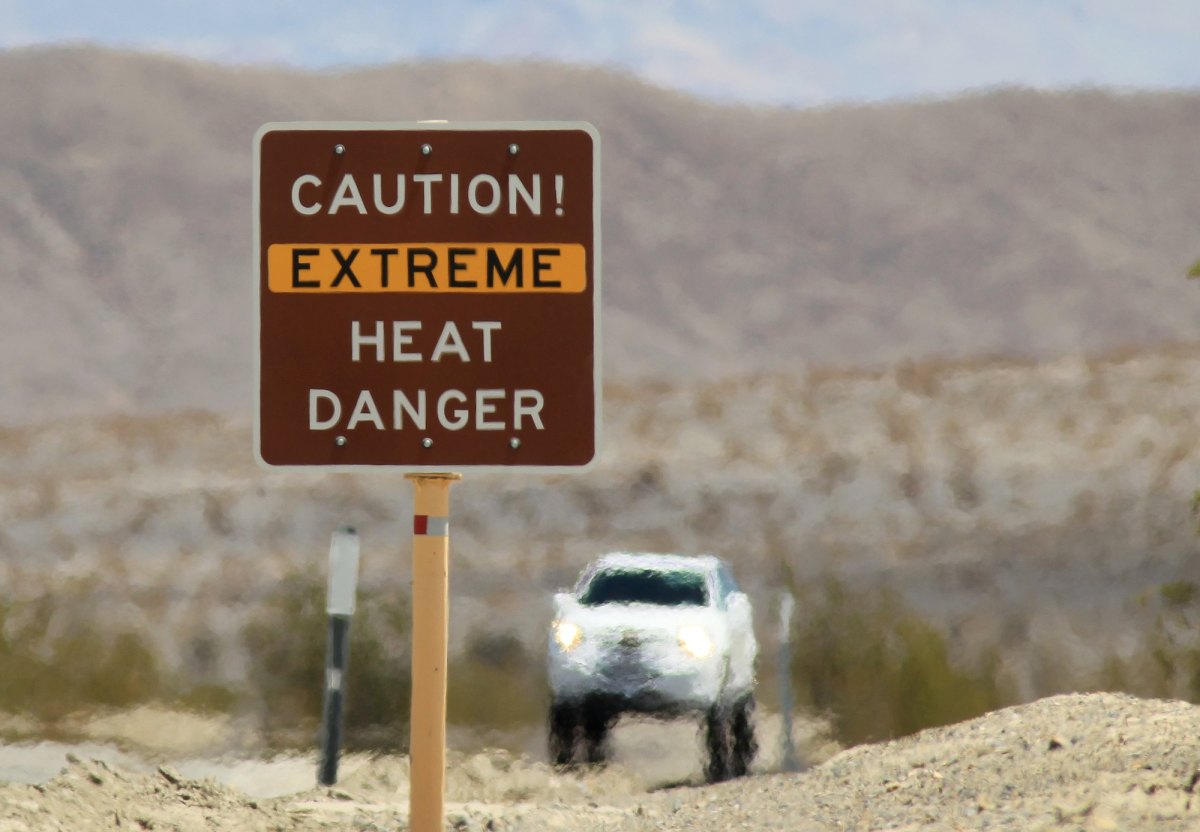

Heat wave coverage almost always focuses on scorching daytime highs, but the more dangerous story is unfolding after sundown. As a punishing heat wave grips the eastern United States and the Southwest bakes at temperatures above 100 degrees, more than 180 million people fall inside Level 3 or Level 4 heat risk zones tracked by the National Weather Service. Emergency room visits for heat-related illness climb sharply on those days, and much of the damage happens overnight.
The phenomenon has a name most Americans still overlook. Nighttime heat, meaning overnight lows that stay warm enough to block the body’s natural cooling process, is emerging as one of the deadliest features of a warming climate.
Why Nighttime Heat Is More Dangerous Than Daytime Heat
When overnight temperatures remain at or above 80 degrees, the body never gets the break it needs to recover from the day’s exposure. Heat stress compounds hour after hour, raising the risk of heat exhaustion, heat stroke and death. Older adults, children under 4, people with chronic disease and anyone living without air conditioning face the greatest danger.
“What’s making the news is the highs, but nighttime minimums have an impact on mortality,” Lara Cushing, an environmental health scientist at the UCLA Fielding School of Public Health, told The New York Times.
The trend has been building for decades. “Most people don’t realize that hot nighttime temperatures have been outpacing daytime temperature increases across most populated regions worldwide in recent decades,” Kelton Minor, a postdoctoral research scientist at the Columbia University Data Science Institute, told CNN.
How Humidity Turns Warm Nights Deadly
Humidity typically climbs overnight because cooler air holds less water, which is why early mornings often feel damp and dew forms on grass. When both temperature and dew point stay elevated after dark, the body tries to sweat but the sweat cannot evaporate. Moisture clings to the skin, core temperature rises and organs come under strain.
Lisa Patel, executive director of the Medical Society Consortium on Climate and Health, explained the mechanics to CNN. “We think it’s because as the days grow warmer, there is more moisture in the air that traps the heat. During the day, that moisture reflects the heat, but at night, it traps the heat in.”
According to the Mayo Clinic, the combination of high heat, high humidity and dehydration can push a person into organ failure in as little as an hour.
Why Cities Stay Hotter After Dark
City residents face an extra layer of risk. Concrete and asphalt soak up heat all day and release it slowly overnight, an effect known as the urban heat island. That release can leave urban neighborhoods up to 10 degrees warmer than nearby rural areas long after sunset, according to The Weather Channel. Many residents also keep windows shut for safety, and homes without cooling can turn into ovens by morning.
What the Death Toll Looks Like
Heat kills more Americans on average than any other weather hazard. Preliminary NOAA data from 2015 through 2024 shows an average of 238 heat deaths per year, with many concentrated in heat waves.



That toll is projected to rise. A 2022 study in Lancet Planetary Health found that heat-related deaths could increase sixfold by the end of the century, driven largely by warmer nights, unless planet-warming pollution is sharply curbed.
How Climate Change Is Making Nights Hotter
Nighttime is supposed to be when the body resets. That window is closing. “In general, minimum temperatures are warming faster than maximum temperatures in the U.S.,” Claudia Tebaldi, an earth scientist and climate modeler at Pacific Northwest National Laboratory, told The New York Times. She noted that for every one-degree increase in global average temperature, extreme highs and extreme lows can rise by up to twice as much.
“It’s one of those things that unfortunately is known to be a fact,” Tebaldi said. “There is not much uncertainty about the fact that warming is going to make these extremes much more severe.”