
Shopping alone no longer draws crowds the way it once did. After years of e-commerce dominance and pandemic-era isolation, the malls and retail districts pulling in the biggest weekend crowds are the ones that treat a visit like a day out, with theme parks under the same roof as flagship stores, immersive art installations next to boutiques, and rooftop restaurants inside furniture showrooms. That blend has a name, and retailtainment is quickly becoming the defining strategy for physical retail in the United States.
The term itself is a mashup. As marketing agency Into The Minds explains on their blog, “The term ‘retailtainment’ comes from combining the English words ‘retail’ and ‘entertainment.’ This strategic approach involves integrating entertainment elements into the commercial environment to transform the traditional shopping experience.” The concept dates back to the 1990s but has seen a surge of interest recently, as people grow more comfortable returning to public spaces after the isolation of the COVID-19 pandemic.
What Retailtainment Looks Like in 2026
The current wave of retailtainment goes well beyond a food court and a movie theater tacked onto a shopping center. Developers are building, or retrofitting, spaces where the entertainment is the anchor and the shopping wraps around it. That means indoor theme parks, aquariums, ski hills, immersive art districts and dining destinations that would work as standalone businesses. The result is a full-day itinerary rather than a quick errand, and the destinations below show how differently that idea can be executed depending on the market.

American Dream, East Rutherford, New Jersey
American Dream sits on the Meadowlands Sports Complex in East Rutherford and stands as one of the most ambitious retailtainment examples in the country. Co-CEO Mark Ghermezian has shared that American Dream “takes everything to a whole new level” by combining flagship retail with a full-blown theme park under one roof. It is the second largest mall in the U.S. behind the Mall of America, and it houses the largest Zara in North America and the largest H&M in New Jersey.
The entertainment lineup is the real draw. Visitors can bounce between DreamWorks Water Park, Nickelodeon Universe Theme Park, Ninja Kidz Action Park, Sesame Street Learn & Play, The Gameroom Powered by Hasbro, the New Jersey Hall of Fame, Legoland Discovery Center, Sea Life Aquarium, Big SNOW Ski Hill and the Dream Wheel. Additions in 2026 lean into the FIFA World Cup moment, including a Messi experience alongside new dining from Mediterranean restaurant Miznon and Firehouse Subs, plus a U.S. flagship for Asian beauty retailer Kiokii.
Mall of America, Bloomington, Minnesota
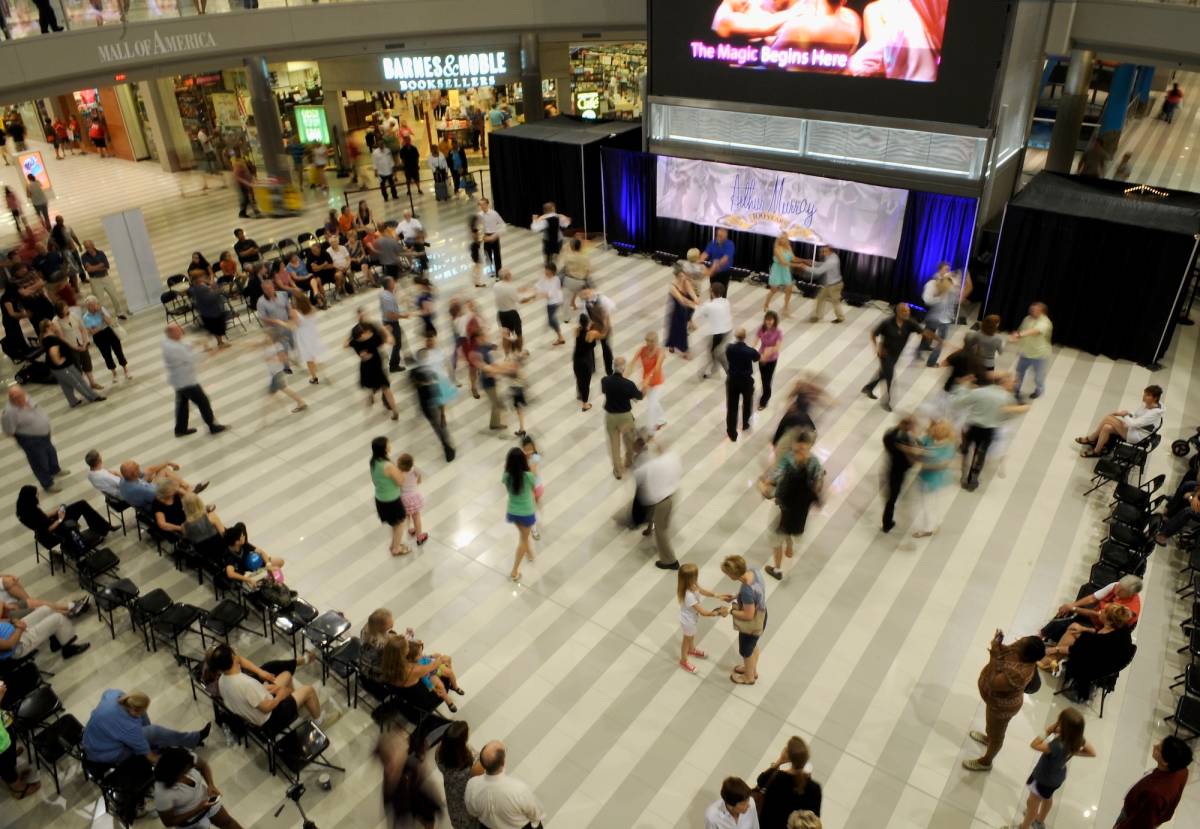
The largest mall in the U.S. was built like an entertainment destination from the start, with more than 500 stores plus attractions spread across roughly 5.6 million square feet. It is unrealistic to see everything in one afternoon, so the smart move is to map out which zone has what you want to see most and start there. Between the retail and the rides, this is one of the best experiential retail examples in the country to plan an entire weekend around.
Attractions include laser tag, a mirror maze, adventure golf, escape rooms, the Museum of Illusions, Crayola Experience, Nickelodeon Universe Theme Park and SEA LIFE Minnesota Aquarium, among others. On the shopping side, recently added retail stores include J.Crew, Lulus, Banana Republic and Mango.
AREA15, Las Vegas
Billed as the world’s first immersive entertainment district, AREA15 was built from scratch in Las Vegas and now offers more than 40 experiences, live events, art installations and dining options. What began as an experimental art space in 2020 has grown into a 40-acre playground, anchored by Meow Wolf’s Omega Mart, an immersive art exhibit with satirical grocery products.
Newer additions include Universal Horror Unleashed and Felix & Paul Studios’ Interstellar Arc, which have pushed the district further into immersive entertainment territory. A handful of boutiques and restaurants round out the district so visitors can turn a stop into a full day.
The Oculus and Westfield World Trade Center, New York
Downtown Manhattan’s World Trade Center campus layers shopping, dining, transit and memorial spaces into one walkable district. The One World Observatory offers 360-degree views from the highest point in the city, while the 9/11 Memorial & Museum gives visitors a place to pay respects and learn about those who lost their lives in the 2001 attacks. That mix of gravity and everyday commerce is part of what makes it one of the best experiential retail destinations in the Northeast.
The Oculus itself, designed by Santiago Calatrava, is the visually striking dove-shaped transit hub connecting visitors, residents and commuters to the rest of the city and New Jersey. Inside, more than 100 stores, including Apple, Sephora and Eataly, make up the Westfield World Trade Center. The complex also connects underground to Brookfield Place, which houses more than 40 additional stores and over 20 dining destinations. In the summer, the plaza above The Oculus hosts the Smorgasburg outdoor food market on Fridays and a weekly greenmarket.

RH Galleries in New York and Beyond
RH, formerly known as Restoration Hardware, has quietly become one of the more interesting retailtainment case studies by combining furniture shopping and hospitality. RH New York’s Meatpacking District gallery spans 90,000 square feet across six levels and pairs the store with a rooftop restaurant, wine terrace and art installations. Shoppers experience the collections in immersive, residential-like settings so they can get a better sense of how the pieces will feel in a home.


Locations in Chicago, San Francisco and other cities follow similar models. RH recently opened a three-level, 19,000-square-foot immersive gallery in Manhasset on Long Island, pairing its luxury furnishings with rare art and antiques. The model keeps expanding, suggesting the brand sees hospitality-driven retail as central to its future.
Why Retailtainment Matters for Shoppers and Cities
For shoppers, the appeal is straightforward, a single destination that justifies the drive, the parking and the time. For cities and developers, retailtainment is a hedge against the pressures facing traditional malls, where anchor department stores have closed and foot traffic has softened. Building in attractions that cannot be replicated online, like a water park, an immersive art exhibit, or a rooftop wine terrace, gives these spaces a reason to exist that e-commerce cannot touch.
The category is still evolving, and not every project at this scale succeeds. But the destinations above show that when the mix works, retailtainment can turn a shopping trip into the kind of outing families plan weeks in advance.