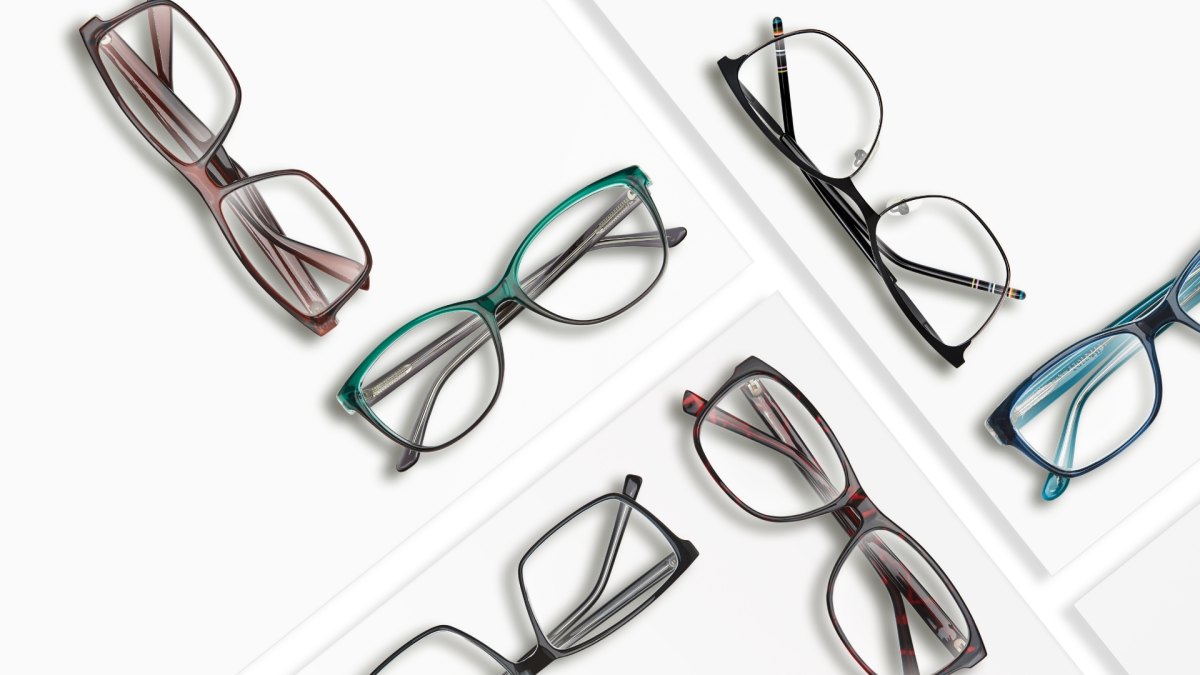
Gone are the days when your only option for buying glasses was to visit an optometrist or a department store. Online stores like GlassesUSA allow shoppers to easily compare frames, lens options, and prices from home. Shopping in-store is still the easier option for fittings, adjustments, and dealing with complex prescription needs.
Online and in-store options both have their advantages. There are pros and cons for each when it comes time to buy a new pair of frames. Making a decision early on in the process can help prevent delays, especially if you require glasses for medical reasons.
Online Glasses Shopping Works Best for Convenience and Comparison
Online shopping for medical eyewear has become increasingly popular over the past several years. Given that online retailers let shoppers compare frame styles, materials, lens upgrades, and colors without visiting a store, it’s not uncommon to see people who are familiar with the process to order their glasses online. This can be especially useful for people who know their prescription, pupillary distance, and their preferred frame measurements. Platforms such as GlassesUSA also allow shoppers to compare multiple brands, lens options, and pricing in one place, making it easier to evaluate different combinations before purchasing.
The global e-commerce eyewear market isn’t showing signs of going anywhere. According to Grand View Research’s e-commerce eyewear data, the global eyewear market was valued at $54.88 billion in 2024, and is projected to continue growing at a 9.6% CAGR from 2024 to 2030.
Not only is shopping online accessible, but it can be more affordable. A shopper replacing a simple single-vision pair of glasses may already know their frame width and lens needs, which makes shopping online more straightforward for them. Those who are familiar with how to insert their prescription online may also find shopping online more convenient and accessible.
There are a number of other advantages as well, which include everything from a wider frame selection, easier price comparisons, and even ease of use for repeated purchases. For example, GlassesUSA offers a virtual try-on feature that uses selfie and live camera technology to help shoppers preview how different frames may look before placing an order. Virtual try-on tools aided by selfie and live video technology also allow consumers to try on glasses before they ever see them in person, often in real time. Additionally, access to lens options and add-ons makes buying online more feasible for some.
While the benefits oftentimes outweigh the need to go to a brick-and-mortar store, there are a number of cons that can be equally troubling.
First, fitting for a pair of glasses can be harder to judge without trying on frames physically. Given that some materials are shaped and feel differently as well in both texture and weight, finding the proper fit can be tricky, especially if you do not know your lens width, your pupillary distance, or even the width of your face. As a result, adjustments might require a separate visit to an optometrist in order to create a perfect fit.
Secondly, incorrectly entering your prescription or PD can affect the online order of your glasses. One false input could mean your glasses could be sent with an improper prescription. For this reason, some recommend uploading your prescription to ensure its accuracy. However, complex prescriptions may require more guidance, or even more time, which means you may still need to go to a specialist.
Lens thickness, progressive placement, and frame comfort can also be harder to evaluate if you have never worn a particular brand or style of glasses. If your ordered pair is too uncomfortable, returns and exchanges are possible, but could take time depending on the manufacturer’s warranty and terms of service.
Physical Stores Still Dominating for In-Person Eyeglasses Trust and Fitting
While online purchases continue to fuel the digital marketplace, in-person eyeglass purchases are more often done in person. A report from The Vision Council’s consumer data reports that, in its fourth quarter of 2024, Consumer InSights found that 86% of eyeglass purchases take place in brick-and-mortar stores, while 78% bought their eyewear from their exam provider. At the same time, the continued growth of online eyewear retailers such as GlassesUSA reflects that many consumers—particularly those replacing an existing prescription or shopping for additional pairs—are increasingly comfortable purchasing glasses online when they have the necessary prescription information.
The advantage of purchasing in-store often comes from the providers themselves. Personal fitting and adjustments are much easier to do when you are able to physically try on glasses. Glasses should fit comfortably, and frame design and materials should match your lifestyle.
Visiting a store in person makes it easier to get assistance for fitting progressive or complex prescriptions. Someone who is buying progressive lenses for the first time may benefit from a practical measurement and fitting conversation, where specialists can immediately troubleshoot for comfort or fit.
With these advantages said, the limitations that come from in-person stores are often tied to the availability of the products they have in stock. Because they have to physically store products on-site, there may be a smaller frame selection depending on one’s location. Likewise, there may also be fewer opportunities to compare many styles quickly.
Price points can also vary depending on one’s insurance, lenses, and frame choices. Transparent pricing is also hard to determine in-store due to the lack of prices available to you.
Last but not least, more time might be required for appointments or visits to an optometrist, which can be a dealbreaker for some consumers.
When Each Eyeglass Option Makes Sense
Before you set out shopping, you should consider what you are looking for in a pair of glasses and what makes sense for your specific situation.
Buying glasses online is the ideal option if you:
- Are current on your prescription
- Know your pupillary distance
- Have a simple or well-known prescription
- Want to compare many types of frames
- Replacing a similar pair
- Looking to compare prices and convenience
- Want features such as GlassesUSA’s virtual try-on tools, broad frame selection, and the ability to compare lens options from home
Physical stores are ideal if you:
- Have a complicated prescription
- Need progressive lenses for the first time
- Need help with professional fitting
- Not sure about frame size
- Need fast modifications
- Buy glasses immediately after an eye exam
Shopping at Your Convenience
Whether you visit a brick-and-mortar location or browse websites from the comfort of your home, there is no right or wrong way to buy glasses. It all comes down to personal preference and what is most practical for you. First-time glasses buyers may have an easier time shopping in store with the assistance of an optometrist. However, if you know what you are looking for, selections online are often larger.
There are pros and cons to both types of shopping. Figuring out what you are looking for can help you decide whether the convenience of shopping online or in a physical store is better for your eye care needs. This proves especially true if you are purchasing your first pair of glasses. For shoppers who already have an up-to-date prescription and are comfortable ordering online, retailers such as GlassesUSA can provide a convenient way to compare frames, explore lens options, and complete the purchase without visiting a store.
Sources:
Eyewear market size, Share & Trends | Industry Report, 2030. (n.d.). https://www.grandviewresearch.com/industry-analysis/eyewear-industry
Consumer insights Q4 2025. Vision Council. (n.d.-a). https://thevisioncouncil.org/product/consumer-insights-q4-2025
The information provided in this article is for general informational and educational purposes only. It is not intended as legal, financial, medical or professional advice. Readers should not rely solely on the content of this article and are encouraged to seek professional advice tailored to their specific circumstances. We disclaim any liability for any loss or damage arising directly or indirectly from the use of, or reliance on, the information presented.