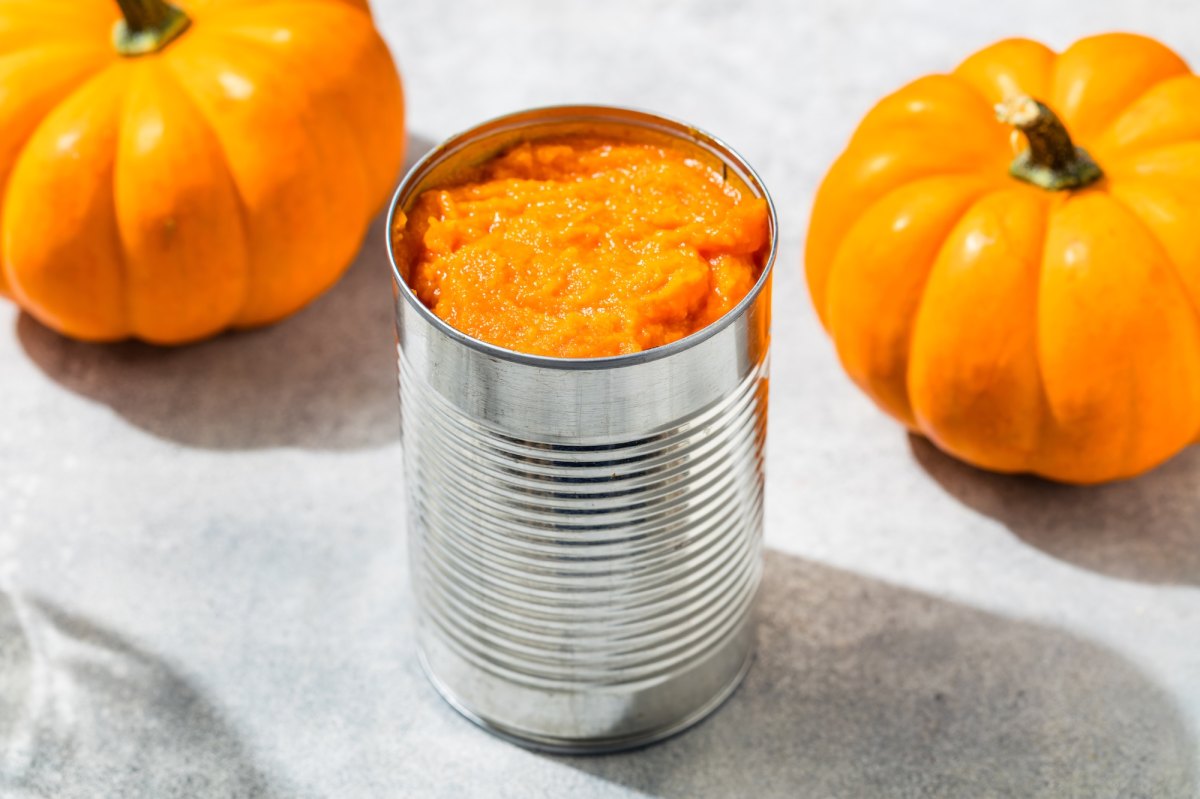

One can in the baking aisle powers Thanksgiving pies, pumpkin bread and your fall latte. Crack it open, though, and the stuff inside tastes nothing like a roasted jack-o’-lantern. Here is what is actually in there, which fresh varieties reward the extra kitchen work and how to pick the right option for the dish you have in mind.
What Pumpkin Puree Actually Is
Pumpkin puree is cooked, mashed pumpkin flesh with nothing else added. The pumpkin itself may surprise you. Most canned puree sold in the U.S. is made from Dickinson pumpkin, a tan, squash-like variety that is a close relative of butternut squash. Some brands blend in other winter squashes, which is legal under FDA labeling rules.
According to the USDA, canned pumpkin is defined as “The canned product prepared from clean, sound, properly matured, golden-fleshed, firm-shelled, sweet varieties of either pumpkins or squashes by washing, stemming, cutting, steaming, and reducing to a pulp.”
Translation: A can labeled “100 percent pumpkin” can legally contain squash. About 90 percent of the canned pumpkin sold in the United States comes from Illinois, as reported by the Chicago Sun Times.
Can You Bake With a Carving Pumpkin?
Technically yes. Practically, you will regret it. Jack-o’-lantern pumpkins, also called field pumpkins, are bred for size and a hollow cavity, which turns them stringy, watery and bland once cooked. That is why pumpkin pie recipes call for canned puree or a dedicated pie pumpkin, not the one glowing on your front step.
Better fresh picks include sugar pie pumpkins, Cinderella pumpkins and Kabocha squash, sometimes called Japanese pumpkin. Ree Drummond of The Pioneer Woman uses sugar pie pumpkins for her puree because “they’re naturally sweeter, less watery and have a smoother texture than large carving pumpkins.”
A 3-to-4-pound sugar pumpkin yields roughly 2 to 3 cups of puree, about the same as one 15-ounce can. Handy math when you are deciding whether the roasting pan is worth pulling out.
Fresh vs Canned: How They Really Compare
The two are not interchangeable in every situation, even when the volume matches.



- Texture. Canned puree is steamed and pressure-cooked, so it stays dense, smooth and consistent from can to can. Homemade puree varies, often running wetter and more fibrous, so it needs straining or a longer roast to drive off moisture.
- Flavor. Fresh roasted pumpkin tastes lighter, sweeter and more vegetal, with caramelized notes. Canned has a deeper, earthier, more uniform taste, which is why a classic pumpkin pie made from the can tastes the way most people expect.
- Nutrition. One cup of canned pumpkin has more carotenoids, some of which convert to vitamin A in the body, and more fiber than one cup of fresh pumpkin, according to Consumer Reports. That gives canned the nutritional edge.
One warning worth repeating. Do not confuse canned pumpkin puree with canned pumpkin pie filling. The filling already has sugar and spices mixed in, and swapping it into a pumpkin bread recipe will throw off both the sweetness and the texture.
Cost, Convenience and Smart Swaps
Canned puree is cheap, shelf-stable, ready in seconds and available year-round. Fresh takes more time to cut, seed, roast, cool and puree, and you get more waste for a higher cost per cup. The upside of fresh is a batch of roasted seeds for snacking and a lighter flavor that shines in a loaf of pumpkin bread or a simple soup.
A few quick answers for the kitchen:
- Can you swap fresh and canned one to one? Usually yes by volume, but drain the fresh puree first to reduce moisture and cut back on other liquids in the recipe.
- Can you substitute butternut squash for canned pumpkin? Yes. The variety most canned brands use is closer to squash than to a carving pumpkin anyway.
- Want pie-ready puree from scratch? Roast your pumpkin halves cut side down instead of boiling them. It concentrates the sugars and reduces water. Drain the puree in cheesecloth or a fine mesh strainer before using it for pies and baking.