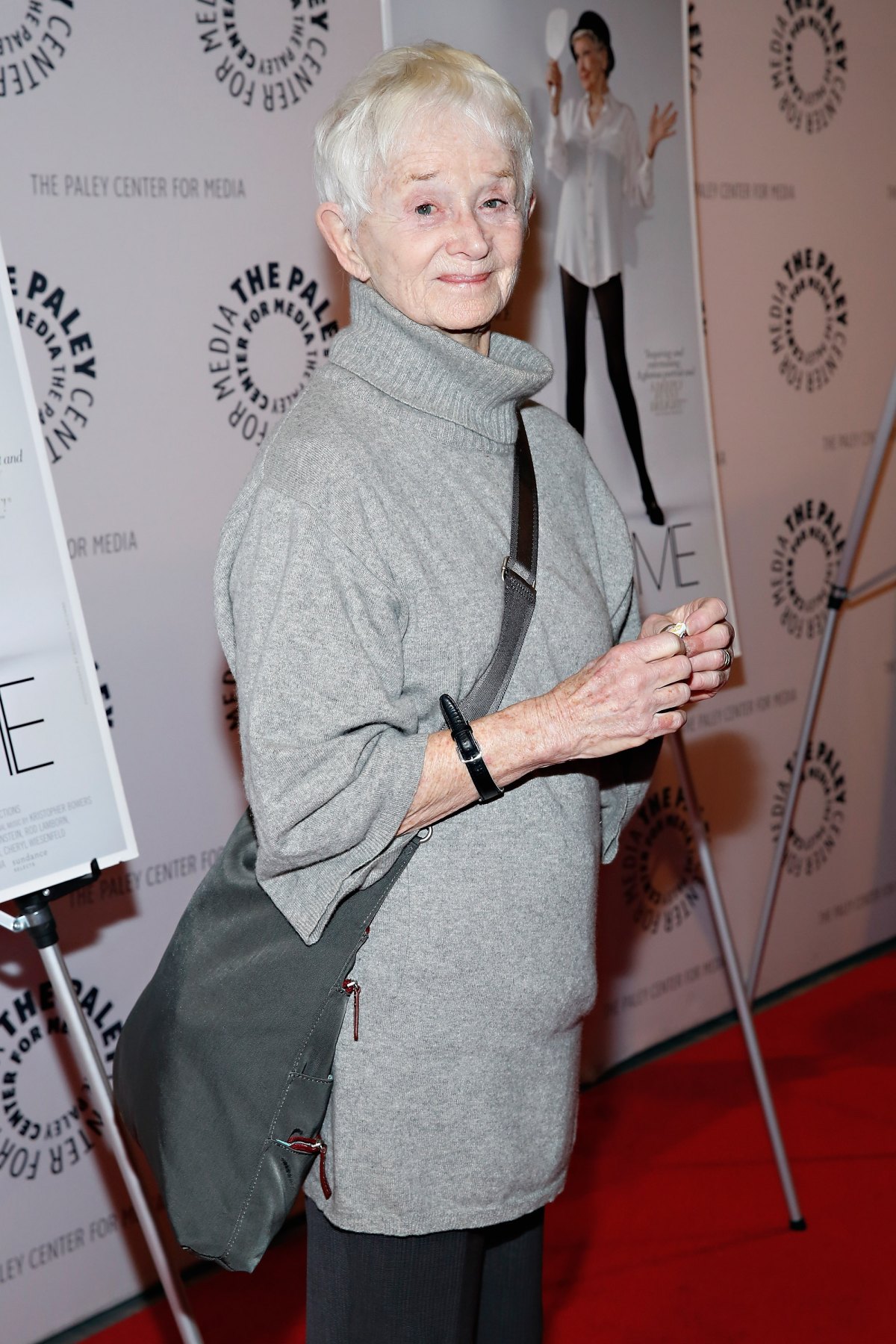

Actress Barbara Barrie has died by assisted suicide after a terminal cancer diagnosis. She was 95.
“On behalf of the Harnick family, I can confirm that her passing was medically assisted in accordance with the New York State Medical Aid in Dying law, of which she was a proponent and advocate,” Barrie’s rep said in a statement to E! News on Wednesday, October 28.
Barrie’s daughter, Jane Harnick, further confirmed that the actress died at her home in New York City. She is survived by Jane and son Aaron Harnick, whom she shared with husband Jay Malcolm Harnick. (The director died in 2007.)
Barrie was diagnosed with rectal cancer in the ‘90s. She later announced that she suffered from idiopathic pulmonary fibrosis, which is a chronic and incurable lung disease.
“I have a very full, active life, but what lies ahead is unknown and yet known at the same time,” she told Playbill in 2014. “I am living full steam ahead and am now trying to help other people do the same.”
Barrie rose to stardom after a role in the 1964 film One Potato, Two Potato, which scored her the Best Actress Award at the Cannes Film Festival. She also earned an Academy Award nomination for her role as Evelyn Stohler in Breaking Away and an Emmy Award nomination when she joined the television series based on the film.
Barrie also appeared in Private Benjamin and Judy Berlin. On the small screen, Barrie is best known for her work on Barney Miller from 1975 to 1978. She later had a scene-stealing role on Suddenly Susan from 1996 to 2000.
The actress also scored accolades in theater, including a Tony Award nomination for Best Featured Actress in a Musical in 1971 when she originated the role of Sarah in Stephen Sondheim’s Company.


Shortly before her death, Barrie reflected on balancing her career with her family life. “My entire professional work, almost, I was married, I had children to take care of,” she said on How Art Changed Me in 2024. “If [a] part came along that I wanted to do, I would do it.”
Following her cancer diagnosis, Barrie wrote two books about navigating the disease: 1997’s Second Act and 1999’s Don’t Die of Embarrassment.
“I think if I can get the word out on this thing, that will be my legacy,” she told the South Florida Sun Sentinel in 1997.