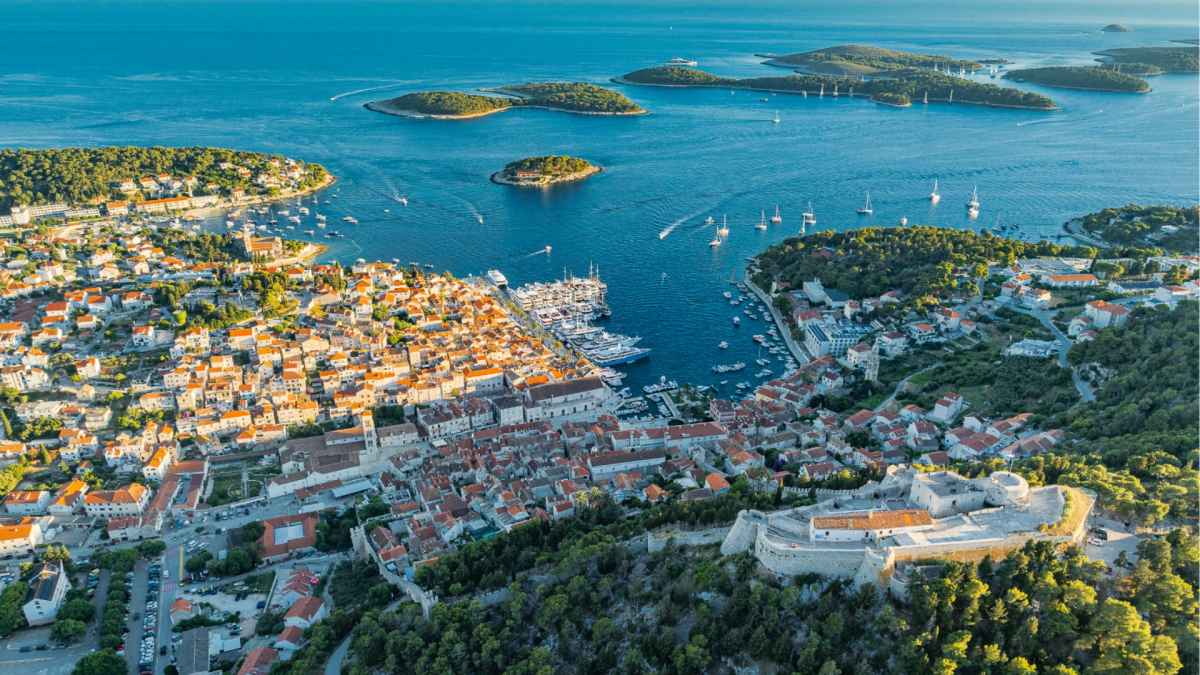
The island of Hvar lies off the Dalmatian coast. Its skyline resembles a long ridge of limestone, lavender and pine surrounded by some of the clearest water in the Adriatic, and its harbor is famous enough that superyachts travel to anchor in it. The glamour here has been well known, but the island’s hidden skill lies in the feeling it brings visitors throughout their stay. People come back from Hvar describing the quieter things: the deep sleep, the way the days slow down, food that tastes like it is meant to. It doesn’t happen through a spa menu. The island works on each person directly, through the senses, and together, they help explain the island’s enduring appeal.
What You See
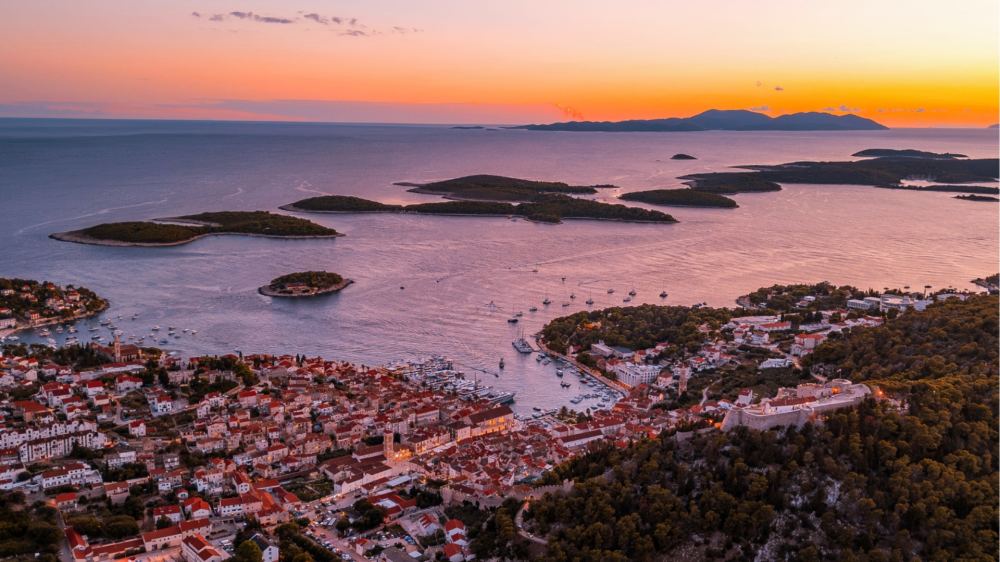
Called the Sun Island, Hvar receives over 2.800 hours of sunshine per year, more than nearly anywhere on the Mediterranean, and the effects of that are visible all around. The limestone glows white at midday, the water shifts from glass to turquoise to deep blue and the golden hour sunsets are something to experience. From the Fortica fortress above Hvar Town, the whole Adriatic lies in front, the Pakleni Islands stretch out across the horizon, anchored by rooftops, harbor and open sea. The sun here does more than just give a tan. It can reset the body’s clock, lift the mood and give a reason to spend time outside from morning to night. The eyes see the island first. The other senses need a bit more to experience it fully.
What You Feel
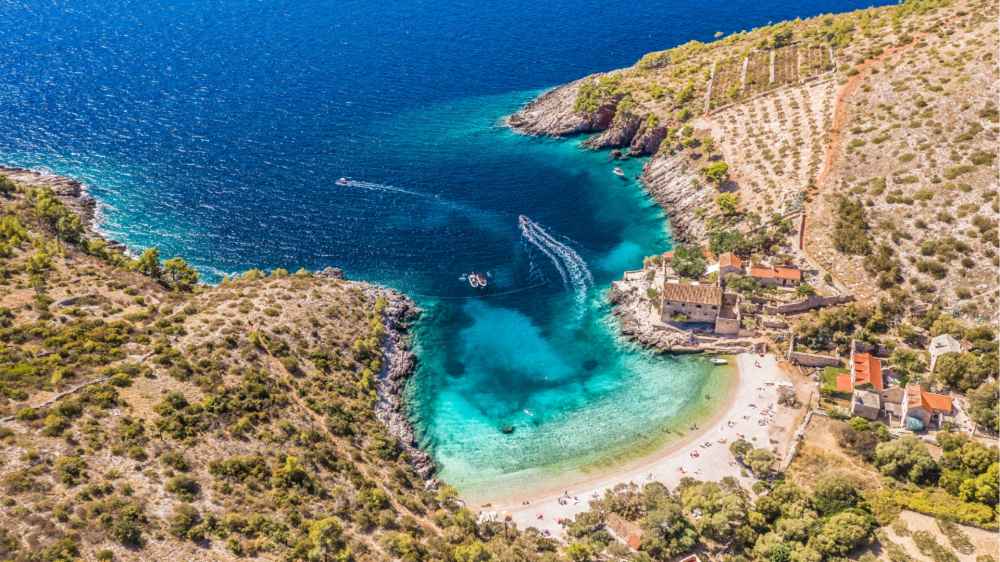
The sea is why many visitors choose to spend their summers here. Hvar’s beaches are pebble and stone, which is the very reason the sea stays so transparent. The days revolve around the swim: picking a cove, getting in before the boats arrive, drying off on warm rock. Dubovica, in the image above, is a bay folded around a few stone houses, and it’s often remembered for its unique submarine scenery and surrounding greenery. Pokonji Dol is an easy walk from town. A taxi boat to the Pakleni islands buys an entire day of swimming in pine-shaded bays where the loudest event is a sailboat changing its mooring. For anyone who opts for structured movement, most beaches are a great spot for yoga flows. The sun handles the rest: salt drying on skin, stone radiating heat and warmth that lingers long after moving into the shade.
What You Smell
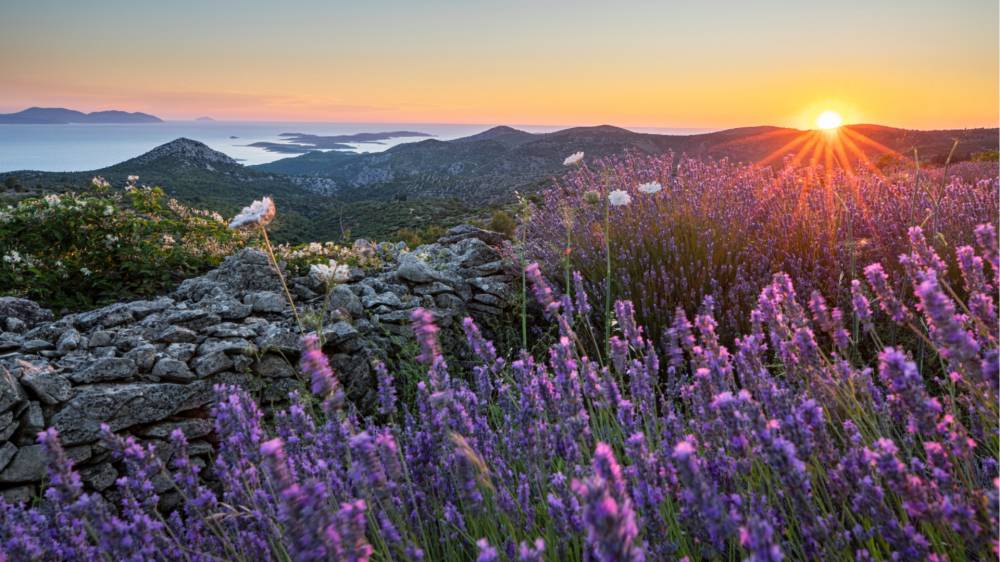
Inland, the island introduces itself again through the nose. Lavender has grown on Hvar’s slopes for generations, and around the stone village of Velo Grablje, the summer bloom is felt in the air well before the fields come into view. Thanks to an abundance of lavender fields, the whole island can be felt as free aromatherapy: pine resin sharpening in the heat, wild rosemary along the trails, salt in the breeze along the coast. Local families still distill the lavender into oil and sell it from small stands beside the road, which makes Hvar one of the few places where the souvenir and the memory can be the same item. For many visitors, the scent of lavender becomes a lasting reminder of the island long after summer has ended.
What You Taste
Many who come here share that the food becomes one of the most memorable aspects of time spent on the island. The Mediterranean diet is inscribed on UNESCO’s intangible cultural heritage list, and Hvar is one of the named island communities where the tradition actually lives, in kitchens rather than in textbooks. The ingredients come locally: fish pulled from the surrounding water that morning, olive oil pressed a few kilometers from the table, figs and capers and tomatoes from island gardens, and honey from hives in the rosemary. The setting is the konoba, the family tavern where dinner lasts three hours, and traditionally, nobody asks for the check early. Among the island’s traditional dishes is gregada, a fish and potato stew often served alongside bogdanuša, a white grape variety closely grown almost exclusively on Hvar. If you ask the locals, the healthiest eating pattern on the planet turns out to be a long, loud, joyful dinner, with people you care about, surrounded by nature.
What You Hear
The island’s soundtrack is analog. Walking through the city, cicadas hold their note through the warm hours with the commitment of serious musicians. The sound of water moving against beach pebbles is a tone not even meditation apps have in their catalogue. In the squares after dark, the traditional Dalmatian a cappella singing, a UNESCO-recognized intangible heritage, is performed by groups called Klape, and their harmonies can stop conversations mid-sentence. But underneath all of it lies the sound many people travel for: near silence, the kind that is getting harder to find anywhere, and the truest expression of what the island is.
The Recipe, Written Out
Add it up, and the formula is simple. Sunlight in quantities you cannot find in the rest of Europe. Sea on the skin twice a day. Lavender and pine on every walk. A UNESCO-recognized food culture served without ceremony. Quiet after dark and the sleep that follows it. Hvar measured out this recipe long before the travel industry started reverse engineering it, and the island runs the whole program on autopilot, every day, for anyone who shows up. Taken together, it offers a reminder that some of the most enduring travel experiences are often the simplest: sunlight, sea, good food and time spent outdoors.