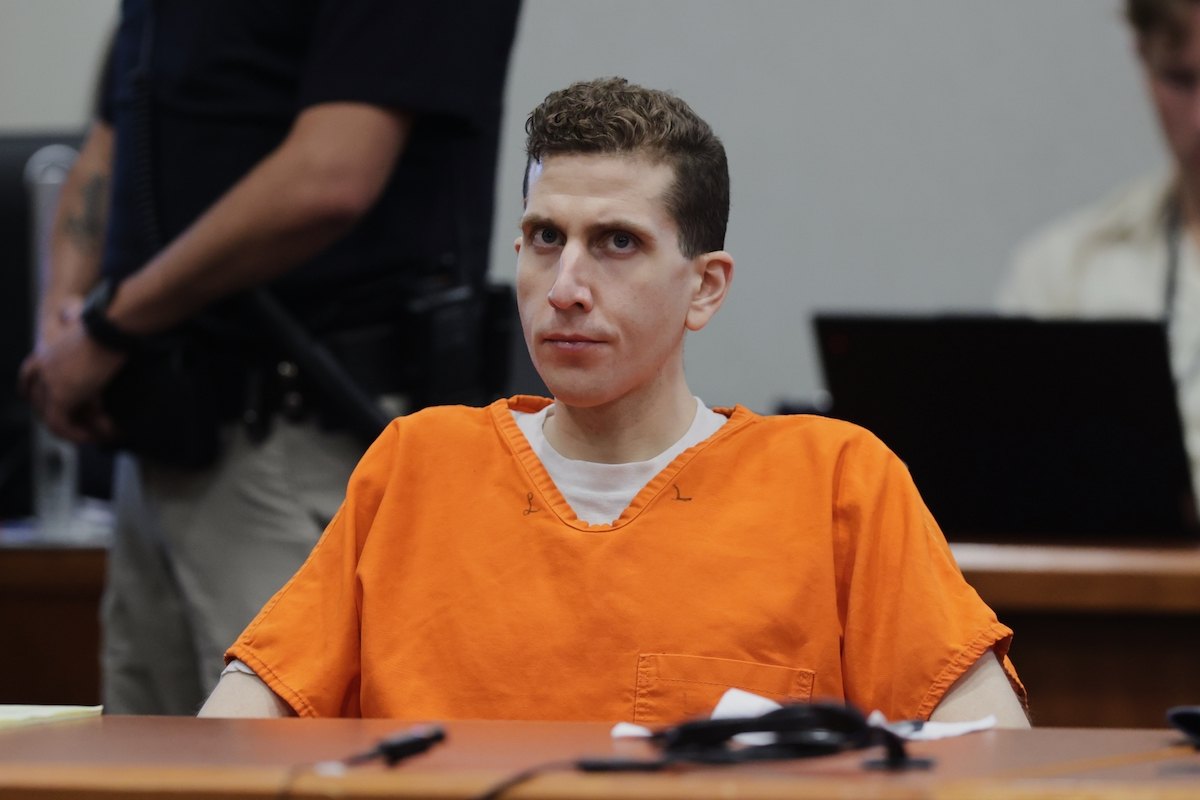


Bryan Kohberger’s arrest following the University of Idaho murders came less than seven weeks after the killings shocked the college town of Moscow, Idaho, but the road from crime scene to conviction stretched years — and it isn’t over yet.
Kohberger confessed to the stabbing deaths of college students Kaylee Goncalves, Madison Mogen, Xana Kernodle and Ethan Chapin inside an off-campus home at 1122 King Road on November 13, 2022. He was taken into custody on December 30, 2022, after DNA evidence linked him to the crime scene. Nearly three years later, in July 2025, he pleaded guilty to four counts of first-degree murder and one count of felony burglary and was sentenced to four life sentences without the possibility of parole.
Now, one year after that plea, Kohberger is attempting to unwind the entire case — claiming he was misled into confessing. Here’s the full timeline of how long it took to catch Kohberger and what has happened since.
Bryan Kohberger Was Arrested 47 Days After the Idaho Murders
The killings took place in the early hours of November 13, 2022. Mogen and Goncalves were found dead in a bed on the third floor of the King Road home, while Kernodle and boyfriend Chapin were found dead in a bedroom on the second floor. Two other roommates, Dylan Mortensen and Bethany Funke, survived the attack by locking themselves in their rooms.
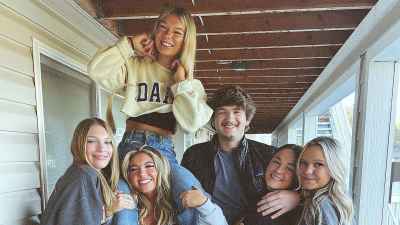
Investigators spent weeks piecing together evidence before Kohberger — then a criminology PhD student at Washington State University in Pullman — was arrested on December 30, 2022 — 47 days from the murders to his arrest.
The break came from a Ka-Bar knife sheath bearing the USMC insignia that was left next to a victim’s body.
Kohberger’s DNA was found on the sheath, according to law enforcement. Amazon records also showed Kohberger had purchased a Ka-Bar knife and sheath months before the killings. Authorities additionally identified a white Hyundai Elantra — the type of car Kohberger drove — circling the crime scene on surveillance video.
Kohberger asked for a lawyer during his first interview with police in December 2022 and initially pleaded not guilty. Prior to his plea deal, he claimed to have been out stargazing on the night of the murders.
Bryan Kohberger’s Guilty Plea and Sentencing in July 2025
Kohberger’s trial was set to begin in August 2025. But one month before it was scheduled to start, he pleaded guilty as part of a deal that took the death penalty off the table.
He was sentenced to four consecutive fixed life sentences without the possibility of parole, plus an additional 10-year fixed sentence for felony burglary.
When he pleaded guilty, Kohberger was not required to share a motive. Asked at his July 2025 sentencing hearing whether he had words for the victims’ families, he replied: “I respectfully decline.”
Ada County District Court Judge Steven Hippler lifted the gag order on the case following the sentencing, allowing the Moscow Police Department to release investigatory records. Those documents revealed Kohberger had been spotted outside the King Road house 23 times before the murders and had used the Ka-Bar knife with “a lot of force.” The murder weapon itself has never been recovered.
The documents also detailed the severity of the attacks. Kernodle had “defensive knife wounds” on her hands and more than 50 stab wounds. Goncalves was “unrecognizable” due to the damage to her face and had more than 20 stab wounds. Mogen had wounds to her arms, hands and face. Chapin was found in Kernodle’s bed with stab wounds and “covered in blood.”

Mortensen, who spoke publicly for the first time during Kohberger’s sentencing hearing, told the court she had seen Kohberger walk through the house that night but “was intoxicated and didn’t want to believe what was going on.” She heard what she believed to be a man’s voice say, “You’re gonna be fine. I’m gonna help you.”
“What happened that night changed everything,” Mortensen said. “Because of him, four beautiful, genuine, compassionate people were taken from this world for no reason.” She added: “Living is how I honor them. Speaking today is to help me find some sort of justice for them, and I will never let him take that from me. He may have taken so much from me, but he will never get to take my voice.”
Bryan Kohberger Petitions to Withdraw His Guilty Plea in July 2026
One year after he pleaded guilty, Kohberger stunned observers by filing a petition to withdraw his plea and reopen the case. He announced the move in a statement to The New York Times on July 26, 2026.
“My actual innocence is my truth, and the plea, hinged on by false promises and blatant disinformation, MUST be withdrawn,” Kohberger said, reiterating an “absolute claim of innocence.”
Kohberger declined to discuss any evidence he had to prove his innocence, but said “the intention is for all of those questions to be investigated and answered appropriately in a trial setting.”
Speaking from the Idaho Maximum Security Institution, he added: “Why am I breaking my silence? A lot went wrong in those plea discussions. I really do want that to be heard.”
Kohberger, who was represented by court-appointed attorneys when he initially pleaded guilty, said he prepared the documentation to challenge the case on his own and is seeking to have a new lawyer appointed.
The Goncalves family swiftly pushed back. “‘The mosquito you just can’t seem to swat’ — that is what Kohberger and his following have become to this family,” the family wrote in a July 27 statement, calling Kohberger “a guilty man once again claiming he is innocent” who previously “chose not to leave his fate — or the facts of the case — to a jury.”
Bryan Kohberger’s Alleged Motive Remains Unclear
Kohberger was never required to share why he targeted the King Road home. But The Idaho Murders: College Nightmare director Skye Borgman offered one theory in the Netflix docuseries, suggesting Kohberger may have targeted the residence because it was occupied primarily by young women.
“This was a house that had five women living in it,” Borgman told Fox News. “The night that the murders happened, Xana Kernodle’s boyfriend, Ethan Chapin, was over, but really, this was a house full of women, and it seems quite clear that he targeted it.”
The docuseries features Kohberger’s former Washington State University classmates, who described him as “not particularly well liked” and said he often spoke negatively about women. He was reported to campus police by a female student who claimed he followed her to her car and lost his teaching assistant job as a result.
“He watched the house; he was around the house in the days, weeks and months leading up to the murders,” Borgman said. “So, it seems pretty likely that he had a very low regard, if not hatred, for women.”



Some experts have also cast doubt on whether Kohberger acted alone. Forensic scientist Brent Turvey, who analyzed the crime scene for the defense, argued the killings involved multiple people and questioned why authorities didn’t do more testing after a hair was found with one of the victims.
Whether any of those questions get a courtroom hearing now hinges on Kohberger’s petition — and on whether a judge agrees to unwind the plea that closed the case just over a year ago.
This story was compiled with the help of AI tools and edited by journalists.