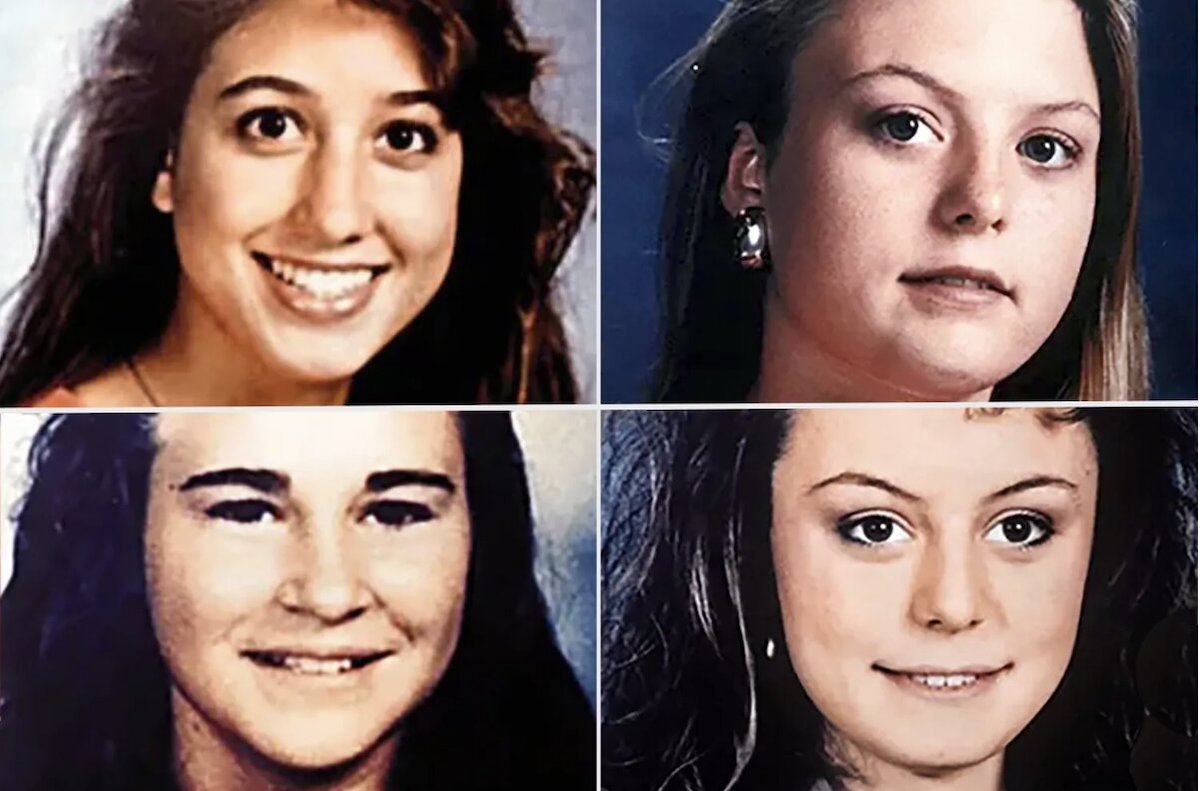


Nearly 34 years after four teenage girls were brutally killed inside an Austin, Texas, yogurt shop, authorities identified the man they believe is responsible — and he has since been linked to another cold case.
The 1991 killings of Jennifer Harbison, Sarah Harbison, Eliza Thomas and Amy Ayers, known as the Yogurt Shop Murders, haunted investigators, families and the Austin community for decades. After multiple wrongful arrests, overturned convictions and dead ends, a major breakthrough finally arrived in September 2025. Here’s everything to know about how the case was cracked and the suspect behind it.
Austin Police Identify Robert Eugene Brashers as Yogurt Shop Murders Suspect
The Austin Police Department announced the long-awaited development on September 26, 2025, revealing that DNA testing had finally pointed them to a suspect: Robert Eugene Brashers.
“Austin Police have made a significant breakthrough in the 1991 I Can’t Believe It’s Yogurt murder case and we have new information. Our team never gave up working this case,” the department said in a statement. “For almost 34 years they have worked tirelessly and remained committed to solving this case for the families of Jennifer Harbison, Sarah Harbison, Eliza Thomas, and Amy Ayers, all innocent lives taken senselessly and far too soon.”

Officials continued, “We have identified a suspect in these murders through a wide range of DNA testing. The suspect is Robert Eugene Brashers, who committed suicide in 1999. This remains an open and ongoing investigation.”
Brashers had not previously been linked to the Austin murders. Authorities confirmed that they had reached out to the families of all four girls before going public with the news.
Brashers is suspected of committing at least three murders between 1990 and 1998 across South Carolina and Missouri. He died by suicide in 1999 during a police standoff.
On September 26, 2025, CBS News reported that the gun Brashers used in his own death is “believed to be consistent with a bullet casing found in a drain inside the yogurt shop.”
The 1991 ‘I Can’t Believe It’s Yogurt!’ Killings Explained
The crime that shocked Austin took place on the night of December 6, 1991. Thomas, 17, Ayers, 13, and sisters Jennifer, 17, and Sarah, 15, were found gagged, tied up and shot in the head inside an I Can’t Believe It’s Yogurt! shop. The building had been set on fire in what authorities believed was an attempt to destroy evidence.
Both Eliza and Jennifer worked at the shop the night of December 6. Sarah and Amy reportedly stopped by to meet the older girls before they closed up that evening — a routine visit that ended in tragedy. The brutality of the killings, the young ages of the victims and the lack of clear leads made the case one of the most notorious unsolved crimes in Texas history.
Wrongful Arrests Plagued the Yogurt Shop Murders Investigation
For years, the case appeared to be on the verge of resolution — only for those efforts to collapse. Robert Springsteen, Michael Scott, Maurice Pierce and Forrest Welborn, who were each teenagers at the time of the murders, were arrested in 1999 and charged with the killings.
The charges against Pierce and Welborn were later dropped. Though Scott and Springsteen confessed to police, both later recanted their admissions, claiming they were forced into making them.
Springsteen was convicted of the murders in 2001, but that ruling was overturned in 2006. Scott was similarly convicted in 2002, only to have his conviction overturned in 2007. Ultimately, all four men were released due to lack of evidence — leaving the case open once again and the victims’ families without answers for nearly two more decades.

Robert Eugene Brashers Linked to 1998 Kentucky Murder of Linda Rutledge
Just months after Brashers was named as the suspect in the Austin killings, investigators connected him to another disturbing cold case. On January 7, 2026, Lexington, Kentucky, police identified Brashers as the person responsible for the 1998 death of 43-year-old Linda Rutledge.
Rutledge was fatally shot inside a business before the building was set on fire — a chilling parallel to what had happened seven years earlier in Austin. Kentucky investigators explained in a Facebook post that they received a tip from Austin police in July 2025, which prompted them to review the evidence from Rutledge’s case.
“That call from Austin, where our shell casings matched, you know, that was some information that we could do something with and could run on,” Lexington Police Department investigative clerk Ann Witte said. “It opened up a whole new avenue of investigation for this case, and neither one of us ever dreamed that it would be resolved the way that it was.”
The breakthrough came after authorities found that a .380 caliber shell casing recovered from Rutledge’s crime scene was an exact match to shell casings found after the yogurt shop murders. Law enforcement sources said they had originally identified Brashers as the suspect in the 1991 case through genetic genealogy technology applied to a DNA profile, according to KVUE.
Witte added that Rutledge’s family had long struggled to understand who could have killed their loved one. “Linda’s mother told us that she hoped that it was no one that knew her,” Witte continued. “Because how could someone that knew her and loved her do that to her?”

Police have said that Brashers was a serial killer and that he has been linked to at least eight victims across the United States, according to KXAN. Because he died by suicide in January 1999, he never served time for any of the crimes he committed.


Investigators noted that Brashers would have been arrested and charged with Rutledge’s murder if he were still alive today. Lexington police extended condolences to Rutledge’s family, expressing hope that closure could help loved ones heal.
“While her case may be solved, it does not bring Linda back, but we hope that by knowing who killed her, her loved ones can begin to heal,” a news release from the Lexington Police Department said, per Spectrum News.
This story was compiled with the help of AI tools and edited by journalists.