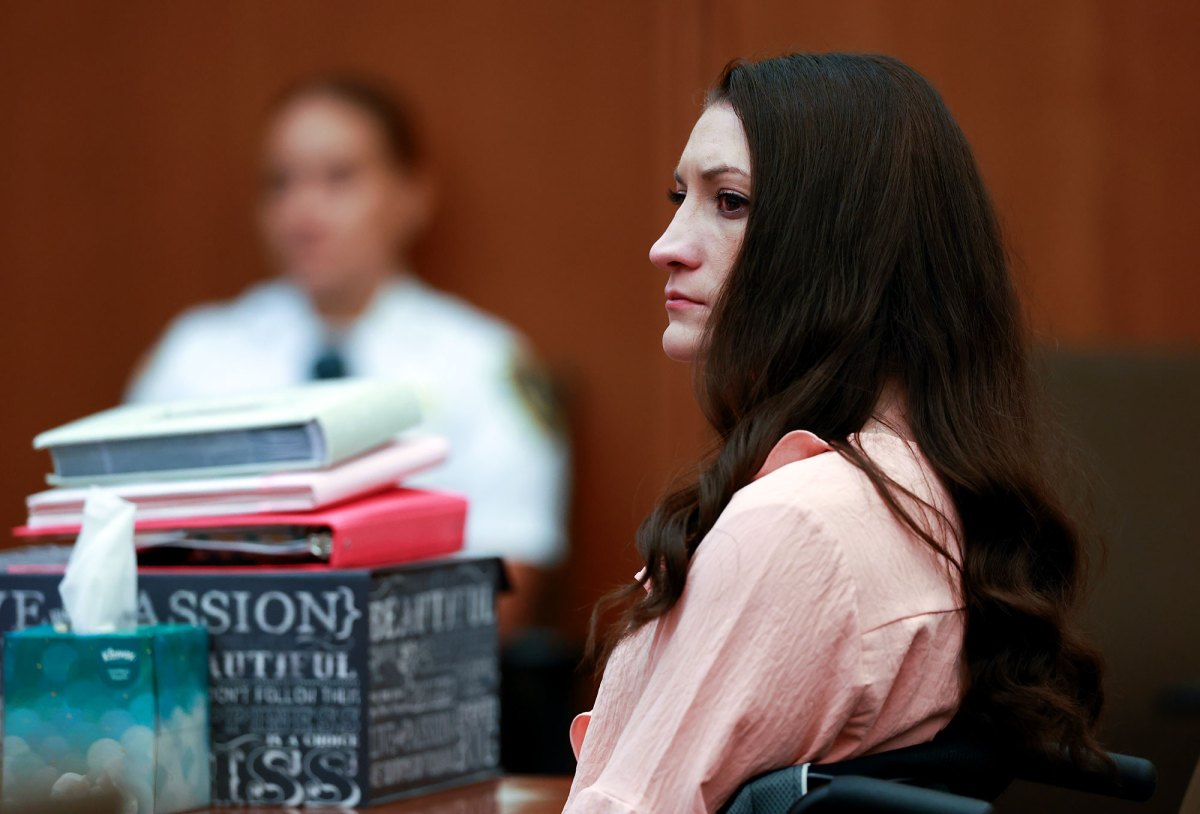


Lindsay Clancy’s murder trial has captured national attention as the former labor and delivery nurse faces charges for the January 2023 killings of her three young children in Massachusetts.
Lindsay is on trial at Plymouth Superior Court, where jurors have been hearing weeks of emotional testimony from her ex-husband, mother, sister and former mother-in-law. The proceedings are being streamed live by Court TV, allowing the public to follow the closely watched case as it unfolds.
Us is breaking down where the trial is taking place, the details of the crime and the arguments being made on both sides.
Lindsay Clancy’s Trial Is Taking Place at Plymouth Superior Court
The trial is being held at Plymouth Superior Court in Plymouth, Massachusetts, which is in the same county where the Clancy family lived at the time of the killings. Lindsay was arrested on January 26, 2023 — two days after the deaths of her children — and has remained a central figure in one of the most heavily covered postpartum-related criminal cases.
Court TV has provided live coverage of the proceedings, including Patrick Clancy’s emotional testimony about the couple’s three children.
What Is Lindsay Clancy Accused of Doing?
The killings took place on January 24, 2023, at the family’s home in Duxbury. According to testimony and prosecutors, Lindsay asked her then-husband, Patrick, to leave the house to pick up dinner and medicine for their oldest daughter, Cora.
Patrick testified that he rocked their 8-month-old son, Callan, on his knees and kissed 5-year-old Cora on the head before he left. Their 3-year-old son, Dawson, was eating chicken nuggets.
“I’ll be right back,” Patrick recalled telling his kids.
He returned home about 25 minutes later to discover that Lindsay had jumped from the second-story window of their home. As he called 911, Patrick found all three of their children had been strangled. Cora and Dawson were pronounced dead shortly after being rushed to the hospital, while Callan died a few days later.
When asked about Lindsay’s demeanor before he left that evening, Patrick said she appeared to be acting “normal” before allegedly confessing to the crime.
Patrick Clancy’s Emotional Testimony About the Kids
Patrick took the stand on July 27, 2026, and grew emotional as Assistant District Attorney Jennifer Sprague showed photographs of the children, including one of Cora smiling in a large red bow.
“She liked princesses,” Patrick said about Cora as he held back tears. “She had a lot of friends. She just liked taking care of people.”
He added that Dawson liked firefighters, trucks and Paw Patrol, and that Callan “was just a happy baby.”
Lindsay Clancy’s Mother and Sister Testify About Her Mental State
Lindsay’s mother, Paula Musgrove, and sister, Allison Ozga, took the stand on August 17, 2026, to testify about her deteriorating mental health in the months before the killings.
Musgrove described her daughter as a dedicated and loving mother, but said Lindsay’s condition began to decline in October 2022 — roughly three months before the deaths of her grandchildren. The jury was shown a text message Lindsay had sent to her mother during that period.
“Mom, will you please come up and stay with me for a bit? I’m really sick. Something is wrong,” the message read. “I had horrible insomnia all night, and I just don’t know how I am going to get through the day. … It’s just really scary, and I don’t want to be alone.”
Musgrove testified that during a December 2022 incident, Lindsay told her and Patrick that she “had thoughts of harming the children.” She said Lindsay had become increasingly paranoid and was scared to sleep alone, and believed the medications she had been prescribed “were destroying her mind.”
Ozga testified that during a December 2022 phone call, Lindsay admitted to having suicidal thoughts every day for a month.
Lindsay’s Former Mother-in-Law Says She Was ‘Begging for Help’
Lindsay’s former mother-in-law, Susan Clancy, took the witness stand on August 18, 2026, and testified that Lindsay was “begging for help” in the months leading up to the killings.
“Lindsay was struggling — we were all concerned,” Susan told the court.
Susan described Lindsay as a “wonderful mother” who was “very nurturing” and “very loving,” and said her former daughter-in-law often turned to her for help with her mental health struggles.
The jury was shown text messages between the two women. In one, Lindsay told Susan she had developed a dependence on benzodiazepines and could not fall or stay asleep without them.
“I’m not okay and I’m terrified of taking meds tonight,” Lindsay texted Susan on November 30, 2022 — less than two months before the killings.
Inside the Defense’s Postpartum Psychosis Case
Lindsay’s attorney, Kevin Reddington, has not denied that she killed her three children. Instead, the defense is arguing that she should not be held criminally responsible because she was experiencing postpartum psychosis at the time.
Reddington has also said that Lindsay has bipolar disorder and that she had been prescribed 15 medications in the months leading up to the tragedy amid her struggles with postpartum depression. According to the defense, antidepressants prescribed to treat her postpartum depression actually worsened her condition and contributed to the killings.
Reddington has insisted that his client is not guilty by reason of insanity.
What Is Being Argued Against the Defense?
Prosecutors are pushing back on the postpartum psychosis defense, arguing that the killings were intentional and premeditated. They contend that Lindsay carefully planned the crime by sending Patrick out to run errands on January 24, 2023, so she would be alone with the children when she strangled them.
After killing the children, Lindsay jumped from the second-story window of the family’s home in what appeared to be a suicide attempt.


Lindsay has not disputed that she killed her children, but her legal team maintains that her mental state at the time makes her not criminally responsible for their deaths.
If you or someone you know is pregnant or just had a baby and is in crisis, help is available. Call or text the National Maternal Mental Health Hotline for free, confidential support 24/7 in English and Spanish at 1-833-TLC-MAMA (1-833-852-6262).
This story was compiled with the help of AI tools and edited by journalists.