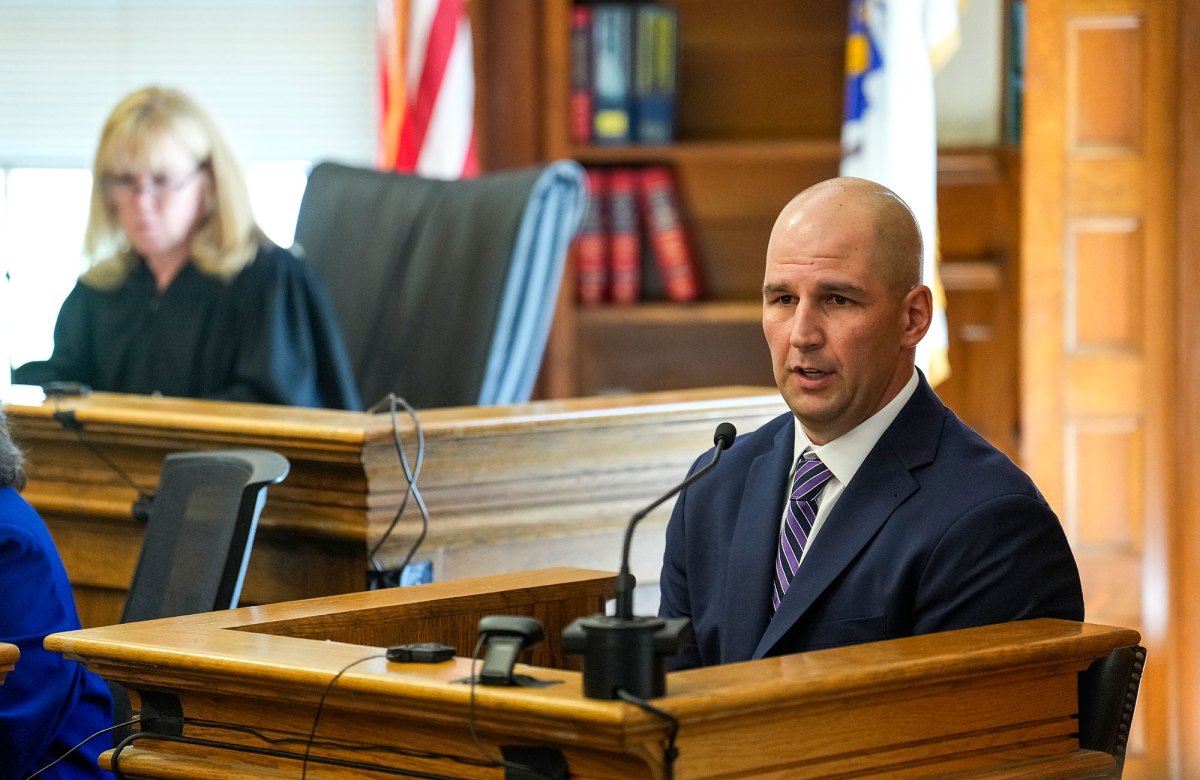


After Karen Read was found not guilty of killing her boyfriend John O’Keefe in 2022, she filed a sweeping lawsuit against the Massachusetts State Police and Canton Police Department — and the court filing puts two former officers at the center of the story: Michael Proctor and Sean Goode.
Read filed the suit in Bristol Superior Court on June 4, 2026, alleging that her trials exposed “an [embedded] culture of bigotry, misogyny, systemic failures, and institutional rot at the very core of both organizations.” While neither Proctor nor Goode is named as a defendant, dozens of their text messages are featured throughout the complaint as evidence of what Read’s legal team describes as institutional rot.
Days later, it was confirmed on June 8, 2026, that Proctor is set to be deposed as part of a wrongful death lawsuit that O’Keefe’s family has filed against Read. However, his upcoming appearance in court is not the only legal matter he’s found himself in the middle of concerning Read.
Everything to know about Proctor, below.
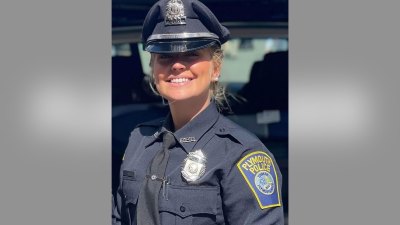
Michael Proctor Was the Lead Investigator on Karen Read’s Case
Proctor served as the lead investigator on the case against Read after O’Keefe was found mortally wounded outside the home of now-retired Boston police sergeant Brian Albert on January 29, 2022. O’Keefe, 46, died of blunt force trauma to the head. Prosecutors accused Read of striking O’Keefe with her SUV while intoxicated and leaving him to die in a blizzard — allegations she has consistently denied.
Proctor’s role became one of the most scrutinized aspects of the trial. During Read’s first trial in April 2024, prosecutors and defense attorneys aired a series of text messages Proctor had sent about Read, including one in which he said he hoped she would kill herself. The messages, sent to friends and colleagues during the active investigation, fueled defense arguments that Read had been the target of a biased and compromised inquiry.
In March 2025, the Massachusetts State Police fired Proctor, citing the messages revealed during the trial as a key reason.
Michael Proctor and Sean Goode Exchanged Concerning Text Messages
Goode, a former Canton police officer, resigned on June 2, 2026, in the middle of an internal investigation tied to the dozens of messages he and Proctor had exchanged dating back to 2013.

The text messages were originally obtained as part of the prosecution of Myles King, who has been accused of killing Marquis Simmons in 2021. Because Proctor was the lead investigator on that case, his personal phone was searched as part of the murder trial. Although Proctor’s phone was placed under a protective order, Read’s attorneys were granted permission to use what they found in future litigation against the Massachusetts State Police and the Canton Police Department. Read signaled the coming suit in an April 2 filing, and the court allowed her team to use the messages.
The Lawsuit Quotes a Long Trail of Alleged Messages
The complaint quotes a series of messages Read’s attorneys say Proctor and Goode exchanged over more than a decade. The contents are graphic, racist, sexist and, in Read’s team’s words, “abhorrent.”
In one alleged message about a car crash in Canton, Proctor wrote, “Actually, take your time, I saw a [n*] was involved, so I wouldn’t rush if you’re working. Let them die.”
In one message cited in the filing, Read’s attorneys say Proctor wrote, “It should be ‘punch a [n*****] day’ in canton today out of retribution. Any shine u see blast it in the face.” A subsequent message allegedly read, “America sucks …. Hitler was really on to something then the [f***] US has to step in and ruin it.”
Read’s lawsuit further alleges that Proctor and Goode held “long-standing and deeply held biases against women.” Several text exchanges cited in the filing show the two former officers allegedly discussing sexual acts performed on women — at times while the women were asleep — and referring to women as “pigs” and other vulgar terms. In one alleged message, Proctor wrote that he needed “a roofie or something” to find someone to have sex with.
Read claims in her suit that both departments knew or should have known about Proctor and Goode’s alleged bigotry, as well as the conduct of other officers she says were unfit to investigate crimes and showed bias that bled into their work.
The Police Departments Respond
Colonel Geoffrey D. Noble of the Massachusetts State Police issued a strongly worded statement to Us. “These disturbing messages are entirely inconsistent with any basic standard of decency and certainly with the expectations of a Massachusetts State Trooper. These racist, sexist and abhorrent comments absolutely do not reflect the values of the Massachusetts State Police and are not tolerated within our ranks. They underscore and fully support my decision to terminate Michael Proctor,” Noble said.

“As Superintendent, my role requires me to act in the best interest of the Department. In this moment, that means moving forward with a focus on upholding our standards, strengthening accountability, and supporting the honorable women and men of the State Police who serve our communities with professionalism and integrity,” he added. “We do so keenly aware of the ways in which this misconduct harmed the public trust on which our mission depends.”
The Canton Police Department addressed the lawsuit in a Facebook statement on June 4, 2026, saying the town “has not been served.”
“As such we have nothing to review with legal counsel at this time. We have no comment on the press release issued by the Read legal team,” the department added.
What Karen Read Hopes to Achieve From the Lawsuit
Read broke her silence about the suit on the Today show on June 5, 2026, alongside her attorney, Alan Jackson, who said her goals go beyond financial damages.
“What Karen wants, you cannot write on a check, which is exposure,” Jackson said. “Exposure of the corruption that is the DNA of the Massachusetts State Police and the Canton Police Department.”
A jury found Read not guilty of second-degree murder, manslaughter and leaving the scene after her first trial ended in a mistrial. She was convicted only of the lesser charge of driving while intoxicated.



“This was always our plan, that I had to save my own life first,” Read said. “I can’t do anything if I’m not free. I had to fight for my freedom for years, and I knew as it unfolded I was never going to be able to just forget that this happened to me, that I was wronged in this way. I couldn’t just go back to life as it was. I have to continue fighting for justice.”
She added that the “acquittal is deserved, but the wrongs have not been completely righted.”
This story was compiled with the help of AI tools and edited by journalists.