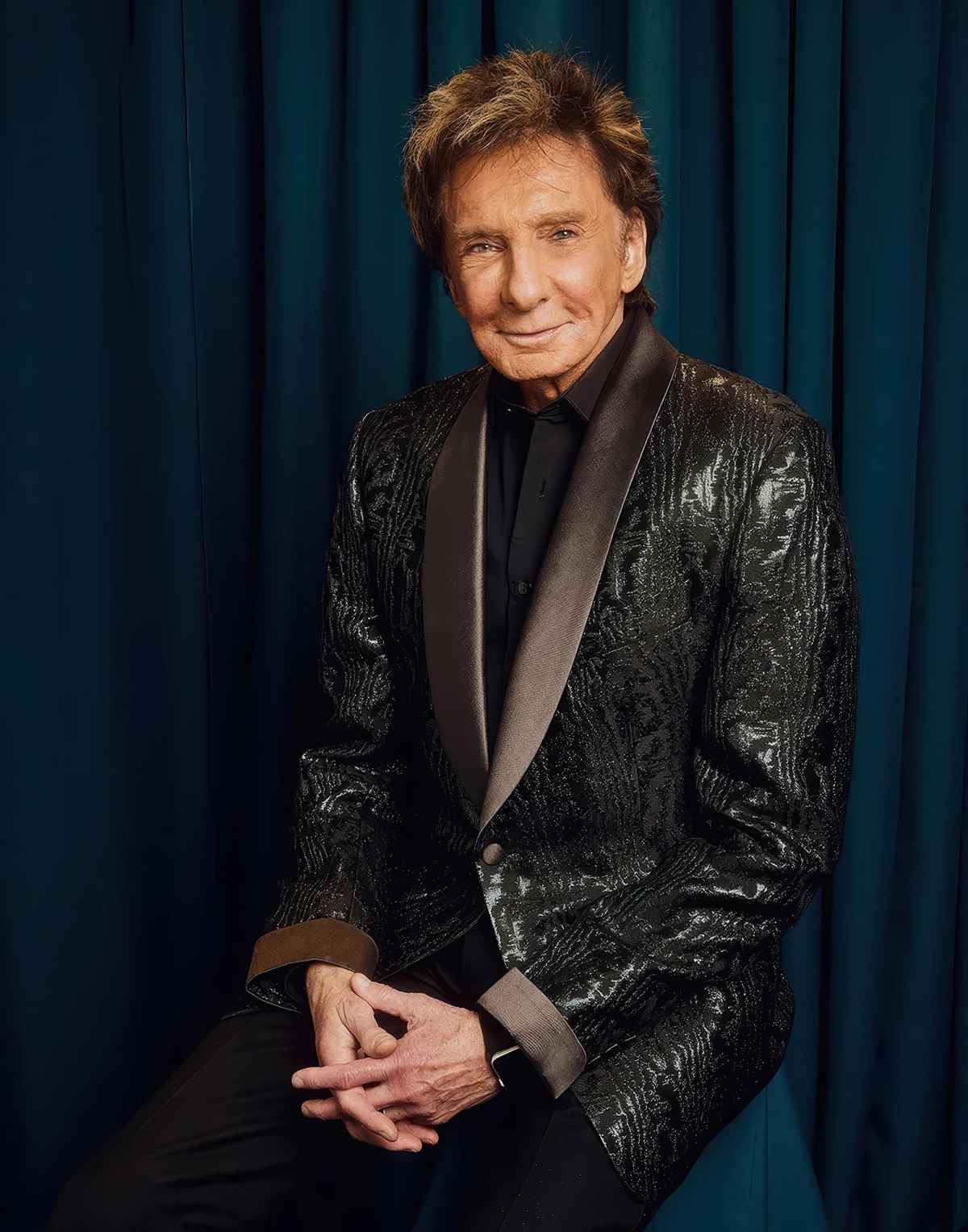

For more than five decades, Barry Manilow has been the soundtrack to pure joy. With timeless hits like “Mandy,” “Copacabana” and “I Write the Song,” the Grammy-, Tony- and Emmy winning singer-songwriter has built one of the most devoted fan bases in history. At 82, he’s looking forward, not back.
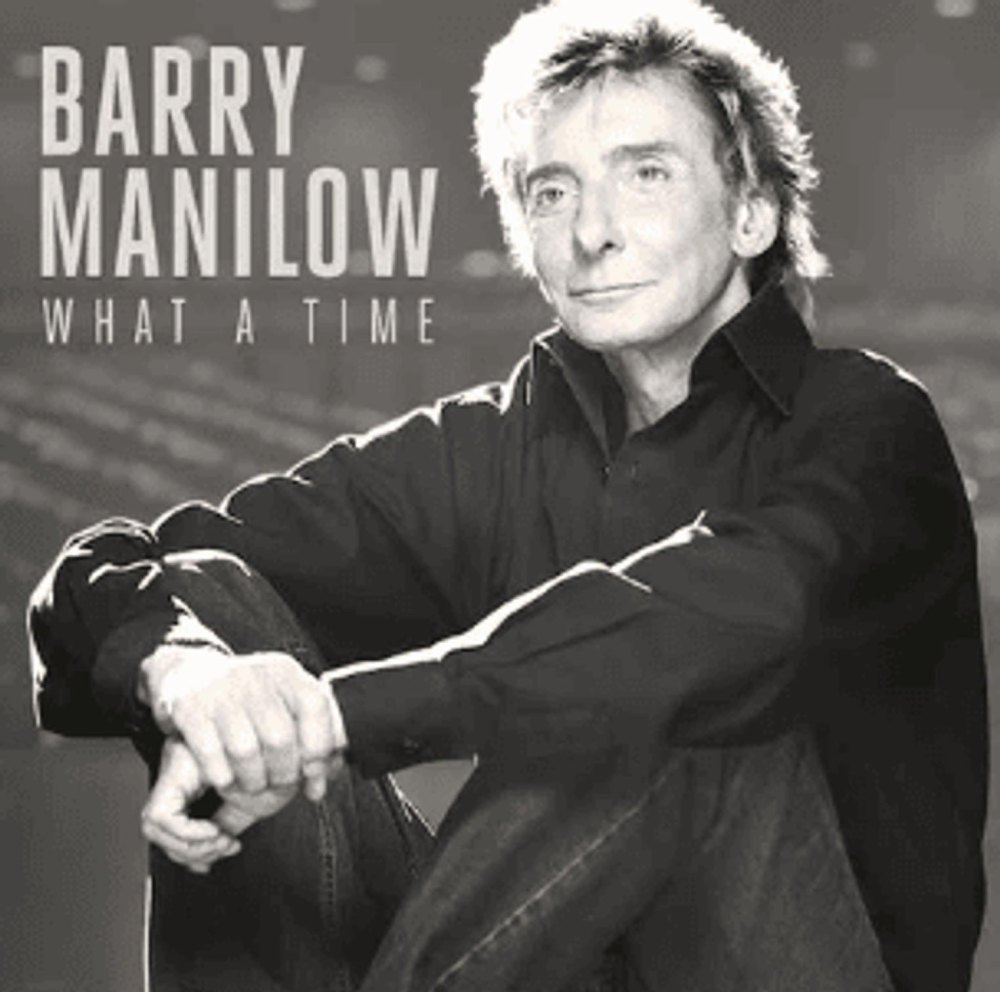
His 33rd studio album, What a Time (out June 5), marks a return to the eclectic, melody-driven music that made him a star. The previously unreleased tracks, which he has worked on over multiple decades, are a blend of jazz, pop and sweeping balladry. The lead single, “Once Before I Go,” was written by Manilow’s friend, Peter Allen, who first played it for the musician years ago. “I knew I was too young to be honest about a song like that,” he says. “Cut to present day, and super-producer Clive Davis asked Manilow, “Have you ever heard of a song called ‘Once Before I Go?’ You should record that. Kenneth “Babyface” Edmonds “did a beautiful rendition,” says Manilow, “and I put my voice on it.” The song is about a breakup, not Manilow’s health, says the star.
Fans would be forgiven for getting that wrong. The album arrives after one of the scariest chapters of Manilow’s life: In December, the icon revealed a lung cancer diagnosis which led to multiple postponed farewell-tour stops. (Because doctors caught the cancer early, he required surgery, but no chemo or radiation.) It also left him wondering if he’s done everything he wanted to in his life.
In an intimate conversation with Us, Manilow talks about the frightening recovery process, his fears about returning to the stage and why making people feel good remains his greatest goal.
Tell me a little bit about what inspired “What a Time.”
I was making albums like this from the beginning of my career — song following song following song — and I always like to make them in different styles. I’ve done this forever. And then I started doing concept albums. I stopped doing just songs. They were concept albums that were singing with the big bands, which was a big band album, there was a Broadway album, there was.. I just kept going on and on, and I stopped writing regular songs, and Clive suggested that we do the greatest songs of the 50s, 60s, 70s, 80s — so for all those years I stopped [recording] pop songs. I was still writing, but I wasn’t putting them on any albums. My collaborators and I kept writing songs, and I’ve always loved them. That’s what this album is — all these songs that I’ve always loved, that no one’s ever heard. I’m so happy to have these songs finally being heard by by people,
Having just listened to the album, I hear different genres.
It’s a lot of different genres. That’s what I’ve always done. I’ve never done an album that starts with a song and all the other ones sound just like that first song. A lot of people do that. A lot of people I love do that, but I’ve never done that. I’ve always gone from “Copacabana” to ballads to a Broadway kind of song. I miss doing that. During those years that I was doing concept albums, I was still writing those kinds of songs, I just had no place to put them, and now I do.
You’re such an accomplished artist. What motivates you to keep writing new music and to keep performing?
I never even think like that. I am a creator. I like creating. I get up in the morning, and I have something to do. I can’t think of a morning that I got up that I didn’t have a project to work on. I never even think about stopping. This crazy cancer that I just got through stopped me from doing what I’ve always loved to do, which is to be with my band and my crew and my singers. That’s what I would have been doing from January till now. But this cancer stopped me. It’s the only [thing that could have] stopped me.
How are you feeling today [May 21]?
If I had to do a show tonight, I’m not sure I could, but I still have a couple of weeks to go.
What has this health crisis taught you about yourself?
I thought about that because it was touch and go for a while, and I thought, have I done everything I’ve always wanted to do? Have I been good to friends? Have I made people feel good? That was my goal in life, and I started to think about that, because this hospital thing was not just about the cancer, it turned into a big bout of pneumonia that they couldn’t stop for seven days. When I finally did get out of it I weighed 128 pounds and it was much more serious than I ever thought it would be. I felt like I was there for years.
What’s been the most difficult part of the recovery process for you, whether it’s physical or emotional?
That I can’t get back on with my band and the life that I’ve always had. It’s been five months now — way too long, and it’s not because I don’t want to work, it’s because I can’t do it yet. That’s the frustrating part.
How do you maintain your health and your energy now or going forward, when you’re getting ready to tour again?
I’m practicing in my studio, and [trying] to hit the F natural at the end of “Even Now,’ and so far I can’t. We’ll see whether or not my lungs can keep up with me. My body is ready to go, but we’ll see whether my lungs are OK.
Does overcoming something like this make stepping back on stage feel different?
I’m terrified, and I’ve never felt that way about going back on stage… I really don’t know what’s about to happen. I’ve never been in this situation, so I’m really very nervous about it.
How do you describe the emotional tone of this new album?
I was very nervous about putting this album out, because when you listen to the radio these days, they’ve stopped writing the way I write. When I listen to what’s going on, Billy Eilish and stuff, it feels like it’s a run-on sentence to me. There’s no chorus that I can grab onto, there’s no verse, there’s no ending. I don’t know what I should listen to. It just keeps going. I tried writing that way, and I didn’t like it. It was not emotional to me, so I stopped, and I went through all the songs that I’ve loved that never made it onto albums. I’m nervous about it, because you put out an album like this, [and you wonder] is the audience going to think that he hasn’t listened to the radio in 40 years? But there may be an audience that is looking for an album like this, because they don’t hear it anymore. So here I am with my choruses and my big endings.
What do you hope your longtime fans are going to take away from this album?
I hope that, like me, they will be happy to hear song after song after song, instead of concept after concept, because when you do a concept album, you’re stuck with your concept. This album is one of [many] sounds like one of the albums that I made years ago. Hopefully it doesn’t sound dated, because Michael Lloyd, my co-producer, really beefed it up. It really does sound more contemporary than I thought it could sound. So, I think the fans are going to love this album. I hope they will.
Few artists have maintained such a devoted fan base as you have. Why do you think people connect to you and your music in such a way?
It’s been like that forever. When I started out after I finished working with Bette [Midler] I had already made my first album. I had to go out on the road to promote it, and I had never done that. I was the music director, I was the conductor, I was in the background. I was very happy doing that, but when I finished making an album, I realized I’d have to go out and perform it, and I’d have to sell it. So I put a really cracker jack band together, and then there was me! I had to get up and say, “Good evening, ladies and gentlemen.” I had never done anything like that, and I was terrible. I really stunk. I didn’t know what I was doing up there. I didn’t know what I was doing, but the audiences liked it. They were telling me, “keep going, we like what you’re doing.” They gave me the career because I never, never thought that I would wind up fronting the band or being the performer. And after my first tour, I was hoping this would all go away. I was so uncomfortable on that stage, doing this thing that I never planned on doing, and I knew that I was terrible. I made tapes of it — I really stunk, but the audiences didn’t agree.
Did you ever imagine that songs like “Mandy,” “Copacabana” and “I Write the Songs,” would become part of pop culture the way they have?
I stop after I make the record. I don’t even think about those songs, I just go on to the next. If they have become those kinds of songs, that’s great, but I never think about it when I’m making the album, when I’m writing a song, when I’m working with my collaborators. We’re inside the song, and when we’re done, we’re done. Then I’m on to the next one. Maybe somebody like Clive would have said, “Yeah, this is going to be so big that it’ll last for a long time,” but I never think like that. I really have no idea what a hit song is. I have no idea where the hit record is. I just make them.
How has your relationship with fame changed over the years?
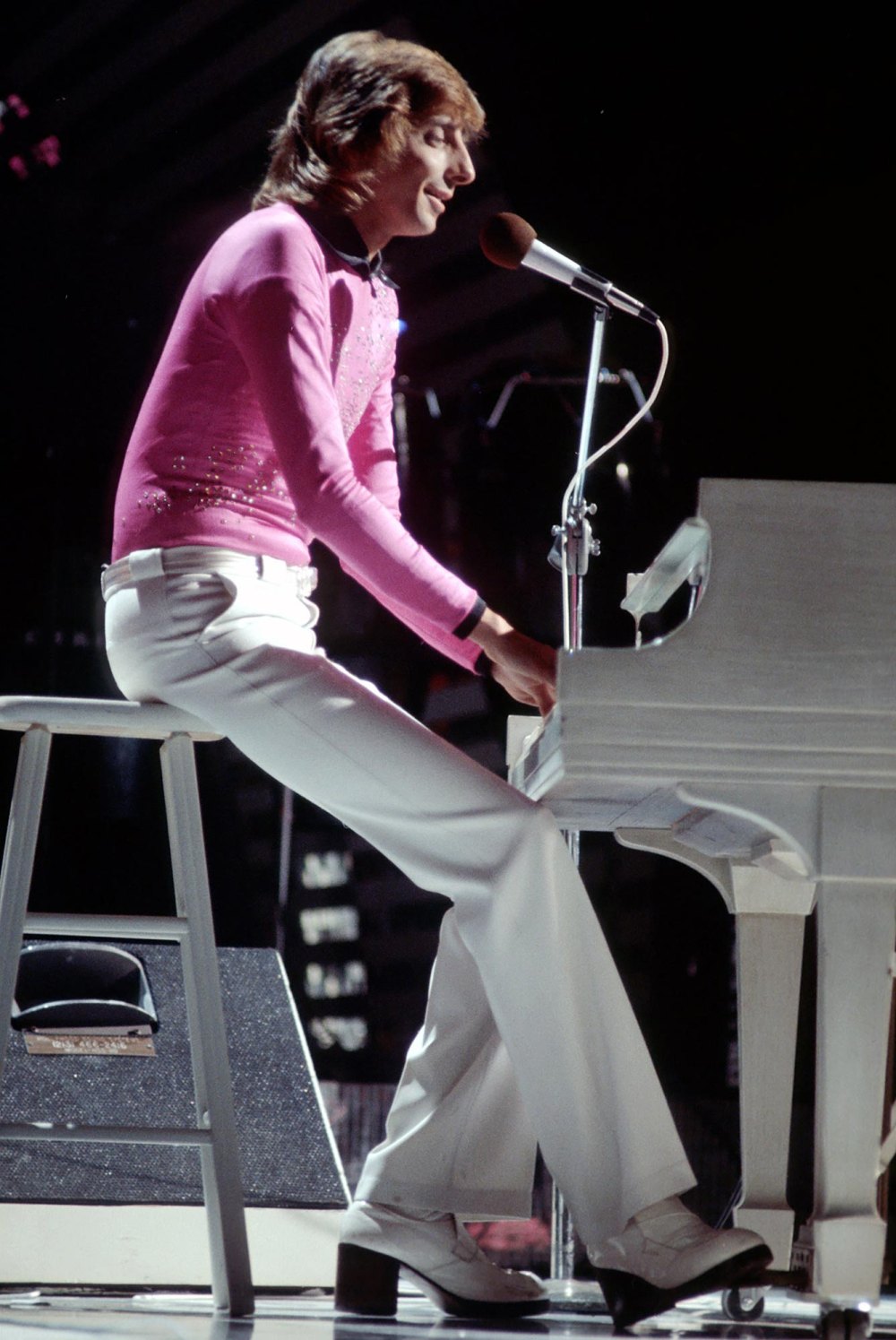
I’ve gotten used to it. I’m okay with it. I’ll tell you why. The people that stop me in the streets say the most beautiful things. If that’s what fame is, I’m very happy about it, because we’ve all read what fame can do to somebody. Poor Brittany Spears — she’s a talented, beautiful young girl, and God knows what’s happening [there]. Thank goodness that never happened to me. My relationship with fame has been just beautiful. In the beginning, it was a little rough, because I was the teenage idol guy. I was in Tiger Beat magazine. So that was different, because I was young, they were young and following me behind my cars. But that stopped pretty quickly, and my fame has been really beautiful. I didn’t go crazy. I had this cancer scare, and have you read some of the things that people have been saying, wishing me well, and hoping that I get through this? It was mind boggling to me that there were that many people that even knew I was around and cared about my health. That’s what I’ve always had. I’ve had these.. I don’t like the word fan. These people who’ve always been great to [me from] the very beginning. I have always said I would like to sit down and have a conversation with every one of them. They’re smart, they’re funny and so devoted.
What do you think younger artists today could learn from the era when you first broke into the music business?
It’s about writing! The lyrics to the songs that young people are writing, they’re not witty, they’re not emotional. When did that stop? I wonder. The stars of today’s records are the engineers and the producers, because they make these fantastic sounding records. There’s a handful of really wonderful songwriters, Bruno Mars and Gaga, but most, most of what I listen to on the radio, and I don’t [like]. When I do [like it], it really is the engineers and the producers that are making these records just irresistible. When I started writing, it was really about the melody and the lyrics. It’s not about melody and lyrics anymore.
Is there a moment in your career that still feels surreal to you?
Meeting Barbara Streisand. We’re one year apart. I wouldn’t say [she was] a big influence, but I just admired her guts. Certainly in the beginning she took such chances. All of her earlier albums, as a budding arranger, I wanted to know how, who, why, how they put these songs together like that. Was it her? Was it [composer, arranger and musical director] Peter Matz who did this kind of writing? As a young budding arranger, musician, I think her earlier albums had a major impact on me.
Is there anything that still gives you butterflies?
Debuting a new song. Me, the band, we don’t know how it’s going to go over. That’s kind of fun, by the way. I wouldn’t say that’s a bad thing. But I’m going to be doing some songs from this album on the next tour. I don’t know how they’ll go over, you know. The audiences have changed. When I started out with my earlier albums, they couldn’t wait to hear the new songs. Now they don’t want songs that they don’t know. They want songs that they know, so they can sing along. Whenever I try to do something new, I can feel the air go out of the room.
What’s your most memorable fan interaction? I’m sure there have been many. Well, the toilet paper was pretty epic.
This girl sent me a roll of toilet paper. She wrote “You are my singer, you are my song,” on every little square [and re-rolled it.]. How on earth she wrote it — I guess it was a compliment, but on toilet paper!
One of the lyrics in “Sun Shine” is “You make my day bright.” Who makes your day bright?
Gary, my long, my long time husband, Gary. We’ve been together for 40 something years.
What’s your secret to such a long-lasting, loving relationship?



Laughing. And we respect each other a lot.
How would you like your musical legacy to be remembered?
I want people to play [my songs] over and over. I do. I’m very serious about writing. I want the public to feel good when they talk about me, and when they listen to my music. I want them to feel good, better than they did before.