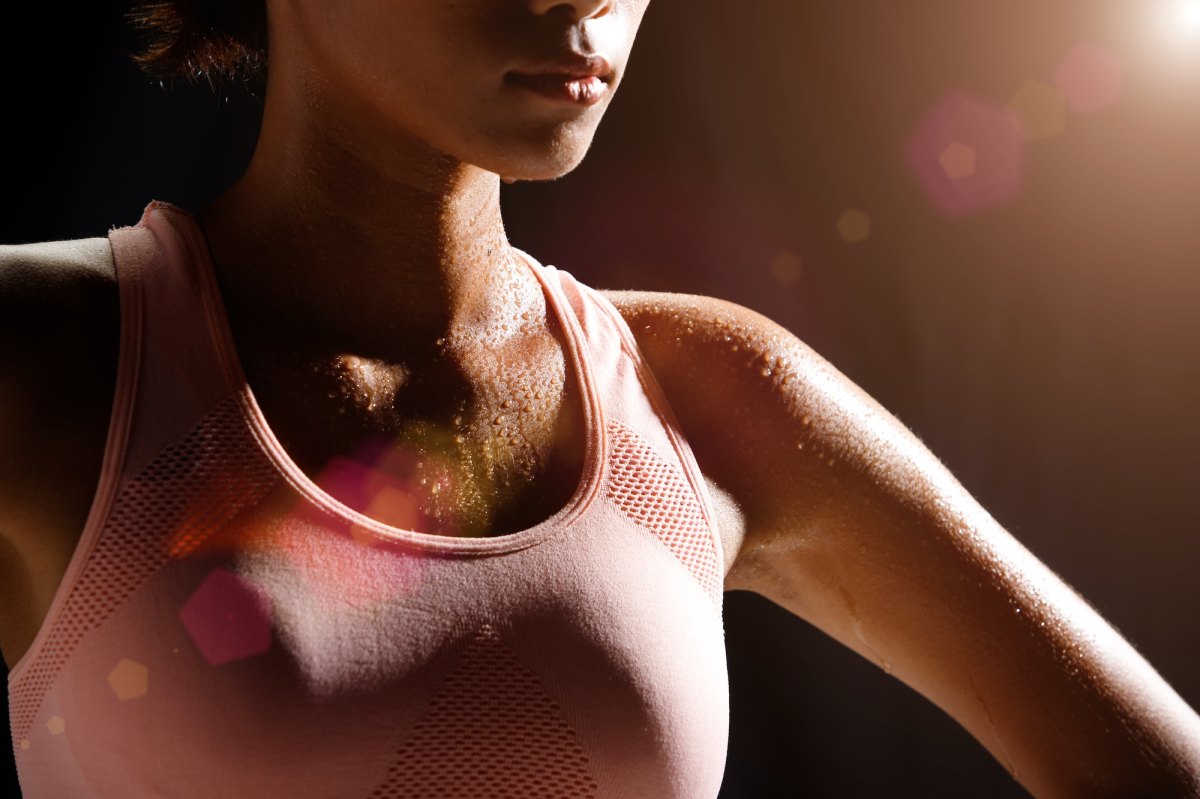

Extreme heat is turning hydration into the latest wellness metric to watch — and brands want you to keep tabs on your sweat, too. In 2026, wearable patches and reusable sensors are gaining traction as a way to estimate everything from fluid and sodium loss to your personal “sweat score.”
The technology has moved from sports labs onto everyday retail shelves. Products from Gatorade, Epicore Biosystems and Nix now translate perspiration readings into hydration recommendations, and newer entrants FLOWBIO and hDrop are pushing similar approaches. Academic labs including Penn State are extending the science toward continuous health monitoring. Whether the scores are as reliable as the marketing suggests is a separate question.

How Sweat Is Being Measured Into Wellness Data
Wearable sweat patches and reusable sensors sit on the skin and use flexible electrochemical or microfluidic components to estimate sweat rate and composition without a needle. A 2022 review in Nature Biotechnology flagged the commercial promise of these sensors while pressing for stronger clinical validation, a concern later reviews continued to raise around reliability and standardization.
The clearest consumer inflection point came in March 2021, when Gatorade launched the Gx Sweat Patch through Dick’s Sporting Goods and online distribution. PepsiCo described the product in August 2021 as bringing elite sports science out of the lab and to consumers, tying patch-based sweat analysis to the broader Gx recommendation ecosystem.
Why Sweat Tracking Is Becoming Mainstream
The heat backdrop has intensified. NOAA reported July 2026 as the warmest July on record for the contiguous United States, with an average temperature of 76.9°F. CDC guidance defines heat exhaustion as the body’s response to excessive loss of water and salt through sweating, framing hydration as a safety concern rather than a performance tweak.
Live data has arrived too. In June 2026, FLOWBIO announced early-access Wahoo integration that displays fluid and sodium-loss information during rides, shifting sweat biometrics from a post-workout diagnostic to an in-session coaching tool.
Pro-sports visibility has done the rest. In July 2026, Epicore’s CEO told CNN he had been working with Brazil’s national team — bringing sweat testing into World Cup preparation.
Companies That Are Getting Sweaty
Epicore Biosystems sits at the center. Beyond its Gx Sweat Patch partnership, Epicore runs a Connected Hydration platform that tracks metrics including sweat composition, fluid loss and skin temperature, along with motion and thermal flux, with haptic alerts for fatigue or heat exhaustion in some deployments.
Nix Biosensors markets a reusable hydration biosensor to athletes, soldiers and laborers. Founder and CEO Meridith Cass traces the company to her experience with hyponatremia at the Boston Marathon.
“Hydration is foundational. It impacts every other aspect of health, from cardiovascular to cognitive, and emerging research is now linking proper hydration with longevity,” Cass told Harvard Business School. “It plays a critical role for the entire population, from pregnant women and the elderly to the average person sitting at their desk.”



hDrop Technologies pushes back on consumable-patch economics with a reusable device, reporting company-linked figures of approximately 92% accuracy for sweat-loss tracking and 87% for sweat sodium-loss tracking. Those numbers are not independently validated, which is the gap skeptical buyers should notice. GraphWear Technologies remains an early pioneer through an NFL patch pilot, and the N-SWEAT Patch from Candesant Biomedical appears in FDA de novo classification records, a reminder that patch-based sweat sensing has medical-regulatory reach beyond wellness scores.
What Else Sweat Can Tell Us
Researchers at Penn State developed a wearable sensor capable of continuously monitoring low rates of perspiration for lactate, a molecule the body uses to break down sugars for energy. Lactate can indicate oxygen starvation in the body’s tissues, a key performance indicator for athletes and a potential sign of serious conditions such as sepsis or organ failure. The team published its approach in the journal Small in 2025 and filed a patent for a band-aid-style device that can collect up to 10 times the sweat of other wearable sensors during low-intensity activities such as walking, laying down or answering emails.
“Sweat offers a source of biomarkers we can monitor via non-invasive systems in near-real time for how the body is performing during exercise or to monitor or manage various health conditions,” said Farnaz Lorestani, assistant research professor of engineering science and mechanics at Penn State. “The challenge is figuring out how to collect sweat when the person isn’t sweating that much, and we solved that challenge by engineering a platform with granular hydrogels, developed by Professor Amir Sheikhi’s research group, capable of collecting sweat even in low-intensity conditions, like checking emails or laying down.”