Us has affiliate partnerships. We receive compensation when you click on a link and make a purchase. Learn more!
If you’ve rebuilt your morning routine around magnesium, a continuous glucose monitor and a meticulously curated supplement shelf, there’s one tool you probably haven’t reconsidered in years: the toothbrush by your sink.
For a category most people grab off a drugstore shelf, oral care has become a surprisingly relevant frontier in preventive wellness. The ARU Sonic Toothbrush is part of a new wave of non-abrasive sonic brushes built specifically for people who care about what they put in and on their bodies, and it may be one of the more meaningful daily upgrades available right now.
The Case Against How Most People Brush
The American Dental Association specifically warns against scrubbing vigorously, noting that firm or medium-strength bristles can damage gums and enamel even with normal daily use. That’s because stiffer bristles concentrate force directly on soft gum tissue and tooth enamel rather than flexing around them, wearing both down over time without you realizing it. And it’s not just technique that matters.
The ADA also recommends replacing your toothbrush every three to four months, or sooner if the bristles look frayed, because worn bristles become less effective at removing plaque and can harbor bacteria that contribute to gum inflammation. If you’re using a sonic brush, that applies to brush heads too.
Combined with excessive pressure, that pattern produces a slow, compounding cycle of enamel wear and gum recession along the gum line. The damage rarely announces itself in any single brushing session. It accumulates over years, eventually showing up as cold sensitivity, visible recession or a tooth that suddenly aches when you sip something iced.
The area most vulnerable to this damage, the sulcus where tooth meets gum, is also where plaque does its most consequential work. Most people respond to gum sensitivity by easing off precisely where they should be cleaning more thoughtfully.
Why Sonic Vibration Changes the Math
Typically, sonic toothbrushes operate at 30,000 to 40,000 brush strokes per minute, replacing scrubbing pressure with high-frequency vibration. The mechanism worth understanding is fluid dynamics: the rapid motion of the bristles drives toothpaste, saliva and water into a turbulent flow that can disrupt plaque slightly beyond the points where bristles physically contact the tooth. That hydrodynamic effect is particularly useful at the gum line and in the small spaces a manual brush often misses.
The clinical literature has caught up with the marketing. A 2021 systematic review published in the International Journal of Dental Hygiene found sonic toothbrushes significantly reduced plaque and gingivitis compared with manual brushing.
For a wellness-minded shopper, the framing matters. This isn’t about whiter teeth on a faster timeline. It’s about reducing the chronic, low-grade inflammation that begins in the gums.
The Oral-Systemic Connection
That inflammation is increasingly understood as a whole-body issue. Gum disease has been linked to cardiovascular disease and broader systemic inflammation, and emerging research is examining its role in cognitive decline.
A 2019 study published in Science Advances identified bacteria associated with gum disease in the brains of Alzheimer’s patients, adding weight to the idea that the mouth is a window into how the rest of the body is functioning.
If you already track sleep, HRV and inflammatory markers, gum health belongs on that list.
What to Look For In A Sonic Toothbrush
A few criteria sort the serious tools from the gimmicks:
- High-frequency sonic vibration in the 30,000-plus strokes-per-minute range, where the fluid-dynamic cleaning effect actually kicks in
- Non-abrasive bristle design that protects enamel rather than relying on stiffness to do the cleaning, especially important for anyone who already has sensitivity or visible recession
- Extra-soft bristles specifically, not just “soft.” The distinction matters at the gum line where most damage accumulates
- Multiple cleaning modes so you can adjust intensity to your comfort level, particularly useful when starting out or managing active sensitivity
- A two-minute timer with quadrant pacing, the duration and structure most clinicians recommend
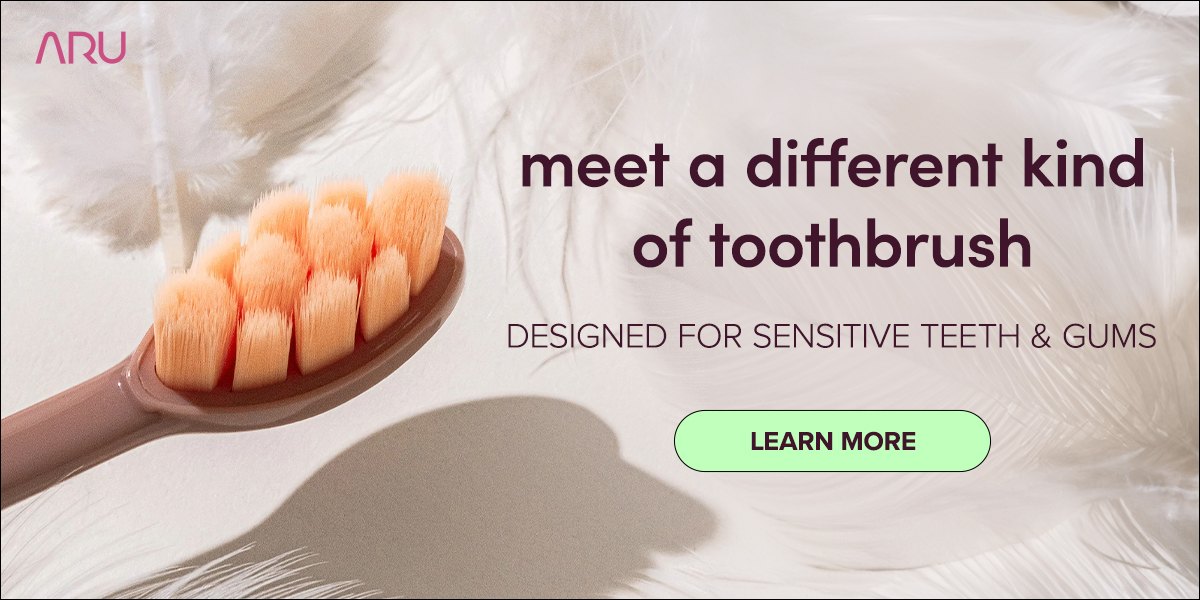
The ARU Sonic Toothbrush Starter Kit checks every one of these: extra-soft patented bristles, three cleaning modes with three intensity levels, a two-minute smart timer with 30-second interval pulses and a non-abrasive design built specifically around enamel and gum protection. It’s available at getaru.com.
Two minutes, twice a day, is already in your routine. The question is what you’re spending it doing.
Production of this article included the use of AI. It was reviewed and edited by a team of content specialists.
In this article:
Browse fashion, beauty and health products. Also, check out our gift guides.