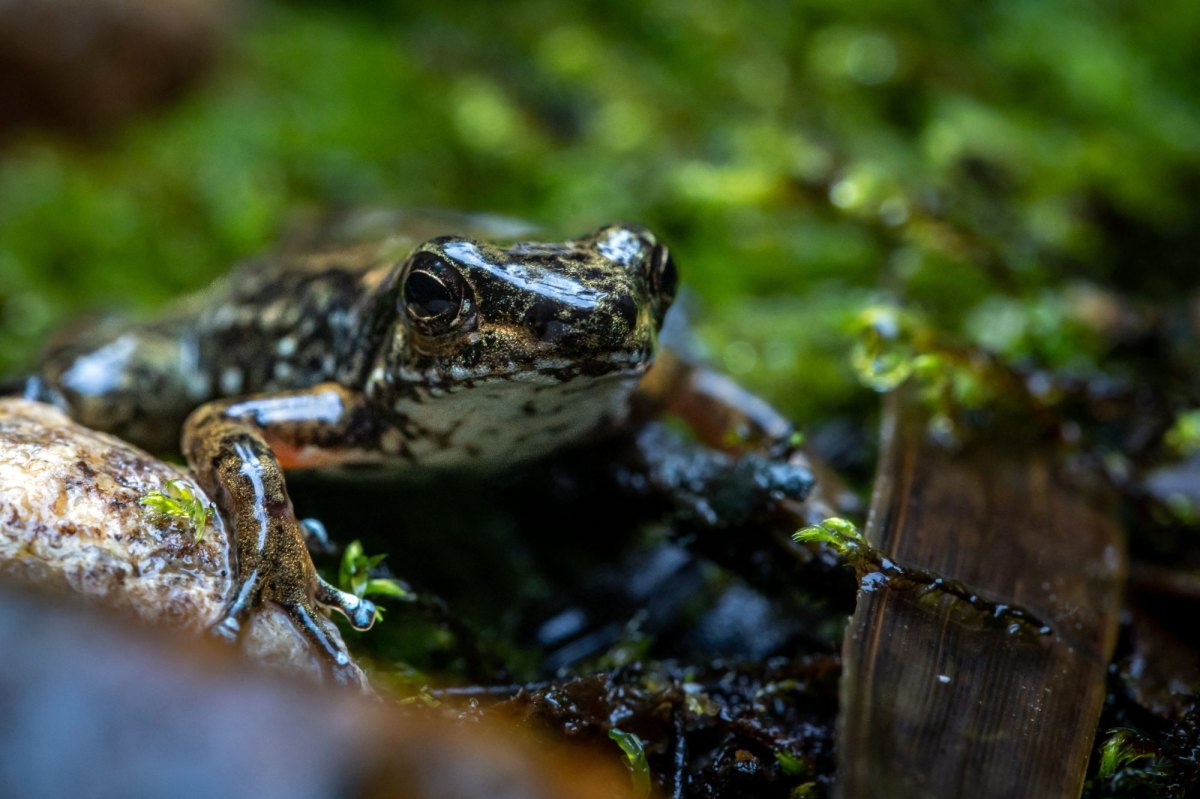


For the first time, scientists have documented microplastics in frog tadpoles living in the wild Amazon rainforest — and the contamination showed up in every single pond and every single tadpole they tested.
The finding, published April 11, in Scientific Reports, raises urgent questions about how deeply plastic pollution has penetrated even remote, sparsely populated corners of one of the planet’s most biodiverse regions.
What surprised researchers wasn’t that they found microplastics. It was how much they found in a place considered relatively well preserved.
What Microplastics Are and Where They Come From
Microplastics are “plastic particles ranging in size from five millimeters (mm), which is about the size of a pencil eraser, to one nanometer (nm),” according to the U.S. Environmental Protection Agency (EPA).
Major contributors of microplastic pollution include synthetic clothing, car tires, city dust, road markings and marine coatings, according to Penn State’s Institute of Energy and the Environment. The fibers found in the Amazon tadpole study are consistent with textile and fishing-related sources.
What the New Amazon Rainforest Study Found
Researchers from the Federal University of Pará, led by ecologist Fabrielle Barbosa de Araújo, collected 20 water samples and 100 tadpoles from five temporary rainwater ponds at Gunma Ecological Park in Pará state, Brazil, in April 2025.
The tadpoles were all Venezuela snouted treefrogs (Scinax x-signatus), a species common across South America in both forested and urban areas. Every pond and every tadpole sampled contained microplastics — most of them transparent, blue or black fibers made from materials like polyester.
The likely sources, according to the team, include sewage discharge and fishing activities in the region.
How Microplastic Pollution Is Reaching Wildlife in Remote Regions
The Amazon contamination story didn’t start with tadpoles. Earlier research had already detected microplastics in fish, invertebrates, soil and water across the region, making this latest finding part of a much broader picture of pollution affecting wildlife.
A 2020 study in Environmental Pollution found plastic waste in 98 percent of fish examined from an Amazonian stream, with debris in 87 percent of digestive tracts. A 2025 scoping review of 52 peer-reviewed studies published in Ambio confirmed microplastics in sediments, plants and diverse fauna including birds, reptiles and mammals.
“What really caught our attention was the large quantity found, especially because this is an area with low [human] population density and considered relatively well preserved,” Araújo told Mongabay.
Why Temporary Ponds in the Amazon Rainforest Matter
The five ponds in the study aren’t permanent water features — they form when rainwater collects in ground depressions. But these temporary pools serve as critical breeding and development sites for multiple frog species across the Amazon.
That makes them an essential habitat to monitor for microplastics in animals, because what accumulates in the water gets passed directly into developing amphibians at their most vulnerable stage. Tadpoles feed on algae, fungi and eggs in the water, almost certainly consuming microplastic fibers alongside their food.
Health Risks: How Microplastics Affect Tadpoles
According to Araújo, microplastic contamination can damage amphibian health by causing genetic and structural harm, including changes to blood cells and DNA. The particles can also build up in tissues and alter normal body functions.
The study also found a developmental pattern worth noting: tadpoles in the pre-metamorphic stage — earlier in development — had higher microplastic contamination than those in the pro-metamorphic stage closer to becoming frogs. Heavier tadpoles showed lower concentrations overall, suggesting that ingestion may decrease as the animals grow larger.

The implications go beyond a single species. “This study provides the first evidence that microplastics are reaching tadpoles in the Amazon, a region where we have very limited data,” Jess Hua, an ecologist who wasn’t affiliated with the study, told Mongabay.


“This is important because amphibians represent the most threatened vertebrate taxa and understanding potential threats, including from microplastics, is important to their conservation,” Hua added.
What Comes Next for Microplastics Research
Freshwater ecosystems have received far less scientific attention than oceans when it comes to plastic contamination, even though rivers, streams and ponds are where much of the world’s biodiversity lives and reproduces.
Araújo’s team plans to keep monitoring microplastic contamination in tadpoles across the Amazon to better understand its impact on regional biodiversity. As amphibian populations continue to decline globally, tracking how plastic pollution reaches even remote breeding sites will be essential to conservation work in the years ahead.