


Maybe the cost of Ozempic finally got to you. Maybe the nausea never really went away, or you hit your goal weight and figured it was time to discontinue use. Whatever pushed you toward your last dose, one question tends to follow close behind: what happens now?
Going off Ozempic isn’t as simple as just not refilling the prescription. After all, your body has spent months adapting to the drug, and it has opinions about you taking it away. Here’s the full picture, from why so many people stop to exactly what happens when you stop taking Ozempic.
What Ozempic Is — and How Many People Take It
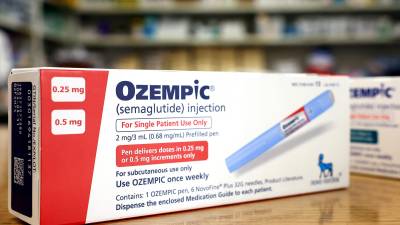
Ozempic is a once-weekly injectable containing semaglutide, a synthetic version of GLP-1 — a hormone your gut naturally releases when you eat. According to Harvard Health, it works in three primary ways:
- Regulating blood sugar by prompting your body to release insulin.
- Curbing appetite by signaling your brain that you’re full.
- Slowing digestion by emptying your stomach more slowly.
It was originally approved for type 2 diabetes, but plenty of people now take it to lose weight.

And plenty is the right word. A 2024 KFF survey found that one in eight Americans (12 percent) have used a GLP-1 drug like Ozempic at some point — and 38 percent of users took it for weight loss alone.
Why Most People Stop Taking Ozempic
Here’s a stat that surprises most people: a 2024 JAMA Viewpoint estimated that 50-75 percent of users stop within 12 months.
There are four common reasons why people stop taking Ozempic:
- Cost. Out of pocket, it runs around $1,000 a month — a hard number to sustain indefinitely.
- Side effects. Nausea, constipation and abdominal pain push plenty of people off the drug.
- Supply. Shortages were a real headache, though the FDA removed semaglutide from its shortage list in 2025.
- Goal reached. Some people always saw it as a temporary tool to hit a target weight.
Whatever the reason, stopping isn’t just flipping a switch. Your body has adapted to the drug, and it reacts when the drug goes away. Those reactions are worth understanding before you stop taking it.
What Going off Ozempic Does to Your Body
Once you stop, semaglutide clears over a few days to a couple of weeks — and your gut shifts in four main ways:
- Digestion speeds back up. The drug was slowing your stomach down; now it returns to its usual pace.
- The fullness signal fades. You’ll feel satisfied later in a meal, and less strongly.
- Hunger and “food noise” return. Harvard Health defines food noise as that constant, intrusive preoccupation with food. For many people, it comes roaring back.
- GI side effects resolve. As digestion returns to its normal pace, the nausea, constipation and stomach discomfort the drug can cause tend to fade with it.
None of this happens overnight. It builds gradually as the medication leaves your system. Because it’s a slow fade rather than a sudden switch, you have a window to get ahead of it — which is exactly why knowing what’s coming matters.
Ozempic Rebound: Why Set Point Theory Works Against You
The returning hunger often isn’t a clean return to where you started. Thanks to what some researchers describe as set point theory, your body actively defends the weight it’s used to carrying.
“When you start to lose weight, your body actually adapts to try to hold on to the weight,” Janice Jin Hwang, chief of endocrinology and metabolism at UNC’s School of Medicine, told Scientific American.
So a chain reaction kicks in, your gut cranks up hunger hormones, food starts tasting more rewarding and you burn fewer calories at rest. That combination is why some researchers believe weight tends to return.
A 2026 University of Cambridge meta-analysis found people regain an average of 60 percent of lost weight one year after stopping. The encouraging flip side: most users tend to maintain 25 percent of lost weight long term.
“Drugs such as Ozempic and Wegovy act like brakes on our appetite,” said the University of Cambridge’s Brajan Budini. “When people stop taking them, they are essentially taking their foot off the brake.”
The Silver Lining: Ozempic Side Effects Fade
It’s not all hunger pangs. If the Ozempic side effects were your real problem, quitting helps a lot.
The same slowed digestion that curbs appetite is what drives the drug’s worst complaints — nausea, vomiting, diarrhea, constipation and abdominal discomfort.
Hans Schmidt, M.D., director of the Center for Weight Loss and Metabolic Health at Hackensack University Medical Center, estimates about 15 percent of users get significant side effects.


As digestion normalizes, those symptoms tend to ease. If the symptoms were why you quit, then you can speak with your doctor about alternatives to Ozempic that won’t result in unwanted side effects.
What to Expect When Going Off Ozempic
Going off Ozempic is rarely a clean switch-off. Hunger and food noise come back, and some weight regain is likely — but the gut discomfort fades, and about a quarter of lost weight tends to stay gone.
If you have diabetes, stopping also affects your blood sugar control, so loop in your doctor before making the call. Either way, knowing what to expect is the best way to plan your next move instead of being blindsided by it.