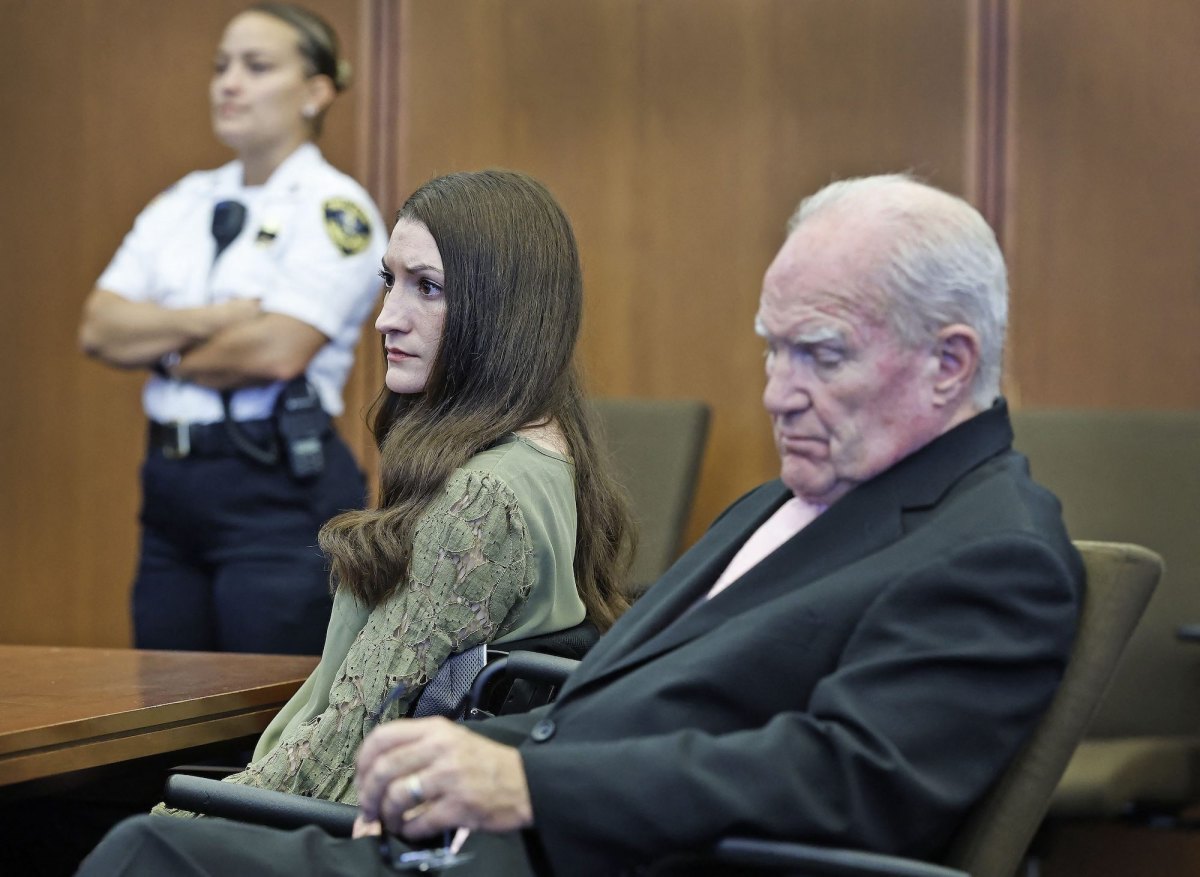

The judge in Lindsay Clancy’s controversial triple murder trial shocked court observers by officially declaring a mistrial after more than five days and 30 hours of jury deliberations.
Judge William Sullivan was informed by a 12-person jury that it was deadlocked on Friday, September 4, after one lone juror remained in disagreement with the remaining 11. The mom faced three first-degree murder charges — among other charges — related to the 2023 deaths of Clancy’s three children — Cora, 5, Dawson, 3, and Callan, 8 months.
Clancy has admitted to strangling her three children to death before jumping out a second-story window in an alleged suicide attempt. Her defense team argues she should not be held criminally liable for the deaths because she was suffering from postpartum psychosis before and during the killings.
Prosecutors insist that despite her documented mental health struggles that she was aware of her actions — and able to differentiate right from wrong — when she killed her three children.
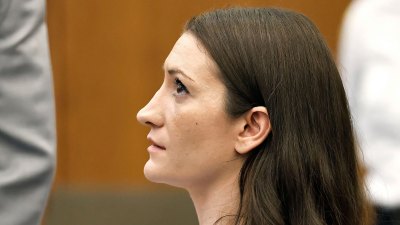
Public intrigue over the case reached a fever pitch when Judge Sullivan allowed Clancy’s defense team one hour to petition for an appeal from the Massachusetts Supreme Judicial Court on Friday. After the high court declined to order an emergency stay, Judge Sullivan formally declared a mistrial before formally dismissing the jury.
The mistrial ruling raises questions over whether Plymouth County District Attorney Timothy Cruz will attempt to retry the case. Lawyers on both sides are due back in court on Tuesday, September 29, to consider next steps.
Keep scrolling for more information on whether double jeopardy applies in this case and what may come next in the courtroom.
What Is Double Jeopardy?
The Fifth Amendment of the U.S. Constitution deals, in part, with how criminal trials are — and are not — allowed to be conducted. The amendment lays out “double jeopardy” as a procedural defense to prevent a person from being tried twice for the same crime, provided they are either acquitted or convicted in a court of law.
A relevant clause in the Fifth Amendment reads, “No person shall be held to answer for a capital, or otherwise infamous crime, unless on a presentment or indictment of a Grand Jury, except in cases arising in the land or naval forces, or in the Militia, when in actual service in time of War or public danger; nor shall any person be subject for the same offence to be twice put in jeopardy of life or limb; nor shall be compelled in any criminal case to be a witness against himself, nor be deprived of life, liberty, or property, without due process of law; nor shall private property be taken for public use, without just compensation.”
What Is a Mistrial?
A mistrial occurs when a verdict in a criminal trial cannot be reached or the trial itself cannot be completed, per the American Bar Association. Possible causes for mistrials include the death of a juror or attorney, a prejudicial error that impacts a jury’s ability to judge a defendant fairly or juror misconduct.
One other common circumstance for a mistrial in criminal court occurs when a jury cannot reach a unanimous verdict.
In Clancy’s case, jurors deliberated for more than 30 hours before informing Judge William Sullivan that they were deadlocked 11-1 on the three counts of first-degree murder. (Clancy’s defense attorney, Kevin Reddington, asked Judge Sullivan for a chance to poll the jury on whether they’d reached consensus on any of the lesser charges. His request was denied.)
Judge Sullivan allowed the defense one hour to petition for an emergency appeal from the Massachusetts Supreme Judicial Court before formally declaring a mistrial on Friday when the high court declined to intervene.
Can Double Jeopardy Be Used in Lindsay Clancy’s Case?
Since no verdict was reached in the Clancy trial, double jeopardy restrictions do not apply — meaning Plymouth County District Attorney Timothy Cruz is legally allowed to retry the case.
What Happens Next in Lindsay Clancy’s Case?
Once a mistrial was declared, District Attorney Cruz wasted no time in addressing his option to retry Clancy while speaking to the media outside the Plymouth Superior Court.
“I do know that one of the questions that’s out there right now [is] regarding retrials,” he told reporters on Friday. “I will let you know that there will be no decision today. I am going to be meeting with my team and will address that [option] further at the appropriate time and in the context of an official court proceeding.”
Defense lawyer Reddington previously expressed his concern that his client would not be able to endure a retrial. However, he assured the media following Friday’s hearing that Clancy will “be ready” if prosecutors proceed with a retrial.



“Judge Sullivan is indicating that we are looking at sometime in the fall,” Reddington clarified.
Judge Sullivan has scheduled a court hearing on Tuesday, September 29, to address next steps in the case.
If you or someone you know is struggling or in crisis, help is available. Call or text 988 or chat at 988lifeline.org.