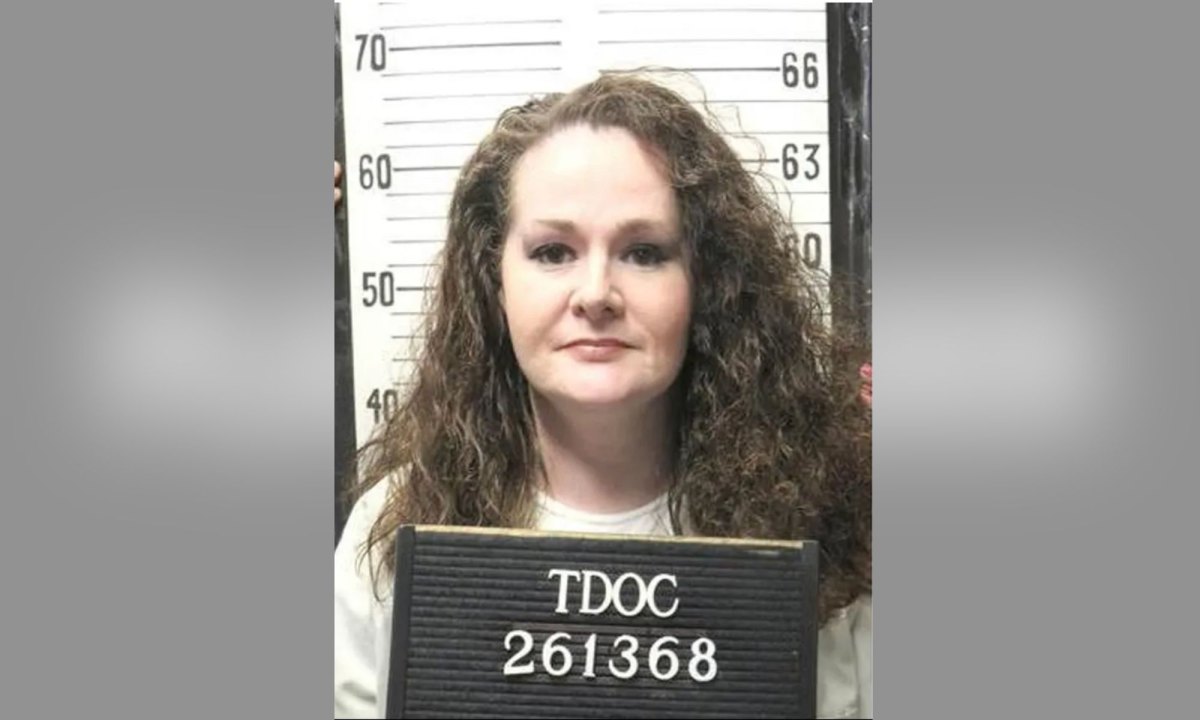

Christa Pike has broken her silence one month after surviving a botched execution in Tennessee, telling supporters she “woke up alone in a hospital confused and in pain” after the state attempted to put her to death with two lethal injections of pentobarbital.
The death row inmate, who was convicted of murdering her classmate Colleen Slemmer in 1995, shared the written statement through her legal team on October 30, 2026 — exactly one month after she walked into the execution chamber at Riverbend Maximum Security Institution in Nashville on September 30, 2026, and, against every expectation, came out alive.
Her survival has triggered a cascade of consequences: Tennessee Governor Bill Lee has suspended all executions for the remainder of 2026, the physician who oversaw the procedure has defended his continued support for her death and Pike herself is now searching for meaning in an outcome she never prepared for.
In light of the story, some people have been left wondering how Pike survived her execution. Everything to know, below.

How Did Christa Pike Survive Her Execution?
Dr. Mark Fowler, the physician assigned to pronounce Pike dead, has offered the clearest public account of what happened inside the execution chamber. In a new interview with Intelligencer, Fowler said he was waiting in a separate room when the warden summoned him with alarming news.
“She’s not dead,” Fowler recalled the warden saying.
Pike had received two doses of pentobarbital and was gasping for air. Fowler said his initial reaction was clinical. “I thought, ‘Well, in human beings there’s a spectrum of responses to medications and we’ll give it a few more minutes,’” he explained.
When Pike still did not die, Fowler said he grew concerned she would be left with irreversible brain damage. He reentered the chamber and diagnosed her as comatose. The deputy commissioner ordered the execution halted, and Fowler had to pivot immediately to arranging emergency medical care in an attempt to keep her alive.
Investigators later determined that the execution team had failed to properly place the intravenous lines. The lethal doses of pentobarbital entered the subcutaneous tissue of Pike’s arms instead of circulating through her bloodstream — which is why the drugs never achieved their intended effect.
Christa Pike Describes the Pain She Has Felt Since the Botched Execution
In her first public statement since the failed execution, Pike said she had made peace with dying that night. She had said goodbye to loved ones and addressed witnesses in the room with what she called “loving kindness.” Then she survived — and the physical and emotional toll has not relented.
“There hasn’t been a moment since that night when I haven’t been in pain. My body hurts. My arms hurt. My hands hurt. My throat hurts. I still struggle to speak. And the pain isn’t just physical. There is pain in my mind and in my soul,” Pike said in the statement.
Pike said she had not thought about what life would look like beyond her scheduled death, and the aftermath has left her reeling. “I had not contemplated life beyond that night, and I’m deeply hurt by the incompetence that has put so many people in this terrible position. I continue to think about my victim’s family and the terrible pain and loss they have endured.”
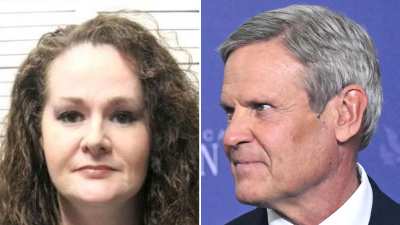
Pike was sentenced to death at the age of 18 for Slemmer’s murder. Slemmer was 19 at the time she was killed.
Christa Pike Spent 10 Days in a Hospital Before Returning to Prison
After the two doses of pentobarbital failed to kill her, Pike was taken to a medical facility alive, according to the Tennessee Department of Correction. State protocols prevented officials from attempting the execution a third time, and she spent 10 days in the hospital before being returned to prison.
She is now being held in the prison’s medical ward, which she described as a return to the isolation she endured for nearly three decades on death row.
“Since that night, I have been largely isolated in the prison’s medical ward, away from other people and the human connections that mean so much to me. That isolation brings its own kind of pain. I spent 28 years in solitary confinement and much of what I am experiencing today is a repeat of that condition,” Pike wrote.
She thanked the medical personnel who treated her at the hospital, along with her attorneys, and said she is slowly regaining strength — though she drew a careful distinction about her recovery.
“Healing is not the same as being OK,” Pike said.
She closed her message with a reflection on how uncertain her future has become. “I don’t know why I survived that night. I don’t know what comes next. Some days, finding hope is harder than others. For now, I am trying to heal, one day at a time. And I am holding on to the love and kindness of so many people who have reminded me that I am not alone,” Pike wrote.
Dr. Mark Fowler Still Wants Christa Pike Put to Death
Despite overseeing the failed procedure, Fowler told Intelligencer he hopes Tennessee will try again to execute Pike. He framed his position as a matter of justice for Slemmer’s mother and pushed back against the criticism directed at him since the botched attempt.
“People will say, ‘Why don’t you just walk away from this?’ And the answer is, that’s exactly what the advocates against the death penalty want,” Fowler said. “They felt that if they could humiliate me I would step back from it — because I promise you, there ain’t anybody else in Tennessee going to sign up for it now — and the answer is, I cannot be pushed off a course that I find correct. I refuse to compromise.”
He defended his character against the backlash. “I’m not an evil, vicious person. I’m not unscrupulous. I’m not uncaring, and I’m not incompetent,” he added.


Fowler also outlined what he believes would prevent another failure. He said Tennessee’s lethal-injection protocol needs to change, and that he prefers the older three-drug cocktail involving potassium chloride over the single-drug pentobarbital method currently in use.
The current status of Pike’s case remains unknown following Lee’s suspension of executions.
This story was compiled with the help of AI tools and edited by journalists.