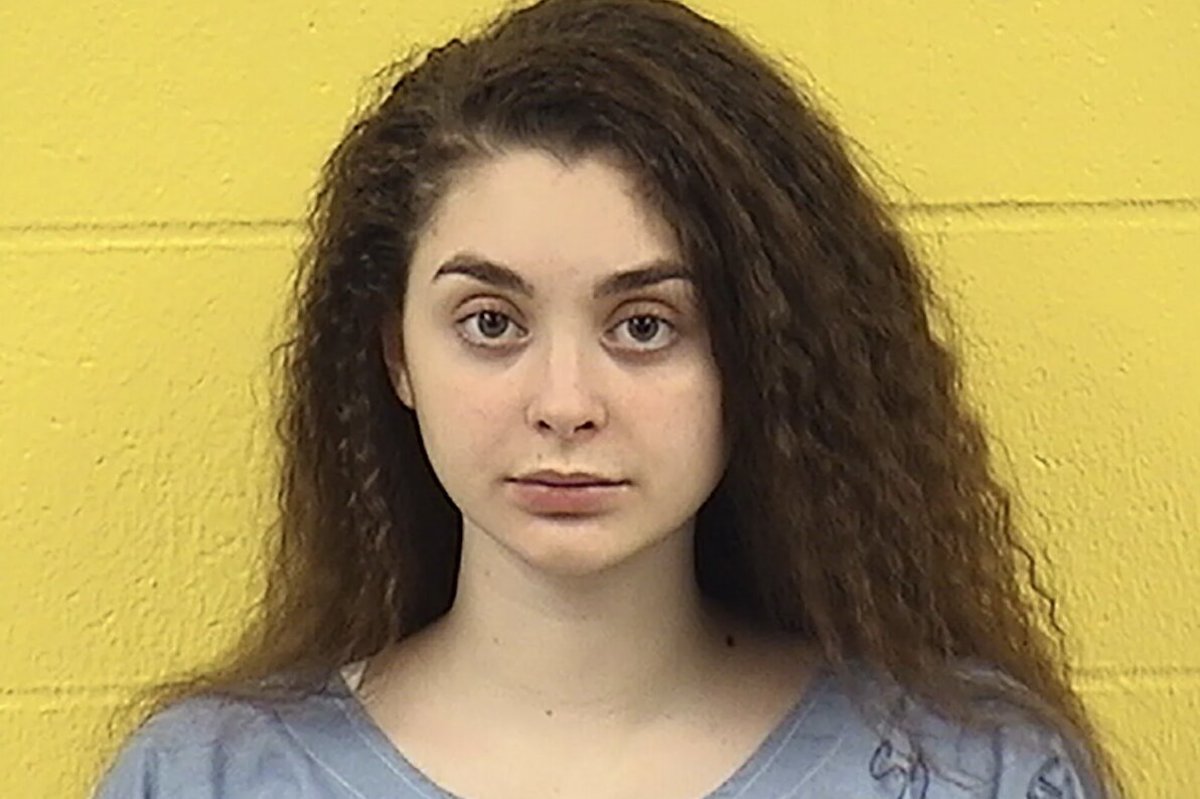


Mackenzie Shirilla became the subject of national attention after a fatal July 2022 car crash in Strongsville, Ohio, killed her boyfriend and their close friend — and her story has only intensified in the wake of Netflix’s documentary The Crash. As viewers process the chilling details of the case, many are asking the same question: How many years will Shirilla actually spend behind bars?
The answer is stark. Shirilla, 21, is currently serving two concurrent life sentences at the Ohio Reformatory for Women after being convicted of 12 felony charges, including murder, felonious assault and aggravated vehicular homicide.
Here’s everything to know about her sentence, the crime that put her there and the new claims emerging about her life in prison.
Mackenzie Shirilla’s Sentence Explained
After her 2023 trial, Shirilla was convicted of 12 felony counts tied to the deadly crash. The most serious of those charges — murder — carries a life sentence under Ohio law, and the judge ordered her to two concurrent sentences of 15 years to life in prison.

Concurrent sentences mean Shirilla serves both life terms at the same time rather than one after the other. While that structure can shorten the overall time behind bars compared to consecutive sentencing, it does not change the reality that she could potentially spend the rest of her life in prison.
There is no fixed release date attached to her case and she won’t be eligible for parole until 15 years into her sentence, which will be in October 2037.
Shirilla is currently housed at the Ohio Reformatory for Women.
Mackenzie Shirilla’s Crime and Conviction
The crash that sent Shirilla to prison happened in the early morning hours of July 31, 2022. According to investigators, she was driving her Toyota Camry with her boyfriend, Dominic Russo, in the front passenger seat and their friend Davion Flanagan in the back seat.
Prosecutors said Shirilla accelerated the vehicle up to 100 mph and never pressed the brake before slamming into a brick building. Both Russo, 20, and Flanagan, 19, were killed on impact.
At the trial, prosecutors argued the crash was intentional and that Shirilla had deliberately driven into the building. The jury agreed, convicting her on all 12 felony charges, including the murder counts that triggered her life sentences.
Shirilla has maintained that the crash was not deliberate. In The Crash, which premiered on Netflix on May 15, 2026, she speculated that her diagnosed medical condition — postural orthostatic tachycardia syndrome, or POTS — may have caused her to lose consciousness or control of the vehicle.

Mackenzie Shirilla’s Fears About Her Future
In an undated jail call with her mother, Natalie Shirilla, that was obtained by People, Shirilla opened up about the toll the sentence is taking on her and her fears about what life will look like if she is ever released.
Mackenzie told her mother she “doesn’t want to live here with these people,” a reference to her fellow inmates that her mother described as “murderers [and] kidnappers.”
“But anyway, since you have to spend time there, we all knew you were going to anyway, it doesn’t sound so, so bad,” her mother responded.
Later in the conversation, Shirilla expressed worry that her parents might be forced to sell their home and that her chances of building a family of her own are slipping away.
“I feel like I want to live off the grid, like, and I’m just — I’m just I’m thinking about like how I’m just gonna be like old when I get out of jail and like, I don’t know, like I’m not gonna be able to have kids or like a family and s**t like that,” she said.
When her mother urged Shirilla not to “go there,” Shirilla replied, “I know, it’s hard not to.”
Mackenzie Shirilla’s Alleged Behavior Behind Bars
Since The Crash premiered, a former inmate has come forward with claims that paint a very different picture of Shirilla than the remorseful young woman shown in the documentary.
Mary Katherine “Kat” Crowder served six months at the Ohio Reformatory for Women that overlapped with Shirilla’s time there. Crowder told The New York Post that she was stunned by Shirilla’s on-camera demeanor.
“When she walked out in the documentary, my jaw literally dropped, because her demeanor and the way that she looked was nothing like the person I was in there with,” Crowder said.
According to Crowder, Shirilla embraced a “Mean Girls” persona inside the prison, complete with full makeup and trendy outfits she allegedly funded with help from her parents and “sugar daddies” she met online.

“When I was in there with her, you’d look at her and she had her makeup done every day, she was very well put together — almost like preppy,” Crowder said. “But in the documentary, she did not look like that at all — she almost looked like she was conforming to the people that have been there for a while.”
Crowder also told NewsNation that she never witnessed any signs of remorse from Shirilla.
“When Mackenzie first walked out in the documentary, my jaw dropped because that was not the person that I saw in prison when I was with her. She walked around in a very light demeanor,” Crowder said. “It was never this dark, smug, tough girl act that was in this video trying to portray some sort of remorse.”



She added that Shirilla seemed to model herself after the Mean Girls queen bee. “I do say that she wanted to be like Regina George,” Crowder said. “I mean, just the way that she did her makeup, the way that she, I mean, it was like she was going out to a club or something.”
Crowder also cast doubt on Shirilla’s claims about her POTS diagnosis being responsible for the crash. “Never one time did I ever see Mackenzie Shirilla go for a blood pressure check, take any type of medication or go to sick call, ever experience dizziness,” Crowder said. “In fact, Mackenzie Shirilla would go out in 100-degree heatwaves with baby oil on her and sit in the prison yard and tan … the girl does not have any medical issues.”
This story was compiled with the help of AI tools and edited by journalists.