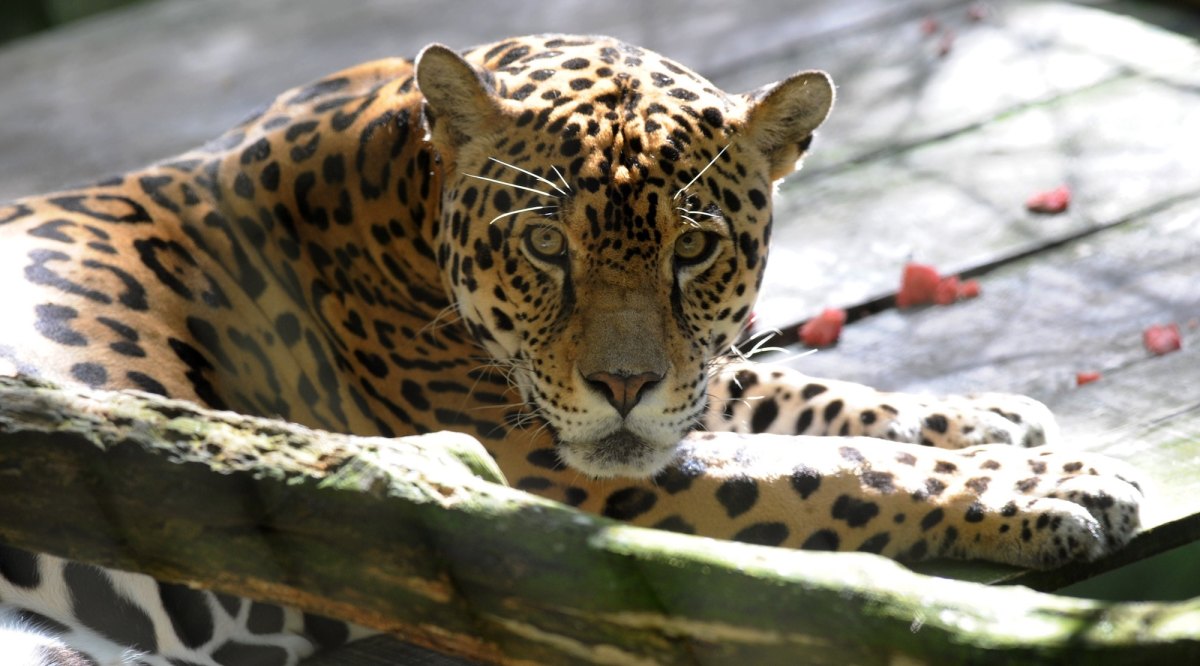


Talk about a comeback story worth rooting for. A young male jaguar just made a jaw-dropping appearance in the mountains of Honduras — and it’s the first confirmed sighting in over a decade.
The big cat was photographed on February 6, 2026, by a camera trap in the high-elevation forests of Honduras’ Sierra del Merendón, at roughly 2,200 meters. The images were captured by wild cat conservation organization Panthera and were shared by CNN in April 2026, and they’re giving wildlife fans everywhere a serious reason to celebrate.
Cloud Jaguar’s Mountain Habitat in Honduras Has Experts Stunned
Here’s what makes this sighting extra wild: jaguars are typically associated with lowland tropical habitats, not mountain forests. Finding one at 2,200 meters challenges everything conservationists thought they knew about where these big cats can survive and travel. (Hence, earning the nickname “cloud jaguar.”) Conservation groups monitoring wildlife corridors between Honduras and Guatemala say the high-altitude discovery could reshape understanding of how jaguars navigate increasingly fragmented landscapes.
Scientists believe the jaguar may have come from one of four nearby populations: Punta de Manabique Wildlife Refuge and Cerro San Gil Springs Protection Reserve in Guatemala, or Pico Bonito National Park and Jeannette Kawas National Park in Honduras. The Honduran populations are believed to be quite small, with an estimated 10 to 18 jaguars in Jeannette Kawas and 20 to 50 in Pico Bonito. A single jaguar showing up in new territory suggests corridors between these isolated groups may still be functional — which is crucial for preserving genetic diversity.
Panthera’s Conservation Work Is Paying Off for Jaguar Species
This wasn’t a lucky break. In recent years, Panthera and its partners have significantly ramped up monitoring efforts across the Merendón range, deploying ranger patrols, camera traps and concealed acoustic sensors along with a program aimed at restoring key prey species for jaguars. According to Panthera, poaching has decreased, and strengthened protections and habitat recovery have made the forest more suitable for animals to live.
“It seems we are seeing a recovery in large cats in general,” said Franklin Castañeda, Honduras country director at Panthera.
Castañeda also pointed to a policy twist no one saw coming. Policymakers originally recognized the Merendón range as a vital watershed for neighboring communities — and in doing so, inadvertently saved a critical jaguar hub.
“They didn’t know then, but now we know they were also protecting a very important habitat for jaguars,” Castañeda explained.
Jaguars Still Face Serious Threats Across the Americas
Even with this feel-good news, the bigger picture is sobering. According to the International Union for Conservation of Nature, jaguars have disappeared from about 49 percent of their original range across the Americas. While the largest population is found in the Amazon basin, most other regional populations are considered either endangered or critically endangered.
“Deforestation and poaching are the biggest threats, and we have been working to tackle both,” Castañeda said.



What’s Next for Jaguar Conservation After Rare Sighting?
At the U.N. Convention on Migratory Species Conference of the Parties (CMS COP15) in March 2026, jaguars were highlighted as a priority species for international conservation action. Dr. Allison Devlin, jaguar program director at Panthera, stressed the need to rethink which landscapes deserve protection.
“Protection of habitat across all elevations, including those people might not readily consider to support wild cat passage or territories, are in need of conservation for adaptable and wide-ranging species like the jaguar and puma,” Devlin said.
Devlin added that CMS COP15 commitments could accelerate action: “Governments home to jaguars will now take significant actions to coordinate and cooperate with one another to protect this charismatic species and its habitat; support coexistence among jaguars, Indigenous peoples, and local communities; improve population monitoring; and address illegal killing of the species.”