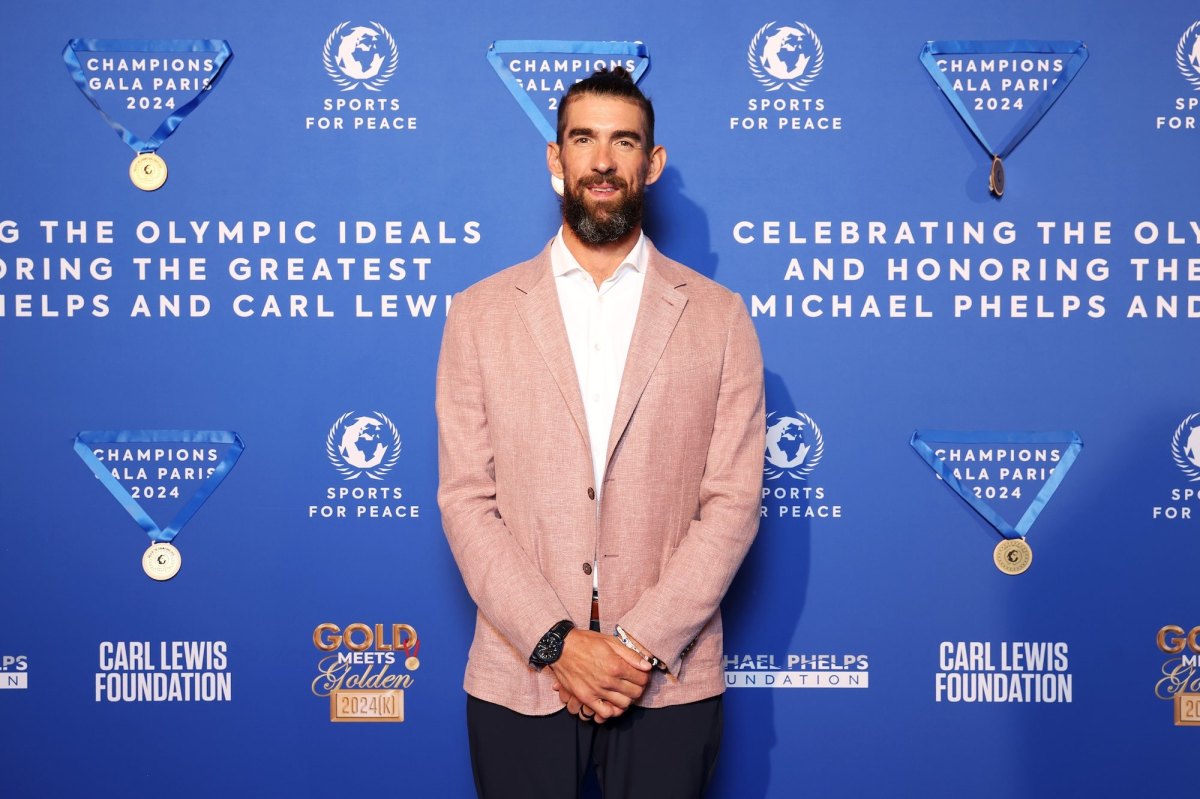

Michael Phelps opened up about the harsh financial realities that many Olympians face.
“I don’t think you’re going into the Olympic space to be a millionaire,” Phelps, 41, admitted on the Tuesday, July 7, edition of the “Richer Lives” podcast. “I think you’re doing it just because you love the sport.”
The competitive swimmer has won more Olympic medals than any other athlete in any sport, with 28 total medals across four Summer Games. (Phelps also holds the all-time record for most gold medal wins with 23, in addition to his three silver and two bronze medals.)
Phelps parlayed his success into a media career that has included major endorsement deals and even his own video game — but that’s not a trajectory that many Olympians replicate.
“I think there’s a very small percent of Olympians that actually can make a living off of it,” he noted. “I was very fortunate to be one of those. I got to wake up every single day and do what I loved.”
The athlete recalled that there were “times [he] wanted to quit” swimming before his Olympics success, only for his mother, Debbie, to remind him of the financial realities of that decision.
“My mom’s like, ‘If you want to quit, do you want to go work a 9-to-5 job?’ I was like, ‘Good call,’” he recalled to host Vivian Tu. “For me, I was going to swim … eight to 10 times a week, that’s a job? I’m getting paid to do what I love.”
Phelps remembered feeling that his life was “all about sports” as a kid even though it “never really felt like a job.”
“I was always outside playing. I was having fun. I was being myself,” he said. “I was very lucky to find a career where I could just be me, my authentic self. I had a blast doing it.”
Later in the podcast, Phelps confirmed that he received an early education from a financial advisor at age 15. Now, he leans into endorsements where he is offered a financial stake in the companies he signs with.
“Over time, my agent got smart in trying to structure contracts in a different way. Whether it was me taking equity or me just taking cash,” he said. “Just having an agent that is able to structure deals in different ways, thinking long term. You’re invested in it. You want [these companies] to go massive. Instead of just getting a pile of cash, for me, I’m along for the ride.”
Phelps also touched on overcoming public controversies, including his two previous DUI arrests. (The Olympian entered a guilty plea to a charge of driving while impaired in 2004 and later pleaded guilty to driving under the influence in 2014.)
He also temporarily walked away from the world of competitive swimming following the 2012 London Games, citing burnout and frustration with the sport. (He told reporters at the time that he “just wanted to be done with swimming and didn’t want anything to do with the sport anymore.”)
“At that point, I didn’t care [about the financial implications],” he acknowledged. “I literally came back to the 2012 Olympics because I had to. I had contractual obligations that I had to fulfill.”
He said that he was so disillusioned with the sport at the time that he’d “skip” a week’s worth of training on a whim.
“I was just stiff-arming the sport because I wanted a break,” Phelps confessed. “After my second DUI, at that point, I didn’t feel like I should be alive anymore. I felt like I didn’t deserve to be alive anymore.”
He continued, “At that point, I just became scared. I think that was the first time that I asked for help. I feel that for so long we would just kind of sweep it under the rug. Nobody wanted to talk about it … I almost wanted to create a generational shift. Make real change.”



“It’s not embarrassing to go to therapy. It’s not embarrassing to ask for help,” he added, pointing out how much he valued his sponsorship deal with online therapy portal TalkSpace.
Phelps ultimately returned to swimming for the 2016 Summer Games in Rio, where he won five gold medals and a silver. He retired from the sport in August 2016.
If you or someone you know is struggling or in crisis, help is available. Call or text 988 or chat at 988lifeline.org.