


Your stomach is built to move. A healthy one contracts in steady waves, pushing food into your small intestine within minutes of a meal. The upper section relaxes to hold what you’ve eaten while the lower muscles squeeze it along. The whole thing runs on muscle and nerve signals firing in sync.
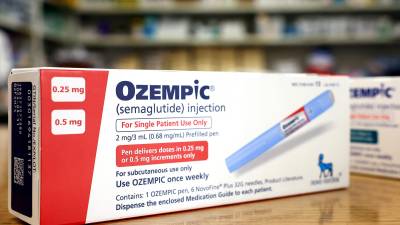
Ozempic changes the timing of that system. Stopping Ozempic results in even more changes. And to understand stomach paralysis, you have to understand how.
What Is Stomach Paralysis?
Stomach paralysis is the everyday name for gastroparesis, or delayed gastric emptying.
It happens when the muscles and nerves of the stomach stop working properly. Food that should move on in minutes lingers for hours, because the muscles are too weak to push it through.

That backup is where the trouble starts. Common stomach paralysis symptoms include nausea, vomiting, bloating, feeling full after just a few bites, upper abdominal pain and sometimes throwing up food that’s hours old and barely digested.
In rare cases, stuck food hardens into solid masses called bezoars, which can cause blockages.
Why Ozempic Slows Your Stomach
Ozempic belongs to a class of drugs called GLP-1 agonists. The name is the mechanism.
Your body already makes a hormone called GLP-1. One of its jobs is to slow how fast food leaves your stomach — part of why you feel full and satisfied after eating.
Ozempic mimics that hormone, on purpose. By slowing digestion and steadying blood sugar, it keeps you full on less food. That’s the entire point of the drug.
So a degree of slowdown isn’t an unexpected side effect. It’s the design. But slowdown runs on a spectrum, and doctors have a way to measure where you land on it.
The test is how much food is still in your stomach four hours after a meal. A healthy stomach has cleared all but about 10 percent by then. Anywhere from 10 percent to 15 percent left behind counts as mild gastroparesis; 15 percent to 35 percent is moderate; and anything above 35 percent is severe.
When Slowed Digestion Becomes Gastroparesis
The real question is how much slower.
A Mayo Clinic study led by gastroenterologist Dr. Michael Camilleri put numbers on it. Researchers measured how long it took for half a meal to leave the stomach in people on a GLP-1 drug versus a placebo.
On placebo: about four minutes. On the medication after five weeks: about 70 minutes — and in some patients, the delay stretched to 151 minutes.
That’s the design working. But for some people, the same mechanism pushes the stomach past slow and into stalled — full gastroparesis, with the relentless nausea and vomiting that come with it.
And it shows up in the data. A University of British Columbia study published in JAMA — the first large look at non-diabetic people taking these drugs for weight loss — found GLP-1 users had a 3.67 times higher risk of gastroparesis than people on an older weight-loss drug.
Why Ozempic Causes Stomach Paralysis in Some People
So why does the same drug leave most people fine and a few with a stalled stomach?
Researchers are still untangling it. One theory from Camilleri: some patients who develop gastroparesis already had a quietly slow stomach to begin with — borderline emptying they never noticed. Add a medication built to slow things down, and a “slow stomach” can tip over into a paralyzed one.
The pattern was hiding in plain sight. “There have been anecdotal reports of some patients using these drugs for weight loss and then presenting with repeated episodes of nausea and vomiting secondary to a condition referred to as gastroparesis,” said Dr. Mahyar Etminan, the UBC study’s senior author.



For many users, though, the effect eases with time. In Camilleri’s research, people clearing half their food in about 70 minutes at five weeks were down to roughly 30 minutes later on — and the nausea faded too.
Where the Ozempic-Stomach Paralysis Line Gets Drawn
Ozempic slows your stomach because that’s what it’s designed to do. For most people, that slowdown is mild, manageable and temporary. For a smaller group, it can tip into gastroparesis — and scientists are still working out exactly who’s at risk, and why.
The mechanism is clear. The line between “working as intended” and “gone too far” is the part still being drawn.